For children, play is not a luxury – it is their primary occupation. It is how they make sense of the world, build relationships, develop movement and coordination, and lay the cognitive foundations for learning. Yet for families supporting children with developmental differences, delays, or disabilities, meaningful play participation can present real and daily challenges.
This is where paediatric occupational therapy steps in. Through carefully selected structured play activities, occupational therapists support children to develop the skills they need to participate fully in life. If you are a parent, carer, or support coordinator in Brisbane, North Lakes, the Gold Coast, Sunshine Coast, Sydney, or Melbourne – or accessing services via telehealth across Queensland, Victoria, New South Wales, or Tasmania – this guide explains what structured play activities in paediatric OT involve and why they matter.
What Are Structured Play Activities in Paediatric OT?
Structured play is defined as play that has rules or directions, may involve equipment, requires instruction, and is extrinsically motivated (Royal College of Occupational Therapists, 2023). In paediatric occupational therapy, structured play activities are purposefully selected and guided by the therapist to achieve specific developmental or participation goals.
Occupational therapists use play in three distinct ways (Kuhaneck et al., 2020):
As a motivator – encouraging children to engage in therapy through enjoyable, play-based experiences.
As a conduit – using play as the vehicle to deliver interventions targeting non-play goals, such as strengthening pencil grip through playdough activities.
As the goal itself – supporting a child’s participation in play as a meaningful and valued childhood occupation in its own right.
This distinction matters because it shapes how therapists design their sessions. A child who struggles to join peers in the playground may need structured play activities specifically targeting social and cooperative play skills, while another child may use structured play activities as the pathway to improving balance or developing hand strength.
Research consistently supports the effectiveness of structured play in therapy. A systematic review by Kent et al. (2020) found a significant, albeit small, effect of play-based interventions on play skills (Hedges’ g = 0.439), with moderate to strong evidence across 11 of the 12 studies reviewed. Furthermore, 47% of evidence underpinning occupational therapy recommendations for play has been assessed as high quality (Grade A), providing a strong research foundation for this approach.
How Do Developmental Stages Shape Structured Play Activities in Paediatric OT?
Paediatric occupational therapists ground their selection of structured play activities in a thorough understanding of typical play development. Play evolves significantly across childhood, and the appropriateness of any structured activity depends on where a child is developmentally.
| Developmental Stage | Age Range | Type of Play | Example OT Structured Activities |
|---|---|---|---|
| Sensorimotor / Exploratory | 0–12 months | Exploring through senses; repetitive motor actions | Rattle play, tummy time with toy placement, cause-and-effect toys |
| Solitary Play | Around 12 months | Playing alone; exploring body and environment | Sensory bins, textured object exploration |
| Functional / Constructive | 12–24 months | Cause-and-effect play; dumping and filling | Stacking cups, twist-and-turn toys, shape sorters |
| Parallel Play | 2–3 years | Playing alongside peers without direct interaction | Side-by-side art activities, shared sensory tables |
| Pretend / Symbolic Play | 2–6 years | Imaginative role play; object transformation | Dress-up play, doll play sequences, kitchen play scenarios |
| Constructive Play | 2–6 years | Building and creating tangible structures | Block building, clay modelling, sand construction |
| Cooperative Play | 4–5 years | Working toward shared goals | Group board games, structured building challenges |
| Rule-Based / Team Play | School-age | Complex games with rules; team sports | Organised ball games, structured card and board games |
Understanding these stages allows occupational therapists to set realistic, meaningful goals and select structured play activities that are appropriately challenging without being discouraging.
What Types of Structured Play Activities Are Used in Paediatric Occupational Therapy?
Paediatric OTs draw on a diverse range of structured play activities, each targeting different areas of a child’s development.
Fine Motor Structured Play Activities
Fine motor development underpins many everyday tasks, from handwriting to fastening buttons.
Playdough and Modelling Clay
Squeezing, rolling, and pinching clay builds intrinsic hand muscle strength – the same muscles that control pencil grip. Activities can include rolling dough into balls, cutting with plastic knives, and pressing textures into the surface to introduce tactile variation.
Bead Stringing and Lacing
Threading beads develops the pincer grasp – the coordinated use of the thumb and index finger – alongside hand-eye and bilateral coordination. Lacing cards extend this to introduce sequencing and pattern recognition.
Scissor Skills Practice
Children progress from basic snipping activities to cutting along curved lines, directly supporting school readiness and hand strength development.
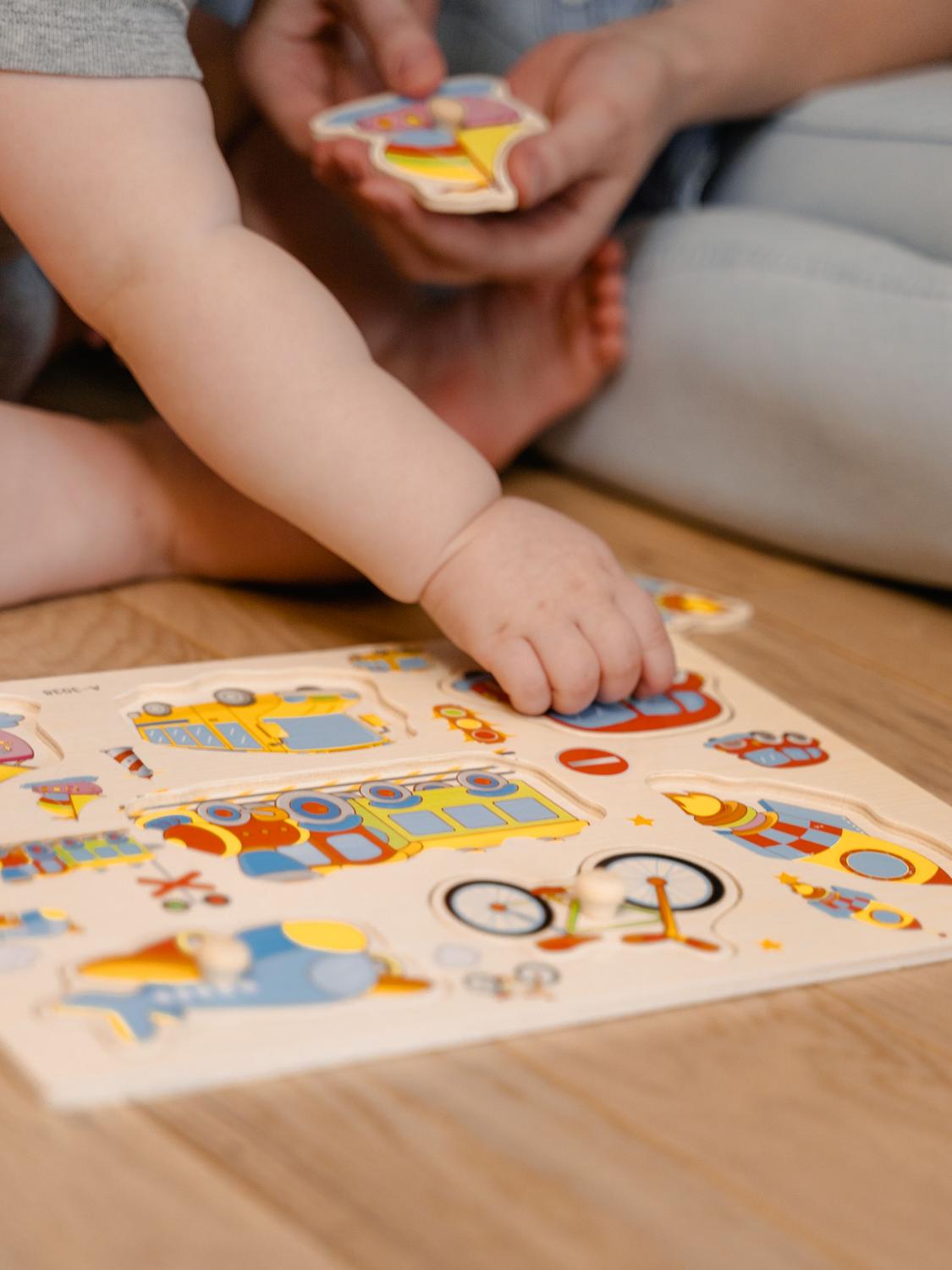
Peg Puzzles and Shape Sorting
These activities train visual discrimination, spatial reasoning, and pincer grasp development through the placement of pieces into corresponding spaces.
Gross Motor Structured Play Activities
Balance and Obstacle Courses
Walking heel-to-toe, stepping over objects, and crawling under tables challenge the vestibular system and support proprioceptive feedback, building coordination and postural control.
Animal Walks
Bear walks, crab walks, and bunny hops function as proprioceptive “heavy work” activities presented in a highly engaging, playful format suitable for a range of ages.
Ball Games
Throwing, catching, kicking, and rolling balls develop hand-eye coordination, timing, and spatial awareness at varying developmental levels, with ball size and distance adjusted to the child’s ability.
Sensory Integration Structured Play Activities
Sensory integration refers to the brain’s ability to process and organise sensory input from the environment and the body. Occupational therapists work across seven distinct sensory systems in their structured play programming.
Tactile System Activities
Finger painting, sand play, and playdough address tactile discrimination and hypersensitivity to touch. Sensory bins filled with rice, dried beans, or kinetic sand allow children to explore textures in a supported, structured context, with goals such as hiding and locating small toys to encourage sustained engagement.
Proprioceptive System Activities
Heavy work tasks, pushing and pulling carts, and resistance exercises provide proprioceptive input to support body awareness and motor planning.
Vestibular System Activities
Swinging, spinning boards, and rocking activities address balance and spatial orientation. It is worth noting that fast movement with quick changes tends to be alerting, while slow, rhythmic movement tends to be calming – a principle that informs how therapists structure these activities within a session.
Visual System Activities
Visual tracking tasks, puzzles of varying complexity, and visual motor coordination exercises train the visual system’s ability to process spatial relationships and support eye-hand coordination.
Social and Emotional Structured Play Activities
Turn-Taking and Sharing Games
Board games with explicit rules and structured sharing tasks practise the social skills needed for peer interaction and cooperative play, areas frequently targeted in therapy for children with social communication differences.
Cooperative Games
Group activities with a shared goal – such as building a single structure together – support the development of cooperative play, communication, and early friendship skills.
Imitation and Modelling Activities
Copy-cat games, Follow the Leader, and video modelling combined with therapist and peer modelling support children in learning and practising social play behaviours within structured, low-pressure contexts.
How Do Structured Play Activities Support Children with Specific Conditions?
Autism Spectrum Disorder (ASD)
Research demonstrates substantial evidence supporting structured play-based interventions for children with ASD. The Royal College of Occupational Therapists (2023) recommends imitation and modelling interventions as Grade A evidence for benefiting play in children with autism.
A systematic review by Kent et al. (2020) found that 11 of the play-based occupational therapy interventions reviewed resulted in moderate to large improvement in playfulness and social play for children with ASD. Strategies shown to be effective include imitation of the child (identified as the most consistent finding), video modelling combined with therapist feedback, modification of the play environment, and a combination of home, guided, social, and free play to promote the motivational factors of autonomy, competence, interest, and relatedness.
A randomised controlled trial examining a structured social play intervention found a moderate positive effect on play, with the overall change in play performance in the intervention group significantly greater than in the wait-list control group (t(63) = 2.471, p = 0.016, d = 0.6).
Attention Deficit Hyperactivity Disorder (ADHD)
The Royal College of Occupational Therapists (2023) recommends structured interventions with peer-to-peer interactions to improve social play skills for children with ADHD (Grade A evidence). A randomised controlled trial found that children’s play skills in an intervention group changed significantly more than those in a control group over a 10-week structured play programme (intervention group change = 23.9; control group change = −1.4; p < 0.001).
Improvements observed by parents following peer-mediated, structured play interventions included increased turn-taking and sharing, improved cooperation, enhanced emotional regulation, and long-term maintenance of social play skills 18 months post-intervention.
Developmental Delays and Intellectual Impairments
Strong evidence supports the use of social skills programming and structured play, leisure, and recreational activities for children with intellectual impairments, developmental delays, and learning disabilities (Royal College of Occupational Therapists, 2023, Grade A evidence).
Hospitalised Children
For children admitted to hospital, the Royal College of Occupational Therapists (2023) recommends that occupational therapists promote play opportunities to reduce the stress of hospitalisation (Grade A evidence). Play interventions during hospital stays have been associated with reductions in stress, pain, anxiety, and fatigue, highlighting the breadth of contexts in which structured play activities remain clinically valuable.
How Are Play Skills Assessed in Paediatric Occupational Therapy?
Assessment always precedes intervention in paediatric OT. Occupational therapists use standardised, evidence-based tools to understand a child’s current play participation, identify areas of need, and set meaningful goals. Eight original occupational therapy play assessment instruments have been identified in the research literature, including:
- Child-Initiated Pretend Play Assessment (ChIPPA) – observation-based instrument
- Revised Knox Preschool Play Scale (Knox PPS) – considered the gold standard for occupational therapy play assessment
- Test of Playfulness (ToP) with Test of Environmental Supportiveness (TOES) – observation-based, considered promising for evaluating intrinsic perspectives of play
- Play History Interview (PHI) – subjective-based interview with caregivers
- Play Assessment for Group Setting (PAGS) – observation-based in group contexts
When assessing children aged 0–5 years, the Royal College of Occupational Therapists (2023) recommends considering both attendance (the frequency of participation) and involvement (the quality of the child’s experience) in play.
Assessment also encompasses fine motor skills, gross motor skills, visual skills, musculoskeletal function, activity tolerance, sensory processing, and functional cognition – all of which influence a child’s capacity to engage meaningfully in play.
How Can Families and NDIS participants Access Structured Play Occupational Therapy Across Queensland and Beyond?
For families across Brisbane, North Lakes, the Gold Coast, Sunshine Coast (including Peregian Springs, Noosa, Buderim, and Gympie), Sydney, and Melbourne, accessing paediatric occupational therapy has become increasingly flexible. Mobile OT services – such as those provided by Astrad Allied Health – deliver structured play assessments and interventions directly in the home or community setting.
Delivering therapy in natural environments is supported by evidence. Research demonstrates that providing occupational therapy in contexts where play naturally occurs – the home, the backyard, or the community – supports meaningful skill transfer and allows therapists to adapt available materials to each child’s specific needs and daily routines.
For NDIS participants, occupational therapy assessments and therapeutic supports are explicitly listed as NDIS supports, with structured play interventions accessible through the Early Childhood Early Intervention (ECEI) pathway for children aged 0–6 years. For families in regional or rural areas, or those unable to access in-person services, telehealth occupational therapy is available across most of Queensland, Victoria, New South Wales, and Tasmania, ensuring that children can benefit from structured play guidance regardless of their location.
Parent and caregiver involvement is an integral part of the process. Research supports collaborative approaches that include families in goal-setting, session participation, and home-based activity facilitation – strengthening outcomes and extending the benefits of structured play activities beyond the therapy session and into everyday life.
Why Structured Play Activities Remain at the Heart of Paediatric OT in 2027
Structured play activities are not merely a tool within paediatric occupational therapy – they represent one of the most evidence-rich, developmentally responsive approaches available to support children’s growth and participation. Grounded in predominantly Grade A research evidence and applicable across a wide range of presentations including ASD, ADHD, developmental delays, intellectual impairments, and sensory processing challenges, structured play activities offer a genuinely meaningful pathway toward improved independence and quality of life for children and their families.
Whether delivered in a Brisbane lounge room, a Sunshine Coast backyard, a Melbourne community centre, or through a telehealth session in regional Tasmania, the evidence is clear: when children play with purpose and support, they grow in ways that matter well beyond the therapy session.