There is a familiar frustration felt by many people engaged in rehabilitation: progress made during sessions with a therapist seems to quietly disappear once formal support ends. Mobility improves, strength returns, daily tasks become manageable – and then life resumes, routines shift, and the gains begin to erode. This experience is not a personal failing. It reflects a fundamental challenge in rehabilitation science: how do we ensure that the hard-won progress from therapy genuinely carries over into everyday life?
Home exercise programmes (HEPs) sit at the heart of this question. Whether you are an NDIS participant, an older adult receiving aged care services, or accessing telehealth support from a regional area – the ability to maintain rehabilitation gains at home is central to long-term wellbeing and independence. For anyone engaged with occupational therapy services, supporting clients to achieve lasting outcomes through well-designed home exercise programmes is a core priority of holistic, individualised care.
Why Do Rehabilitation Gains Fade After Therapy Ends?
Understanding why gains are lost is the first step toward preserving them. Research consistently shows that the return to daily demands – work, family, community – competes directly with the time and motivation required to continue structured exercise. Benefits often diminish in the long term because daily life no longer leaves people with the time or drive to exercise, even though persistence of long-term benefits is closely linked to regular physical activity practice.
Motor learning research reinforces this point: in a manner not unlike physical fitness, task-specific practice requires ongoing and progressive engagement to be maintained and advanced. Skills that are not revisited and applied in meaningful contexts begin to fade.
Carry-over is not automatic. It must be deliberately designed into the rehabilitation process – from how exercises are selected, to how progress is measured, to how family and support networks are involved.
How Effective Are Home Exercise Programmes Compared to Clinic-Based Rehab?
The evidence strongly supports home-based rehabilitation as a clinically sound approach. Seventy-three per cent of trials comparing home programmes to expert-provided therapy found home exercise programmes equally effective for functional outcomes. Research further demonstrates that home-based exercise improved activities of daily living (ADL) performance compared to no intervention, and improved quality of life and mobility compared to standard care.
Across specific conditions, the evidence is compelling:
- For knee osteoarthritis, home-based exercise interventions significantly reduced pain and improved physical function and quality of life, with effects comparable to clinic-based exercise.
- For low back pain, supervised home exercise produced reduced pain with positive effects preserved over five years.
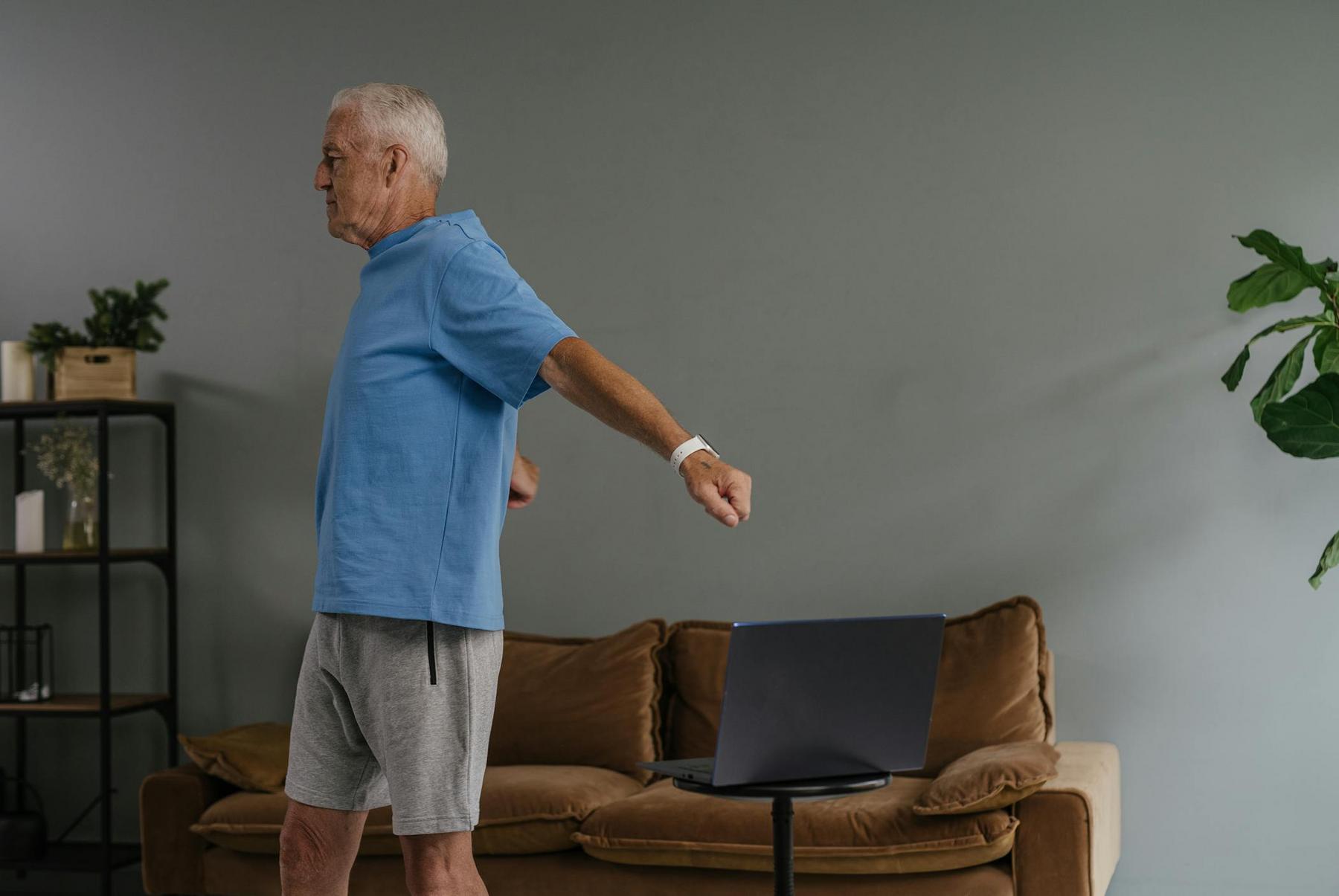
- For older adults, home exercise programmes delivered with digital health support improved lower extremity strength, balance, mobility, and functional capacity while reducing falls.
- Hospital readmission rates were notably lower among home rehabilitation clients compared to day hospital participants.
Perhaps most significantly for Australian families and support coordinators, home-based rehabilitation has demonstrated cost savings of approximately 28% compared to centre-based approaches – a meaningful consideration for NDIS participants and aged care recipients managing support budgets.
Key Evidence Summary: Home Exercise Programmes
| Outcome Measure | Finding | Source |
|---|---|---|
| Home vs. expert therapy equivalence | 73% of trials showed equivalent outcomes | Novak et al., 2011 |
| ADL improvement (HEP vs. no intervention) | SMD 0.60 | PubMed, 2022 |
| Quality of life improvement (HEP vs. standard care) | SMD 0.30 | PubMed, 2022 |
| Mobility improvement (HEP vs. standard care) | SMD 0.23 | PubMed, 2022 |
| Knee OA pain reduction | SMD = −0.32 | PMC, 2023 |
| Hospital readmission rate (home vs. day hospital) | RR = 2.1 (day hospital higher) | Semantic Scholar, 2024 |
| Cost effectiveness advantage | 28% savings with home-based approach | Productivity Commission |
| Caregiver stress (home vs. day hospital) | CSI 3.56 vs. 4.95, p = 0.047 | Semantic Scholar, 2024 |
| Telehealth HEP education | 66% reported HEP helped recovery | IU Indianapolis, 2022 |
| self-efficacy and adherence correlation | rho = 0.38, p = 0.03 | University of Kentucky, 2024 |
What Are the Key Barriers to Home Exercise Adherence in Rehab?
Despite the evidence supporting home exercise programmes, adherence remains one of rehabilitation’s most persistent challenges. Adherence rates are estimated at between 21% and 67%, with most research indicating rates of 30–50%. Understanding why people disengage is essential to designing programmes that genuinely support carry-over.
Psychological and Motivational Factors
Low self-efficacy – a person’s belief in their ability to successfully complete exercises – is one of the most modifiable barriers therapists can directly address. Research shows a weak to moderate positive relationship between initial self-efficacy levels and adherence. Other psychological factors including depression, anxiety, fear-avoidance beliefs about pain, and an external locus of control (the belief that outcomes are beyond one’s own influence) are all associated with reduced engagement.
Programme Complexity
A particularly important finding from the evidence: participants prescribed two exercises performed significantly better than those prescribed eight. Compliance with rehabilitation programmes decreases as complexity increases. Those prescribed four or more exercises demonstrated lower compliance than those prescribed two or fewer. This is a critical design principle for any occupational therapist or allied health practitioner developing home exercise programmes.
Social and Contextual Factors
Limited social support from family, friends, and therapists is a significant predictor of non-adherence (p < 0.05). Demographic factors also play a role: older age (adjusted OR 3.13), female gender (AOR 2.67), lower education level (AOR 4.34), and demanding work schedules (AOR 4.89) were all associated with higher rates of non-adherence.
For clients in a wide range of communities – where work demands and lifestyle pressures vary enormously – personalised assessment of these barriers is an essential starting point.
How Can Therapists Design Home Exercise Programmes That Maximise Carry‑Over?
Evidence-informed programme design is the single most powerful lever available to allied health practitioners. Several principles emerge clearly from the research.
Keep It Simple and Meaningful
Prescribing two to four highly relevant exercises – rather than lengthy programmes – supports sustained adherence. Exercises should be directly connected to the functional tasks a person needs and wants to perform. A home exercise programme that is abstract and disconnected from daily life will be learned as an isolated, fragmented entity. One that mirrors real tasks in real environments will be integrated, retained, and carried forward.
Build Self-Efficacy Through Mastery
Bandura’s framework of self-efficacy identifies mastery experience as the most powerful source of confidence. Breaking exercises into achievable steps, celebrating progress, providing clear measurements of improvement, and using verbal encouragement all contribute meaningfully to a person’s belief in their own capacity. When a client begins to experience genuine success, that confidence becomes self-sustaining.
Involve Clients in Planning
Home exercise programmes with consistently favourable outcomes are more likely to involve clients in establishing the programme itself. Negotiating exercise selection, agreeing on realistic frequency, and incorporating patient-identified goals transforms a prescribed programme into a personally meaningful commitment.
Embed Exercises in Daily Routines
Forgetting to exercise is the single largest self-reported barrier. Embedding exercises within existing routines – linking them to morning activities, mealtimes, or evening habits – reduces reliance on willpower alone and makes home exercise part of life rather than an addition to it.
What Role Does Motor Learning Play in Long-Term Carry‑Over?
Motor learning principles are the scientific foundation of carry-over. Key principles relevant to home exercise programme design include:
Variable Practice and Transfer
Varying the conditions, contexts, and sequences of practice enhances retention and transfer to real-world tasks. Although variable practice may initially slow performance, it produces superior long-term learning. Research demonstrates that approximately 2,250 repetitions over five days of functional upper extremity training can transfer to untrained tasks that are markedly different – supporting the value of high-repetition, meaningful practice.
Task-Specific and Goal-Directed Practice
Practising meaningful, functional tasks – especially in the home environment where those tasks will eventually be performed – enhances transfer. Environmental familiarity assists in retrieving previously learned skills. This is a distinct advantage of occupational therapy services that work within a client’s own home.
Retrieval Practice Over Re-Studying
An important and often overlooked finding: repeated testing and retrieval of learned skills produces more lasting maintenance than repeated re-studying. Rehabilitation protocols that build in regular self-testing and performance monitoring – rather than passive review – better support long-term retention.
How Does Occupational Therapy Support Home Exercise Programme Success in Practice?
Occupational therapists are positioned to integrate the above principles within a holistic, person-centred approach that addresses not just the physical demands of exercise, but the motivational, environmental, social, and cognitive factors that determine whether those exercises are actually performed.
This includes:
- Conducting performance assessments in the home environment, where ADL ability is demonstrably better assessed (and often better performed) than in a clinical setting
- Evaluating baseline self-efficacy and psychological readiness before programme prescription
- Engaging family members and carers in education and support roles – research shows this reduces carer burden (Caregiver Strain Index 3.56 in home rehabilitation vs. 4.95 in day hospital settings)
- Using monitoring tools such as exercise logs, symptom diaries, and telehealth follow-up to sustain engagement post-discharge
- Planning explicitly for the maintenance phase, rather than treating discharge as the end of the rehabilitation journey
Occupational therapy delivered within the home environment offers a powerful advantage: the context of therapy and the context of daily life become one and the same.
The Foundation of Lasting Rehabilitation Gains
Home exercise programmes do not succeed or fail on their own merits alone – they succeed or fail based on how thoughtfully they are designed, how meaningfully they are communicated, and how consistently they are supported over time. The evidence is clear: when home exercise programmes are grounded in motor learning principles, tailored to individual barriers and strengths, kept simple and relevant, and reinforced by strong therapeutic relationships and social support, evidence suggests similar functional outcomes to centre-based approaches in many studies.
Carry-over is not a happy accident. It is the product of deliberate, evidence-informed practice. And for individuals living with disability, navigating aged care, or recovering from injury, achieving lasting independence in their home environment is precisely the outcome that makes rehabilitation meaningful.
Disclaimer: Individual results may vary. The information provided in this article is intended for general educational purposes only and does not constitute clinical advice. People should seek a personalised assessment from a qualified allied health practitioner to determine the most appropriate approach for their individual circumstances.
What is a home exercise programme in occupational therapy?
A home exercise programme (HEP) in occupational therapy is a structured set of activities or exercises prescribed by a therapist for a client to practise independently at home between sessions. These programmes are tailored to an individual’s goals, abilities, and home environment, and are designed to support ongoing progress toward improved independence and daily function.
Why is carry-over important in rehabilitation?
Carry-over refers to the ability to retain and apply skills learned during therapy in real-world, everyday situations. Without carry-over, gains made during formal rehabilitation sessions may fade once active therapy ends. Ensuring carry-over is critical to achieving lasting improvements in independence, function, and quality of life.
How many exercises should be included in a home exercise programme?
Research consistently shows that fewer exercises lead to better adherence. Evidence suggests that prescribing two to four targeted exercises produces significantly better compliance than prescribing eight or more. Quality, relevance, and simplicity are far more important than volume when designing a home exercise programme.
What can be done to improve adherence to home exercise programmes?
Evidence-based strategies to improve adherence include: keeping programmes simple and meaningful, building a person’s self-efficacy through achievable success, involving clients in planning their own programme, embedding exercises into existing daily routines, engaging family or carers as supporters, providing clear progress monitoring, and using technology-assisted follow-up such as telehealth appointments.
Can occupational therapy home exercise programmes be delivered via telehealth?
Yes. Telehealth delivery of occupational therapy, including home exercise programme education, review, and monitoring, is supported by evidence. Research indicates that telehealth sessions focused on HEP education meaningfully support client engagement and programme completion, making support more accessible regardless of location.