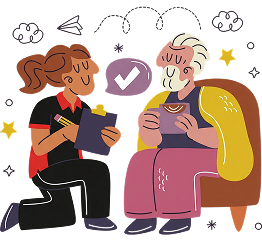
Bedroom and Rest Area Setup
We review bed height, transfer safety, bed rail needs, and nighttime navigation - particularly important for people with reduced mobility or fall risk after discharge.
Returning home after a hospital stay is a critical time. The home environment needs to be ready. Astrad Allied Health provides mobile hospital to home assessments across QLD, NSW, VIC, and TAS. Our AHPRA-registered occupational therapists work with discharge teams, GPs, and community coordinators. We assess your home, recommend equipment, and support a safe return.

What the Assessment Covers
Our hospital to home assessment is comprehensive. We examine the full home environment alongside the person's functional capacity to identify gaps and recommend practical solutions that support a safe return from hospital.
We review bed height, transfer safety, bed rail needs, and nighttime navigation - particularly important for people with reduced mobility or fall risk after discharge.
We assess shower access, toilet height, grab rail placement, non-slip surfaces, and bathroom layout to ensure safe and independent use with mobility aids.
We check entry access, internal layout, floor surfaces, lighting, steps, and door widths to identify barriers affecting safe movement through the home.
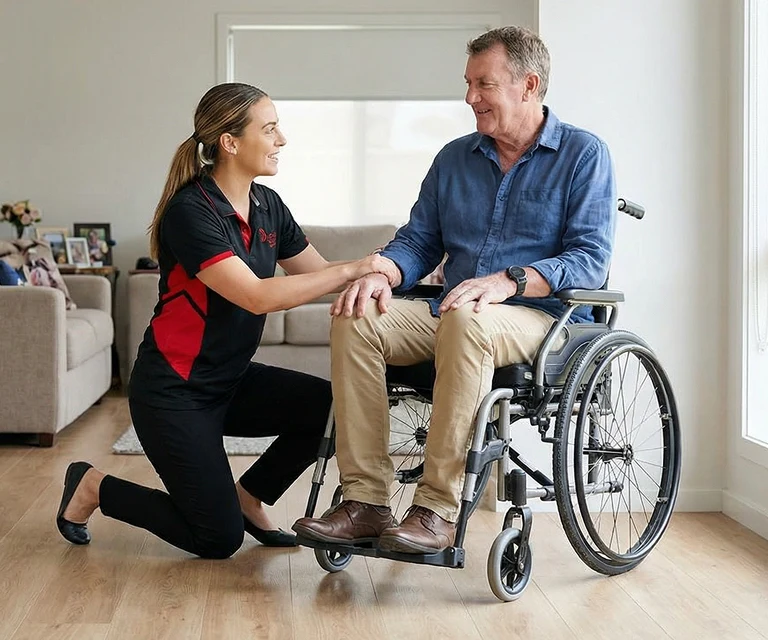
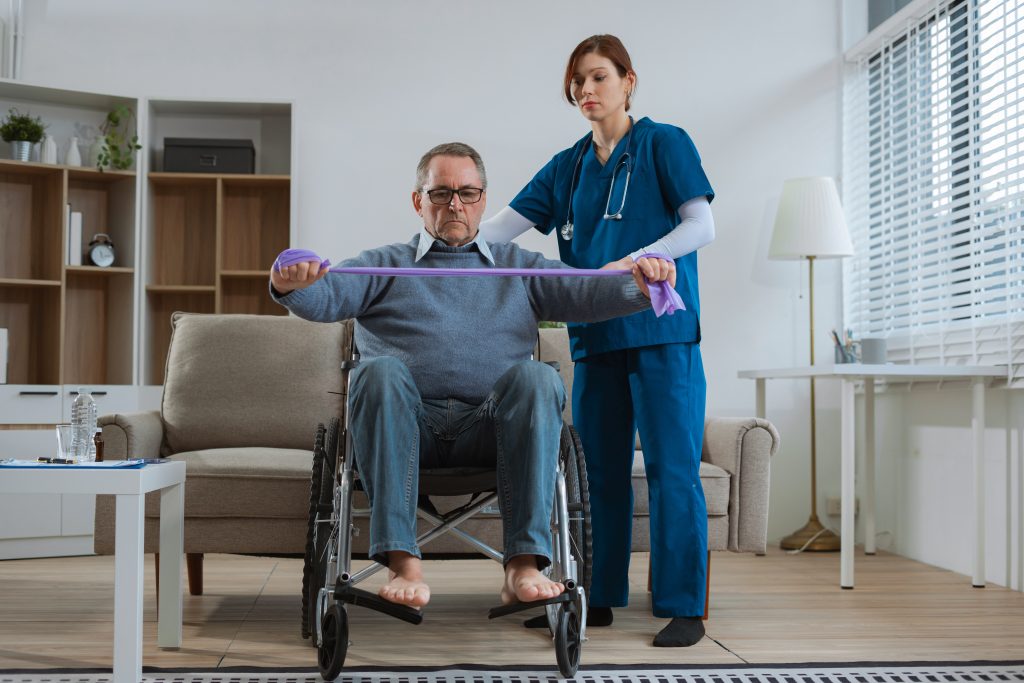
Astrad Allied Health is a mobile allied health provider. We deliver occupational therapy and speech pathology across QLD, NSW, VIC, and TAS. Our therapists have over 10 years of combined clinical experience.
We come to you - at home, in your community, or in residential care. We are an NDIS registered provider with experience across paediatric conditions, adult conditions, and aged care.
Who Benefits from a Hospital to Home Assessment
A hospital to home assessment supports people returning to the community after a hospital admission. It helps identify what needs to be in place before the person comes home - whether that is short-term recovery support or longer-term adaptation.
Older Australians returning home after a fall, fracture, or acute illness are common referrals. We work with Home Care Package and CHSP coordinators to arrange timely assessments funded through aged care pathways.
Hospital to home assessments are available through NDIS, Home Care Packages, CHSP, DVA, WorkCover, CTP, and private funding. The right pathway depends on your age and situation - contact our team for guidance.
When illness or injury results in a new disability, the home may need significant adaptation. We assess functional capacity against real home demands and provide clear recommendations to support independence and safety.
Hip and knee replacements, spinal surgery, and other orthopaedic procedures often require temporary modifications. Raised toilet seats, shower chairs, bed rails, and ramp access may all be needed before a safe discharge.
People discharged from stroke units or neurological wards often need significant home modifications and equipment. Our OTs assess homes for people with hemiplegia, reduced upper limb function, cognitive changes, and mobility challenges.
We work closely with hospital OTs, social workers, discharge coordinators, and community care managers. If you need a reliable, responsive community OT for discharge home assessments, contact our team to discuss referrals.
Our hospital to home assessment follows a clear, coordinated process. We work around your discharge date to keep things moving.

We accept referrals from hospital discharge planners, social workers, GPs, community nurses, and families. Once we receive your referral, we act quickly to schedule the assessment around your planned discharge.
Our occupational therapist visits the home to assess access, safety, and layout. We check every area the person will use - entry, bathroom, bedroom, and kitchen. We then match findings to their current functional capacity.
You receive a clear written report with our findings and recommendations. This covers equipment needs, modification requirements, and any carer training. We write reports to meet NDIS, aged care, and hospital discharge standards.
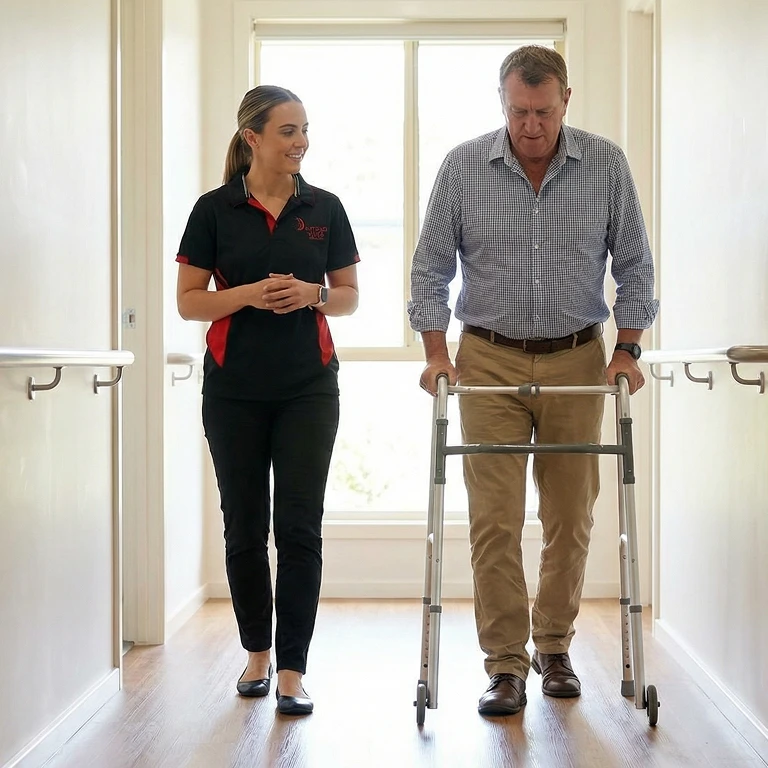
Book Early. Return Safely.
Referrals are accepted from hospital OTs, social workers, discharge planners, GPs, community nurses, NDIS support coordinators, aged care case managers, and families. Direct self-referrals are also welcome.
Entry access, internal layout, bathroom and toilet safety, bedroom setup, floor surfaces, lighting, and step heights - matched against functional capacity to identify equipment, modification, and carer training needs.
Common recommendations include shower chairs, raised toilet seats, grab rails, bed rails, non-slip mats, ramps, and walking frames. Equipment is prescribed to individual needs and sourced through the appropriate funding pathway.
Assessments are available through NDIS, Home Care Packages, CHSP, DVA, WorkCover, CTP, and private payment. The right pathway depends on age and circumstances. Our team identifies the best option.
Most assessments take 45 to 90 minutes. Larger homes or complex needs may require longer. We prioritise discharge referrals and aim to schedule at short notice when required.
Mobile hospital to home assessments are available across Queensland, New South Wales, Victoria, and Tasmania, including regional and rural locations. Contact us to confirm availability in your area.
A hospital to home assessment is conducted by a registered occupational therapist. The OT visits the home to assess whether it is safe for the person to return after hospital. They identify hazards, recommend equipment and modifications, and coordinate with the discharge team. The goal is a safe, supported transition back to community living.
The OT assesses the entire home environment – entry access, internal layout, bathroom and toilet safety, bedroom setup, floor surfaces, lighting, and step heights. Findings are matched against the person’s current functional capacity to identify what equipment, modifications, or support is needed before and after discharge.
There are two types of hospital to home assessment. A pre-discharge home visit happens before the person leaves hospital, allowing equipment to be sourced and installed in advance. A post-discharge assessment happens after the return home to address any issues that only become apparent in the real environment. In complex cases, both visits are needed.
An occupational therapist visits your home to assess whether it is safe to return after a hospital stay. They identify hazards, recommend equipment and modifications, and coordinate with the discharge team to support a safe transition home.
As early as possible, ideally before you leave hospital. A pre-discharge visit gives the OT time to identify needs and source equipment before you return. If you are already home, book promptly.
Referrals are accepted from hospital OTs, social workers, discharge planners, GPs, community nurses, NDIS support coordinators, aged care case managers, and families. Self-referrals are also welcome.
Entry access, internal layout, bathroom and toilet safety, bedroom setup, floor surfaces, lighting, and step heights, matched against your functional capacity to identify equipment, modification, and carer training needs.
Assessments can be funded through NDIS, Home Care Packages, CHSP, DVA, WorkCover, CTP, or private payment. The right pathway depends on your age and circumstances. Our team will help identify the best option.
Contact Astrad Allied Health to arrange a hospital to home assessment. We cover QLD, NSW, VIC, and TAS. Call (07) 3477 9366 or email [email protected]. Our team will confirm availability and next steps promptly.
Contact Our TeamAstrad Allied Health offers a comprehensive range of mobile services across QLD, NSW, VIC and TAS to support your health, independence, and quality of life.
Assistive devices and equipment assessed and prescribed to support independence at home and in the community.
Home safety assessments and modification recommendations to reduce falls and support daily living.
Detailed assessments for NDIS, insurance, legal, and workplace purposes.

AHPRA-registered OTs visiting your home across QLD, NSW, VIC and TAS.
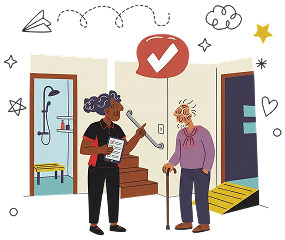
Speech pathologists delivering communication, voice, and swallowing therapy in your home.

Coordinated OT and speech pathology addressing your full range of daily living goals.