Outdoor play is unstructured, child-led time outside: climbing, digging, running, splashing and exploring backyards, parks and bush. Research links it to stronger movement skills, better mood and concentration, richer social play and growing confidence with risk. For children with disability or sensory differences, the right setting and some adult planning can put those benefits within reach too.
Because our occupational therapists, speech pathologists and psychologists work in homes, schools and community spaces rather than a clinic, the backyard and the local park are familiar territory for us. What we see there matches the national data: physical activity drops sharply once children reach school age.
How much time Australian children really spend outside
The newest national figures look reassuring for little ones and worrying for everyone older: preschoolers are far more likely than school-aged children to meet the physical activity guideline for their age.
For reference, Australia’s 24-Hour Movement Guidelines recommend at least 180 minutes of physical activity a day for 1-5-year-olds, including 60 minutes of energetic play for 3-5-year-olds, and at least 60 minutes of moderate to vigorous activity a day for 5-17-year-olds. Outdoor play is one of the easiest ways to reach those targets.
That drop says a lot. Once school starts, days fill with desks, cars, homework and organised activities, and free time outdoors shrinks. The national report card reflects the same pattern: Australian children score poorly for overall physical activity, while organised sport rates much better. Kids are signed up for plenty. They are just not roaming.
Children themselves point to the barriers. Many say they lack time to play or see friends, or are not allowed to play outside alone or with friends. Internationally, children are spending less time outdoors even as the evidence for its value grows (UNICEF, 2025).
Our read on this is simple. The problem isn’t that children have stopped wanting to play outside, it’s that adults have stopped scheduling and permitting it. That is good news, because schedules and permissions are things families can change.
What the research links to time outside
The evidence is broad and consistent, but it is worth being honest about what it shows. A 2025 international position statement, drawing on an umbrella review of the research, found positive links between active outdoor play and children’s physical, mental, social and thinking skills, including executive function (the brain’s planning, focusing and self-control system), while noting that evidence of direct cause and effect is still partial (IJBNPA, 2025).
In plain terms: children who play outside more tend to do better across many areas, and the pattern holds across a lot of studies. Researchers have not yet proven every benefit is caused by the play itself. We think that is a perfectly solid basis for making outdoor time a family priority, without overselling it as a cure for anything.
The table below groups what research links to outdoor play by area of development, and what that can look like in an ordinary afternoon.
| Area of development | What research links outdoor play to | What it can look like outside |
|---|---|---|
| Physical and motor | Fitness, coordination, big-muscle strength | Running, climbing, kicking, throwing, balancing on logs |
| Emotional wellbeing | Calmer mood, lower stress, resilience | Quiet time under a tree, water play, unhurried wandering |
| Social and communication | Turn-taking, negotiation, shared imaginative play | Building a cubby together, chasing games, making up rules |
| Thinking skills | Focus, planning, problem-solving | Working out how to cross a creek or build a dam in sand |
| Sensory processing | Movement and body-awareness input that may help regulation | Swinging, digging, carrying heavy buckets, rolling down hills |
Raising Children Network notes that time in nature may help children feel calm (Raising Children Network, 2026). A 2026 review of 22 studies linked nature play specifically to emotional wellbeing, engagement in thinking, physical activity, social skills and a sense of connection with nature (BMC Public Health, 2026). More time in green space has also been linked to better focus and lower stress (UNICEF, 2025). Australian researchers have extended that interest to “blue” spaces such as beaches, rivers and lakes alongside green ones (The Kids Research Institute Australia, 2025), which suits families on the Gold Coast, Sunshine Coast and Northern Rivers well.
Risky play deserves more trust than it gets
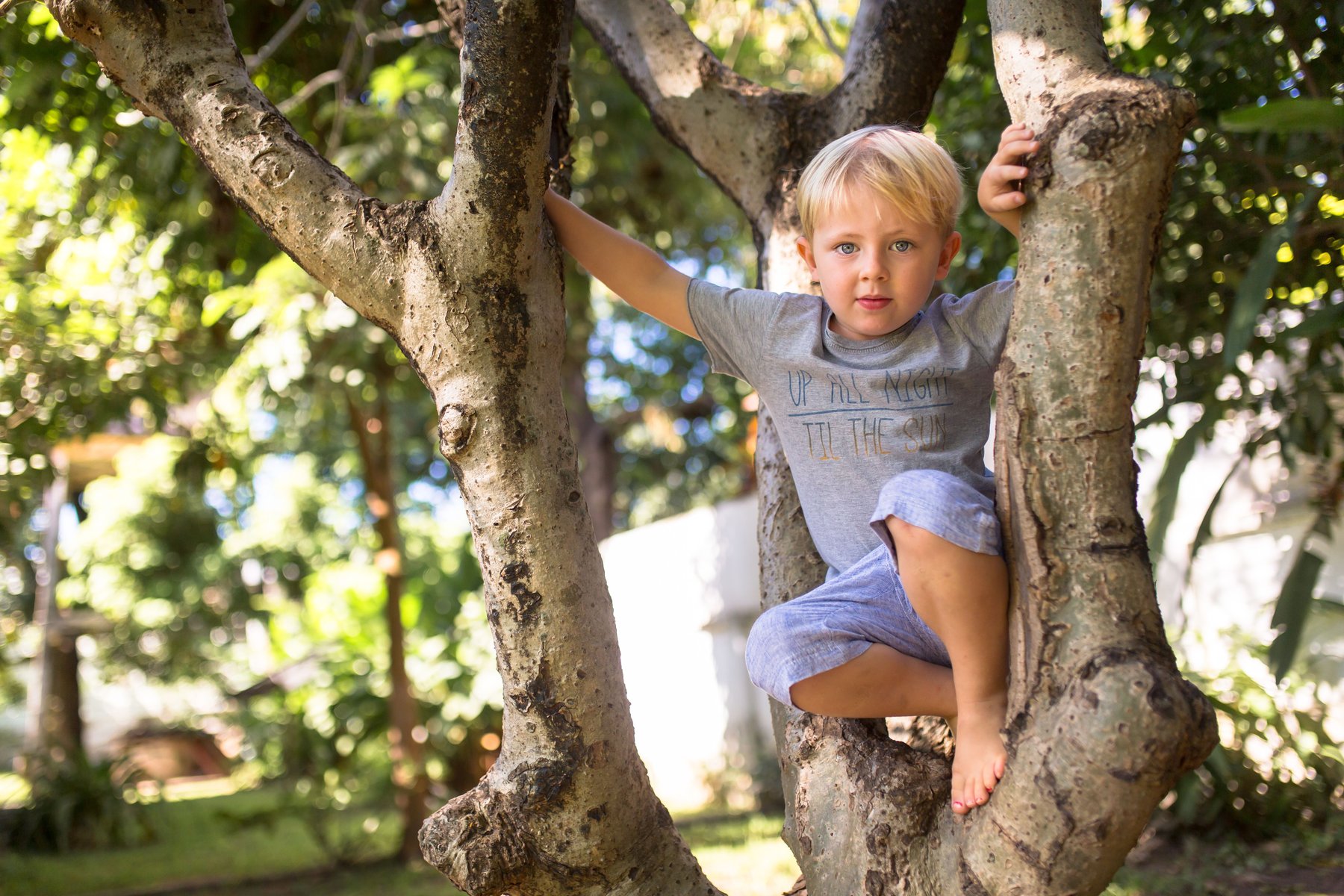
Risky play is the thrilling kind: climbing high, going fast, using real tools, play-fighting, or being briefly out of an adult’s sight. It makes many parents nervous. It also appears to matter. For children aged 3-12, risky play (including rough-and-tumble) is linked to fitness, self-efficacy (a child’s belief that they can handle things), self-regulation and resilience (IJBNPA, 2025). A 2026 scoping review of 80 papers on risky play in early childhood education and care found consistently positive links, while flagging gaps in long-term evidence (Macquarie University, 2026).
The adult side of the equation is revealing. In a Scottish survey of parents and practitioners, adults who perceived more danger let children try fewer risky situations, but that effect stopped being statistically significant once perceived benefits were factored in (International Journal of Play, 2025). Put another way, adults who can see what children gain from risk tend to allow more of it.
A child who never gets to misjudge a small jump has nothing to draw on when the big jumps arrive.
The useful distinction is between a risk and a hazard. A risk is something a child can see and choose to take on, like a tall climbing frame. A hazard is something they cannot reasonably judge, like a rotten branch, a frayed rope or a road at the end of the path. Adults remove hazards. Children manage risks.
In practice, stepping back usually means staying close enough to help but quiet enough not to steer. Swapping “be careful” for questions such as “what’s your plan for getting down?” or “where will you put your foot next?” hands the thinking back to the child. Many children respond by slowing down and assessing, which is exactly the skill risky play builds. If your child has a medical condition, a physical disability or a history of injury, talk with their treating health professional about which risks suit them.
Outdoor play for children with disability, autism and sensory differences
This is the part most articles skip, and it matters. Systematic review evidence suggests that children with developmental disabilities play outside less than their peers. Carers’ decisions were shaped by the child’s abilities and interests, worries about safety and health, time and money, available support, and whether local places felt welcoming and accessible.
None of those barriers mean the child gets less out of being outside. They mean the environment and the adults around the child have more work to do.
Sensory regulation outdoors
Outdoor spaces deliver a lot of sensory input at once: wind, noise, other children, uneven ground, bright light. For some autistic children and children with sensory processing differences, that can tip into overwhelm quickly. The same spaces also offer proprioceptive input (the sense of body position, which comes from pushing, pulling and carrying) and vestibular input (the sense of movement and balance, from swinging, spinning and rocking). Many children find these kinds of input organising and calming.
Playspace design research recommends spreading touch, sound, movement and body-awareness features across a site, with quiet retreat areas and clearly separate zones so children can choose their level of stimulation. Some inclusive playgrounds are built with these ideas in mind. Other projects have taken a low-cost route, adding loose parts like tyres, crates and barrels to school playgrounds.
Motor planning and communication
Some children know what they want to do on a climbing frame but struggle to plan and sequence the movements to get there. Occupational therapists call this motor planning, or praxis. Climbing a ladder, crossing monkey bars and getting onto a swing are all planning problems, and outdoor equipment gives children repeated, motivating practice.
Playgrounds are also busy communication environments. Joining a game, asking for a turn and following someone else’s made-up rules all draw on language and social skills. Children who use AAC (augmentative and alternative communication, such as a speech device or picture board) may need their system set up with playground vocabulary to take part fully.
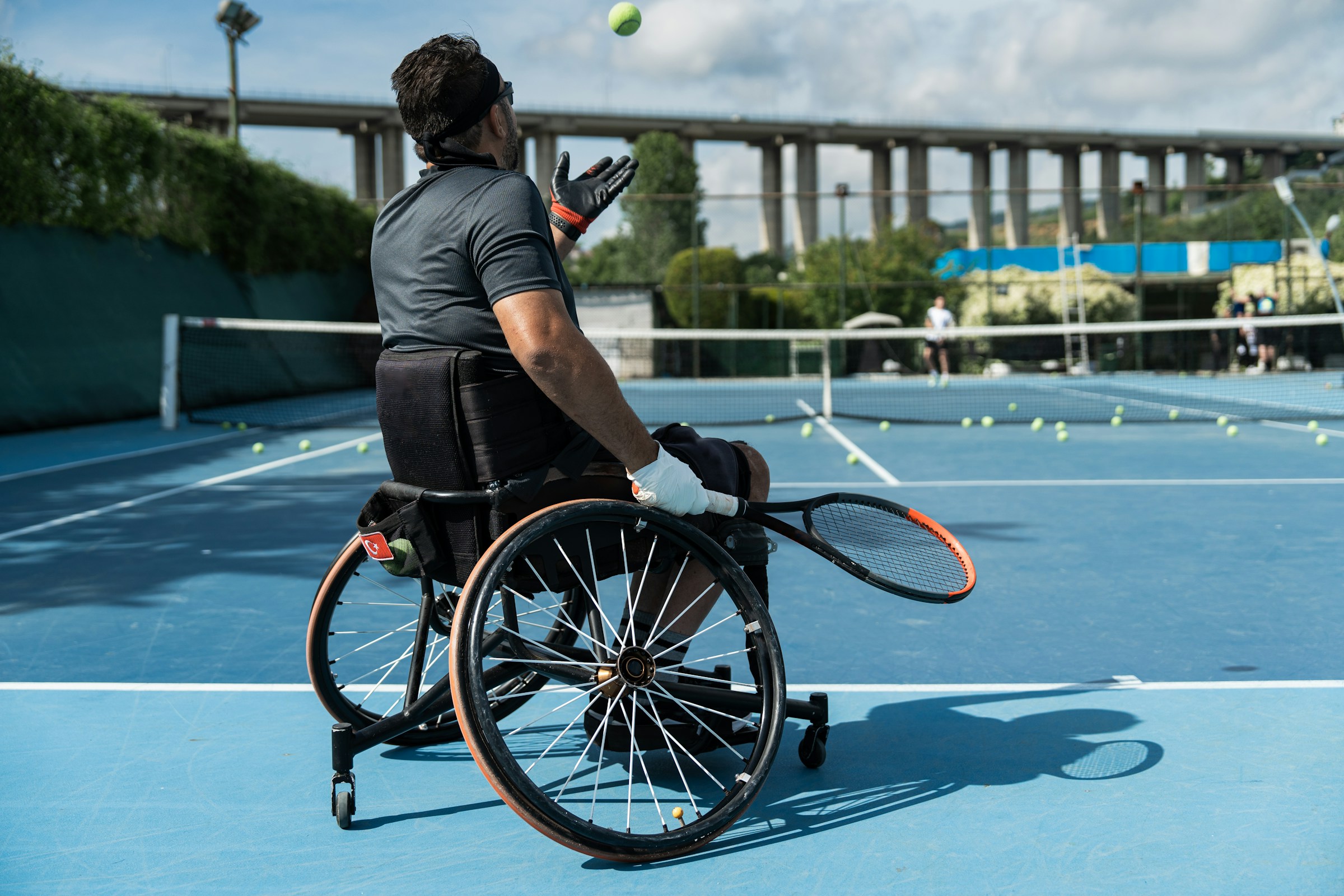
Research also suggests inclusion depends more on adult attitudes and social participation than on ramps and equipment alone. A wheelchair-accessible swing helps. An adult who lets the child lead, and helps other children include them, often helps more.
Making it work in heat, small yards and busy weeks
Screen time is the obvious trade-off. Many young children exceed the screen-time limit for their age. One US paediatric source puts the fix neatly: “Scheduling time to actively play outdoors sets a natural limit on the amount of time your child can spend with a device” (CHOP, 2025). We agree. Treat outdoor time as a fixed part of the day, like dinner, rather than a reward for when everything else is done.
Climate is the other factor for our families in Queensland and northern NSW. Summer heat and strong sun mean the middle of the day is often the worst time to be out. Early mornings and late afternoons, shaded parks, water play and covered areas make a big difference. Cancer Council’s SunSmart guidance and the daily UV index are the best places to check sun protection advice, and hats, shirts, sunscreen, water and shade belong in every outdoor routine.
None of this needs expensive equipment. Ideas that cost little or nothing include:
- a daily walk where the child chooses the route and the pace
- backyard “jobs” with real effort, like watering plants, raking leaves or carrying the washing basket
- a digging patch, a tub of water and some cups and spoons
- loose parts such as boxes, planks, buckets and old tyres
- the same local park visited regularly, so a hesitant child can build familiarity
- beach, creek or lake time with close supervision around water
For primary-aged and older children, the bigger wins are often about time and freedom:
- walking, scooting or riding to school where the route allows
- protected, unstructured time after school that isn’t filled with organised activities
- gradually allowing independent play with friends in the street or local park, starting with short, agreed boundaries
For children who find new places stressful, predictability helps. Visiting quieter parks at quieter times, showing photos of the place beforehand, and agreeing on a “calm spot” to retreat to can make the difference between a meltdown and a good afternoon.
Where therapy and NDIS funding fit
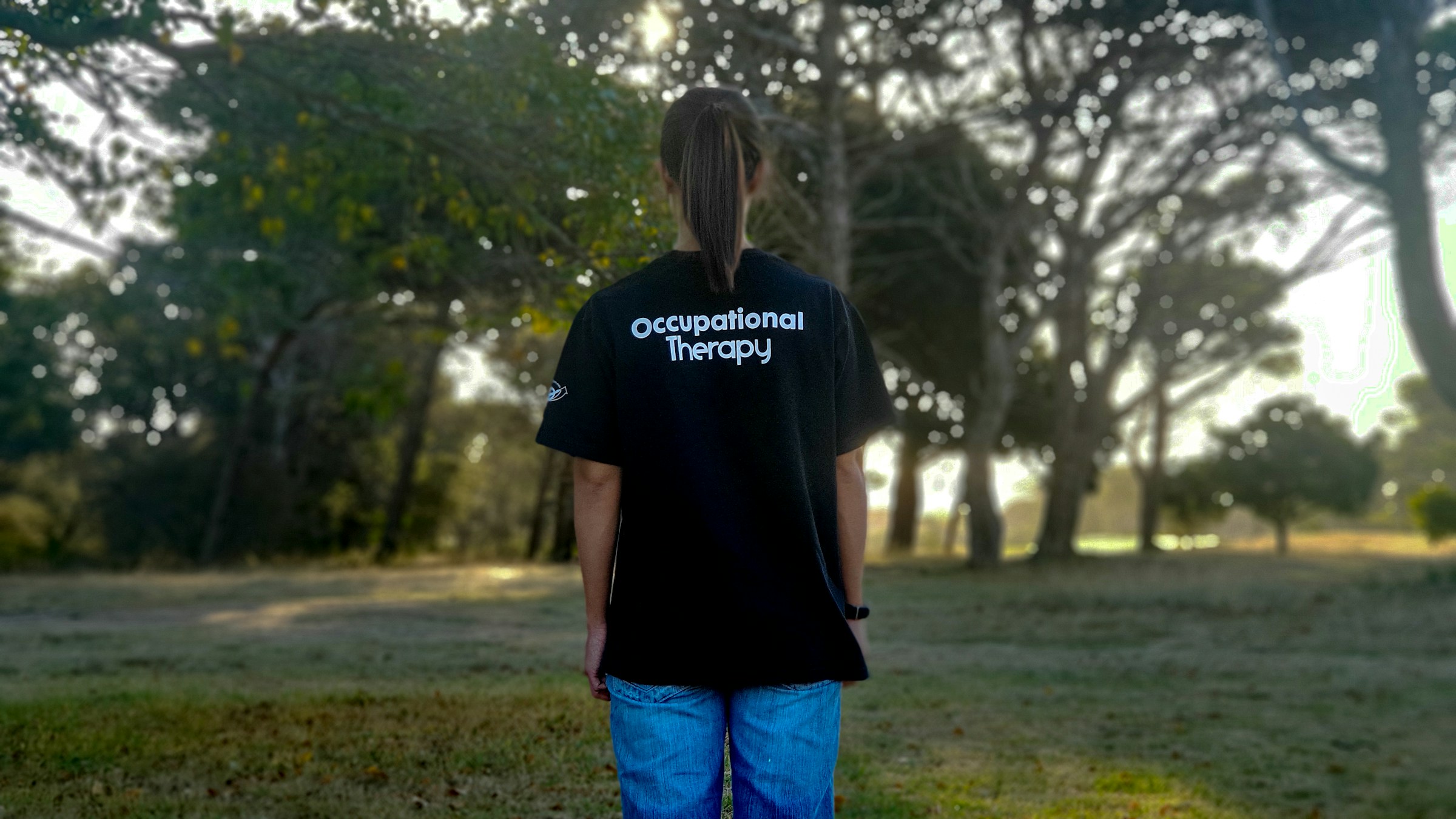
Outdoor play is not a therapy program, and most children simply need the time, space and permission to do it. For some children, though, therapy goals and outdoor play overlap naturally. An occupational therapist may work on climbing, balance, sensory regulation or confidence on playground equipment. A speech pathologist may work on joining in, turn-taking or using AAC during games. A psychologist may help a child build confidence in leaving the house or trying new places.
Because our service is mobile, sessions can happen in the places a child actually plays: the backyard, the school playground or the local park. That lets therapists see the real barriers rather than a clinic version of them, and it gives parents strategies they can try at home between sessions. Telehealth is available for families outside our mobile areas.
For NDIS participants, Astrad is not a registered NDIS provider. Families with plan-managed or self-managed funding can access our services, and plan goals around play, social participation or community access may be relevant. Funding decisions rest with the NDIA, so it is worth talking through goals with a support coordinator or planner.
If you have questions about outdoor play, sensory needs or how therapy might fit into your family’s routine, we’re happy to talk it through. Call us on 0468 552 997, email [email protected] or get in touch through the contact page on our website.
Is it okay to let my child play outside in the rain or cooler weather?
Generally yes, as long as children are dressed for the conditions and there is no lightning, flooding or strong wind. Puddles, mud and wet grass offer different textures and movement challenges that dry days do not. Many families find wet-weather play becomes a favourite once children have a raincoat and boots. If your child has a health condition affected by cold or damp, check with their doctor first.
What if we live in an apartment with no backyard?
A backyard is helpful but not essential. Local parks, school grounds after hours, footpaths, beaches and community gardens all count. Balconies can hold a small water tray, pots for digging or a few loose parts. Many families build a routine around one or two nearby spaces visited often, so the child gets to know the area and can try new challenges there over time.
How can I help a child who refuses to go outside?
Start by noticing what the child dislikes, whether it is noise, heat, other children, insects or simply leaving a preferred activity. Shorter, predictable trips to quiet places, a favourite toy brought along and a clear end time can ease the change. If refusal is ongoing or linked to anxiety or sensory distress, a qualified health professional such as an occupational therapist or psychologist can look at what is going on.
Can outdoor play be part of a therapy session at school?
Yes, where the school agrees and it suits the child’s goals. Mobile therapists can sometimes work with a child in the school playground at recess or during class time, which shows how the child manages real social and physical demands. This usually needs consent from parents and coordination with teachers, and some schools have their own policies on visiting allied health practitioners.