


NDIS Funding Guide
NDIS Home Modifications: How Funding Works
The NDIS can pay for home modifications when the change relates to your disability and passes the NDIA's reasonable and necessary test. You will usually need a report from an occupational therapist. Astrad's registered OTs write these reports and visit homes across Queensland, New South Wales, Victoria and Tasmania.
What the NDIA Weighs Up
The NDIA uses the same funding rules for every home modifications request. These 4 points usually shape how smoothly yours goes.

Your Daily Tasks

Clear OT Evidence
Itemised Quotes

Owner Consent
Who Writes the Evidence
About Astrad Allied Health
Astrad Allied Health is a mobile team of occupational therapists and speech pathologists. For home modifications, our occupational therapists visit your home and watch how you manage each task. Then they write the report that explains what needs to change and why. We don't build, quote or project manage the work. We support self-managed and plan-managed NDIS participants, and the funding decision always sits with the NDIA.
About UsOur Services
Astrad Allied Health offers a comprehensive range of services, including:
Mobile Occupational Therapy
Registered occupational therapists providing support for daily living skills, independence and participation in work, school and community activities.

Mobility Equipment Assessment
Assessment and recommendations for mobility equipment and assistive technology to support participation in daily activities across your environment.

Speech Pathology Services
Registered speech pathologists helping with communication, swallowing and language development across Queensland, NSW, Victoria and Tasmania.

Home Assessment & Modifications
Professional home evaluations identifying modifications and equipment recommendations to improve safety, accessibility and independence.

Assistive Technology Assessment
Recommendations for assistive technology solutions like communication devices, computer access & adaptive equipment to support daily participation.

Comprehensive Therapy
Complete allied health support including ongoing therapy sessions, rehabilitation programs and personalised interventions to address all your therapy needs.

Reports Built on What We See at Home
Why People Choose Astrad
Minor Work
Minor modifications are non-structural changes to 1 or 2 areas of the home. Think grab rails, a small ramp or a handheld shower fitted to an existing wall.
Complex Work
Complex modifications change the structure of the home. A full bathroom rebuild or wider doorways usually needs building approval, certified trades and more evidence before funding.
The OT Report
Your occupational therapist links each change to a task you find hard. That link between the barrier and the daily task is the core of the evidence the NDIA reads.
The NDIA Decides
The NDIA checks your request against the NDIS funding rules. A clear report helps the planner follow your case. The final decision still rests with the NDIA.
Consent First
If you rent, or live in a unit, you'll usually need written permission from the owner or body corporate. It helps to ask early, before anyone quotes.
Quotes and Builders
Complex jobs usually need 2 itemised quotes. Minor jobs may need fewer, or none. A building professional may also check that the plan can work in your home.
Reviewed by Team Astrad, October 2026.
The NDIS can fund home modifications when they link to your disability and meet its reasonable and necessary rules. Most requests need an occupational therapist’s report, and complex work also needs builder quotes. If the NDIA approves, the funding goes into the capital supports part of your plan.
Key points
- Minor work, like grab rails, leaves the structure alone. Complex work is structural, such as a bathroom rebuild.
- Category B and complex jobs call for a home modification assessor.
- If you rent, you usually need the owner’s permission in writing first.
- The NDIA makes every funding decision, and you can ask for a review if it says no.
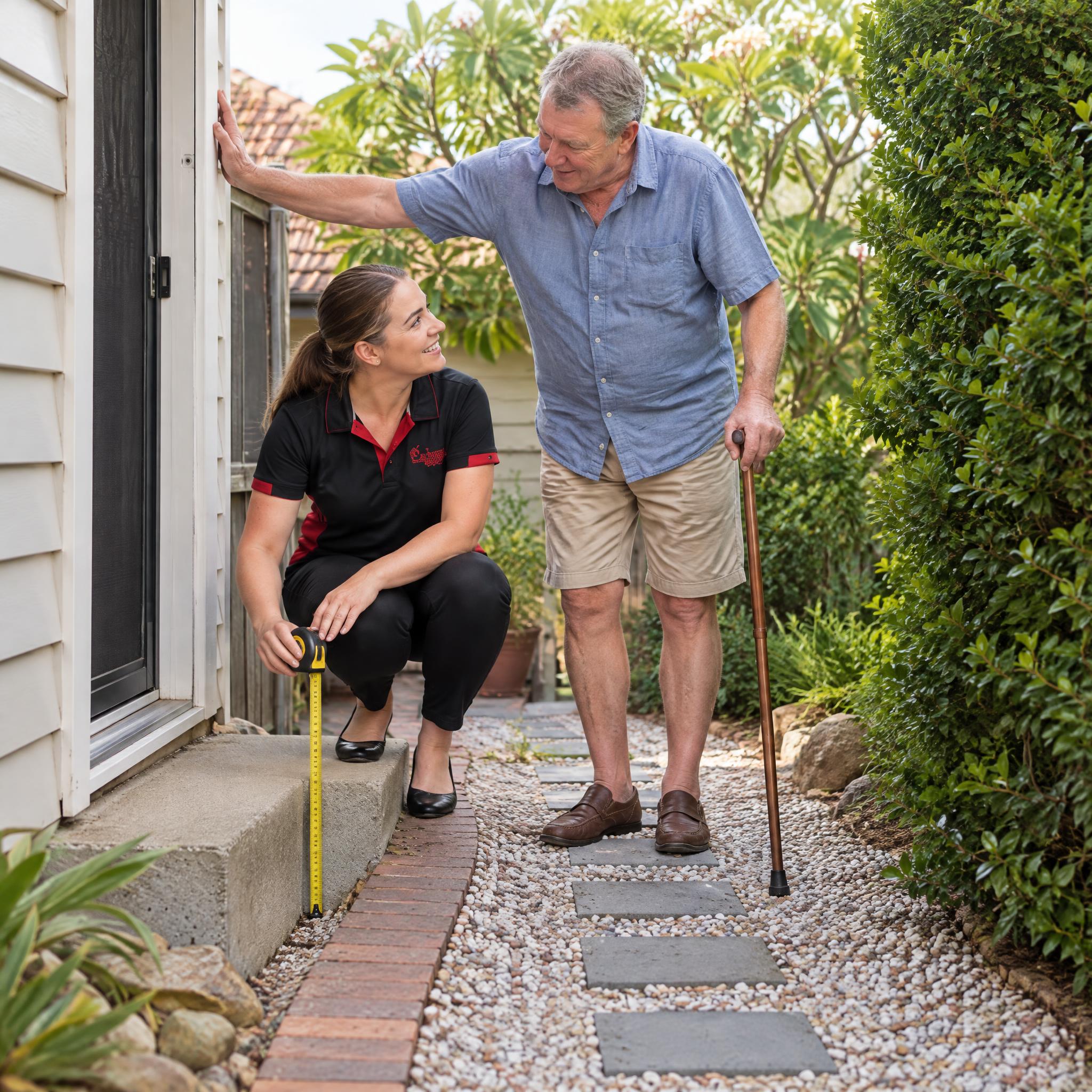
The step at your back door used to be nothing. Now it is the part of the day you plan around. You might hold the door frame with one hand and the washing basket with the other. Or you might have stopped going out there at all.
A ramp or a rail could fix it. The harder question is who pays, and how. This guide follows NDIS home modifications from the first conversation to the day the builder packs up. It covers minor and complex home modifications, NDIS evidence rules and what happens after a decision.
How Does the NDIS Fund Home Modifications?
The NDIS can fund changes to your home when they relate to your disability. They also need to help you do everyday tasks safely. The NDIS Act 2013 says funded supports must be reasonable and necessary. The NDIA tests each request against those criteria. Among other things, it asks whether the change is linked to your disability. It also weighs up value for money and whether the change is likely to work for you.
The NDIA usually sets aside approved funding in your plan for that particular job.
Minor or Complex: 2 Different Paths
The NDIA sorts home modifications into minor and complex work. Which one yours falls into changes the evidence you need.
Minor work doesn’t touch the structure of the house and usually stays within 1 or 2 rooms. Grab rails, handrails, small ramps and a handheld shower are common examples. The NDIS splits minor work into 2 categories, called Category A and Category B, based on cost and the type of work. Category B asks for a little more evidence than Category A.
Complex work alters the building itself. A bathroom rebuilt for wheelchair access is a typical example. This work usually needs building approval, licensed trades and certificates when it is finished.
The table shows how the 3 groups usually compare.
| Detail | Category A minor | Category B minor | Complex |
|---|---|---|---|
| Structural change | No | No | Yes |
| Who assesses | An occupational therapist | A home modification assessor | A home modification assessor |
| Quotes | May need fewer, or none | May need fewer, or none | Usually 2 itemised quotes |
Not sure which group your change falls into? Your occupational therapist can usually tell you after the home visit.
What Does the NDIA Need to See?
Most requests rest on 3 kinds of evidence. Each one answers a different question for the planner.
- An assessment and report from an occupational therapist, explaining what is hard and why the change helps.
- Quotes from a builder or tradesperson, when the type of work calls for them.
- Written consent from the owner, landlord or body corporate if you don’t own the home outright.
The NDIA publishes its own assessment and quote templates on the NDIS website. Using them may save a round of questions later.
Do You Need an OT Report for Home Modifications?
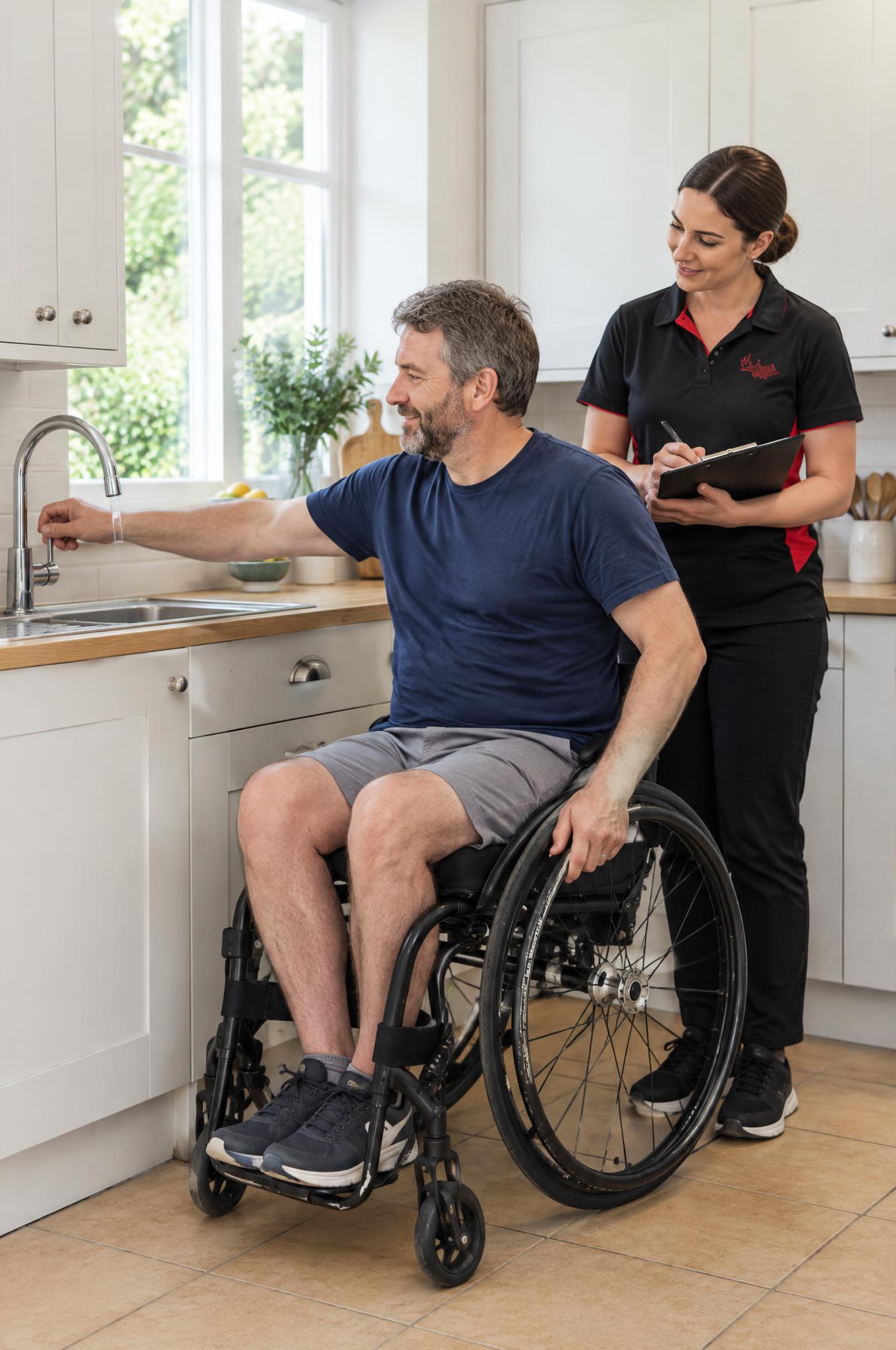
In most cases, yes. The report is the bridge between your disability and the change you want. A good one does more than say you need a rail. It says where the rail goes, which task it supports and what risk it lowers. We think vague evidence is the weak point to fix first. So we write every recommendation against a task you actually do.
For Category A work, an occupational therapist can usually write the assessment. Category B and complex work need a home modification assessor. That is an occupational therapist with specific home modification experience. Ask any assessor which categories they cover before you book.
The visit happens in your home, because that is where the barriers are. You can read what happens on the day in our guide to a home modification assessment.
Quotes, Builders and Consent
Complex work usually needs 2 itemised quotes, which help the NDIA judge value for money. In some regional towns it is hard to find 2 builders willing to quote. If that happens to you, tell the NDIA early.
For larger jobs, the NDIA may also fund a building works project manager. This person is separate from the builders who quote. They help you understand the contract and check the builder does the work as agreed.
If you rent, talk to your landlord early. Getting written permission before anyone quotes saves wasted effort on both sides.
What Happens After the NDIA Decides?
Once a request is approved, the money appears in your plan and you can book the builder. Self-managed and plan-managed participants usually have more choice about which builder they use.
You normally hold back part of the final payment until the job is finished and signed off. Before you sign, check the work matches what was approved. Try the new ramp or rail yourself while the builder is still there.
If the answer is no, ask the NDIA to explain its reasons in writing. You can ask for a review of the decision. Sometimes the gap is missing detail, and a clearer report or an extra quote can help. The outcome may still be the same, though.
How Astrad Can Help
Astrad’s occupational therapists write the assessment and the report. Builders and trades handle the works and quotes, and the NDIA makes the funding decision.
Our mobile occupational therapists travel to homes in QLD, NSW, VIC and TAS, and work with participants whose plans are self-managed or plan-managed. If the back door step has started to run your day, call us on (07) 3477 9366. We can talk through where to start.
From Visit to Decision
How the Funding Pathway Usually Runs
Call (07) 3477 9366Talk to Your Team
Raise the problem with your planner, support coordinator or plan manager. Ask whether home modifications fit your goals and your current plan.
Get the Assessment
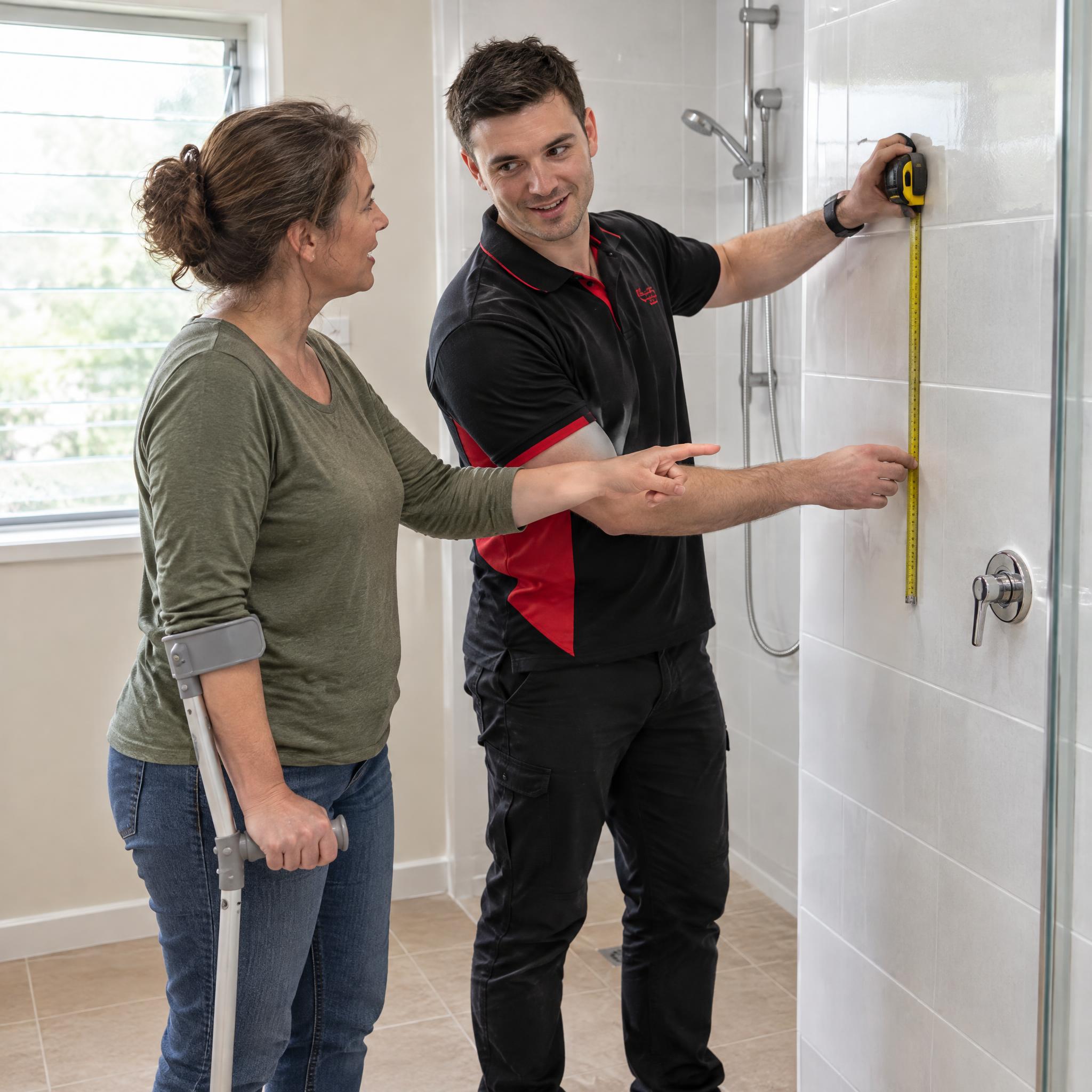
An OT visits your home and watches how you manage the hard tasks. The report then ties each change to a daily activity.
Gather Quotes
Collect quotes and any owner consent the job needs. For complex work, a building professional may check the plan and help manage the build.
NDIA Decision
The NDIA reviews your evidence. If it approves the request, it adds the funding to your plan and the builder can start the work.

Meet the People Behind Your Care
Our team is passionate about helping you achieve your goals through personalised, evidence-based care.
Meet Our TeamOur Team







Book An Appointment
Our response time is impressive



Talk to Us About Your Home
Tell us what has become hard at home. We can explain where an OT assessment fits in your NDIS plan and book a visit.
Common Questions About NDIS Home Modifications
Does the NDIS pay for home modifications?
It can. The NDIS may fund changes to your home when they relate to your disability. They also need to meet its reasonable and necessary rules. The NDIA decides based on the evidence you send, which usually includes an occupational therapy report.
How much does the NDIS pay for home modifications?
There’s no set amount. The NDIA funds what it finds reasonable and necessary, based on your report and quotes. Larger or structural jobs are treated as complex and need more evidence.
What is the difference between minor and complex home modifications?
Minor modifications are non-structural changes to 1 or 2 areas, such as grab rails or a small ramp. Complex modifications change the structure of the home, like a full bathroom rebuild. Complex work usually needs building approval and more evidence.
Do I need an occupational therapist report?
In most cases, yes. The report explains which tasks are hard and why each change helps. The higher category of minor work, and all complex work, need a home modification assessor. That is an occupational therapist with specific experience.
Can I modify a rented home through the NDIS?
Often you can. You’ll usually need written permission from the landlord, or from the body corporate if you live in a unit. Ask early, before you spend time getting quotes.
How many builder quotes do I need?
It depends on the work. Complex modifications usually need 2 itemised quotes. Minor work may need fewer, or none at all. Your planner or support coordinator can confirm what applies to your request.
What happens if the NDIA says no?
Ask for the reasons in writing. You can request a review of the decision. Sometimes a clearer report or an extra quote helps, though the result may not change.