Play is far more than a way to pass the time. For children, it is their primary occupation – the mechanism through which they understand the world, build relationships, develop skills, and grow into confident, capable individuals. Yet for many families, the question of whether their child’s play is developing as expected can sit quietly in the background, growing louder with each passing month.
What Are Play Development Milestones and Why Do They Matter?
Play development milestones are observable markers of a child’s growing capacity to engage in progressively complex play. From the earliest moments of sensory exploration in infancy to collaborative, rule-based games in the preschool years, these milestones reflect integrated development across motor, cognitive, social-emotional, sensory, and language domains.
As the Royal College of Occupational Therapists articulates, “a child playing is a child who is well, happy and included in their community and society. A child who can play has hope – to grow, to develop, to heal and connect with others” (Kolehmainen, 2023).
Within Australia’s National Disability Insurance Scheme (NDIS) framework, play-based assessment and intervention is recognised as a cornerstone of early childhood support. For occupational therapists, understanding where a child sits along the continuum of play development milestones informs every element of assessment and therapy planning.
Play development milestones are not rigid timelines. Rather, they offer a general guide to what most children demonstrate within a given age range, acknowledging that individual variation is natural and expected.
How Do Children Progress Through the Stages of Play?
Play development follows two complementary frameworks: functional classifications of play (what children do with objects and imagination) and social classifications of play (how children interact with others during play).
Functional Stages of Play
Exploratory and Sensorimotor Play (0–3 months) marks a child’s earliest engagement with the world. Infants explore through sensory input – the feel of a caregiver’s skin, the sound of a rattle, the sight of a moving mobile. Back-and-forth interaction with caregivers forms the foundation of all future play.
Functional and Relational Play (6–18 months) sees children begin to understand how objects work. Cause-and-effect play emerges – pressing a button to produce a sound, tipping and filling containers. Simple games such as peek-a-boo introduce early social engagement.
Symbolic and Pretend Play (12–30+ months) represents a significant cognitive leap. Children begin using one object to represent another – a wooden block becomes a telephone, a banana becomes a rocket. By 30 months to five years, sociodramatic play develops fully, with children assigning roles and building narratives across shared play themes.
Social Stages of Play (Parten’s Classification)
Developmental theorist Mildred Parten identified six social stages of play that remain clinically relevant for occupational therapists today:
- Unoccupied Play (birth – 3 months): Random body movement and exploration without directed purpose.
- Solitary Play (birth – 2 years): Independent play without interest in others.
- Onlooker Play (around 2 years): Watching peers play without joining; social learning occurs through observation.
- Parallel Play (2–3 years): Playing alongside others using similar materials, but without direct interaction.
- Associative Play (3–4 years): Playing together in a group with shared materials, though without organised goals.
- Cooperative Play (4+ years): Organised, goal-directed group play with assigned roles and shared objectives.
Understanding this progression helps occupational therapists identify where a child’s social play capacity sits relative to developmental expectations.
What Play Milestones Should You Expect at Each Age?
The following table provides a general overview of key play development milestones across the early childhood years. This information is general in nature and is not intended to replace a professional assessment.
| Age Range | Key Play and Developmental Milestones |
|---|---|
| 0–3 months | Tracks faces and objects with eyes; responds to sounds; engages in tummy time; reaches for objects |
| 4–9 months | Rolls front to back and back to front; transfers toys between hands; babbles; imitates actions in play |
| 10–12 months | Pulls to stand; pincer grasp emerging; drops toys into containers; waves bye-bye; first words |
| 12–18 months | Engages in pretend play; walks independently; scribbles; uses several single words; points to body parts |
| 18–24 months | Parallel play; builds a tower of 3 blocks; 2-word combinations; vocabulary exceeds 50 words; kicks a ball |
| 2–3 years | Associative play beginning; stacks 4+ blocks; follows 2-step instructions; 2–4 word sentences |
| 3–4 years | Cooperative play with peers; hops on one foot; cuts with scissors; draws a person with 2–4 body parts |
| 4–5 years | Sociodramatic play with roles and themes; skips; counts to 10; distinguishes real from pretend; prints letters |
Note: Children with premature birth histories should have milestones assessed against their corrected gestational age. These milestones are general guides; individual variation is normal.
How Does Play Support Development Across Multiple Domains?
One of occupational therapy’s most important contributions is articulating why play is not merely recreational – it is developmental work. Play development milestones reflect growth across multiple intersecting domains simultaneously.
Motor Development: Play builds both gross motor skills (balance, coordination, strength, locomotion) and fine motor skills (grasp, pincer grip, hand-eye coordination, scissors use). Motor planning and sequencing are embedded in every play activity from building blocks to obstacle courses.
Cognitive Development: Problem-solving, cause-and-effect understanding, executive functioning, attention, and object permanence all develop through play. Children learn that there are often multiple solutions to challenges – a foundational cognitive skill.
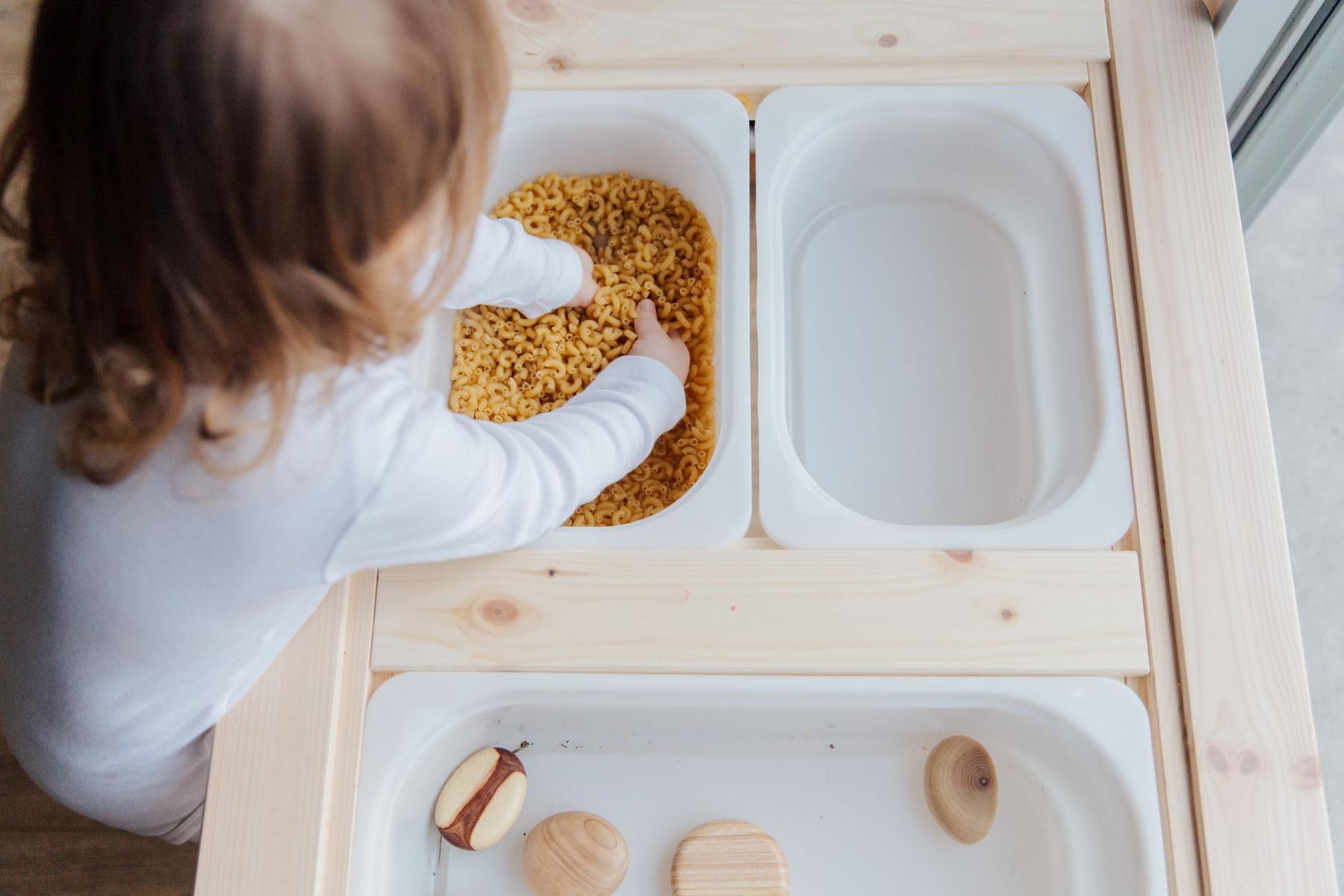
Sensory Integration: Sensory-rich play environments allow children to process and integrate vestibular (balance and spatial awareness), proprioceptive (body awareness), and tactile input. Play-based sensory exploration supports the development of self-regulation and adaptive responses.
Communication and Language: Turn-taking in play mirrors turn-taking in conversation. Play promotes vocabulary expansion, pragmatic language skills, and narrative development – all critical for literacy and social success.
Social-Emotional Development: Through play, children learn empathy, perspective-taking, emotional regulation, resilience, and self-confidence. The capacity to join a group, negotiate roles, and manage frustration during a board game are social-emotional achievements with lifelong implications.
Play, therefore, is not one thing – it is everything. For occupational therapists, this breadth is precisely what makes play such a powerful assessment and intervention tool.
What Are the Red Flags in Play Development That Warrant OT Assessment?
Recognising potential delays in play development milestones early creates opportunities for timely, effective support. The following are general indicators that may warrant further assessment by an occupational therapist or relevant health professional.
Infants (0–12 months)
- Not making consistent eye contact with caregivers
- Not showing interest in cause-and-effect toys
- Withdrawing from or resisting touch during caregiving routines
- Not imitating sounds, gestures, or facial expressions
- No purposeful reaching for objects
Toddlers (1–3 years)
- No interest in engaging with moving toys
- Not attempting to feed self with a spoon
- Limited exploration of the environment
- No pretend play or cooperative play observed
- Not using one object to represent another by 30 months
Preschool Children (3–5 years)
- Not engaging in pretend play with peers
- Still using a fisted grasp on crayons and utensils
- No established hand preference
- Difficulty with transitions between activities
- Not engaging or playing with peers
- Resistance to dressing, grooming, or toileting routines
It is important to note that this information is general in nature. If you have concerns about your child’s development, speaking with a qualified occupational therapist or your child’s paediatrician is always the recommended next step.
How Does Occupational Therapy Use Play in Assessment and Intervention?
Occupational therapists approach play from a unique perspective: play is simultaneously the primary occupation of childhood and the most effective therapeutic medium through which development is supported.
Assessment of Play Development Milestones
OT assessment of play typically combines several complementary approaches:
Observation
Watching a child play in natural environments – the home, the backyard, a childcare centre – provides invaluable insight into the quality, complexity, and spontaneity of play. Occupational therapists observe how a child moves, what they choose to engage with, and how they interact with others.
Parent and Carer Interview
Families hold essential knowledge about their child’s interests, routines, strengths, and challenges. Gathering this information ensures assessment is grounded in the child’s real-world context.
Standardised Assessment Tools
Several evidence-based tools are used within Australian OT practice, including:
- Ages & Stages Questionnaire (ASQ-3): Screens communication, gross motor, fine motor, personal-social, and problem-solving skills for children aged 1–5.5 years.
- ASQ TRAK: A culturally adapted version designed for Aboriginal Australian children at key developmental intervals.
- PEDI-CAT: Assesses functional capacity in children under seven with disability or developmental delay.
- Young Children’s Participation and Environment Measure (YC-PEM): Evaluates participation in activities across home, childcare, and community settings for children aged 0–5 years.
Play as Intervention
Play-based occupational therapy is not simply structured activity – it is intentional, individualised, and evidence-informed. Research consistently demonstrates that play-based approaches improve cognitive and behavioural outcomes more effectively than didactic instruction, particularly in early childhood (Pyle & Danniels, 2017).
Through play, occupational therapists provide graded challenges that promote adaptive responses – a concept central to sensory integration theory (Ayres, 1979). Because children find play intrinsically motivating, therapeutic goals are embedded within activities that feel natural, joyful, and meaningful.
Within Australia’s NDIS Early Childhood Approach, children younger than six with developmental delay, or younger than nine with a disability, may be eligible for support – without requiring a formal diagnosis in many circumstances. Mobile occupational therapy services, including telehealth options, ensure that families across Queensland, New South Wales, Victoria, and Tasmania can access quality support regardless of location.
Why Play Development Milestones Are a Lifelong Foundation
Understanding play development milestones is not merely an academic exercise – it is a practical, compassionate framework for supporting children to thrive. The capacity to play freely, creatively, and with others is foundational to learning, relationships, and wellbeing across the lifespan.
Occupational therapy recognises that every child plays differently, develops at their own pace, and brings unique strengths to every interaction. Play development milestones offer a road map, not a rigid destination. When families, educators, and health professionals share a common understanding of that road map, children receive the informed, timely, and holistic support they deserve.
Have questions? Need help? Contact Astrad Occupational Therapy today.
What are the most important play development milestones to watch for in toddlers?
Key play development milestones in toddlers (1–3 years) include the emergence of pretend play, parallel play alongside peers, building simple block towers, using two-word phrases during play, and beginning to use objects symbolically. Imitating caregivers and showing interest in cause-and-effect activities are also important indicators.
When should I consider an occupational therapy assessment for my child’s play development?
If your child is not reaching age-appropriate play milestones, shows limited interest in typical play activities, avoids sensory experiences, or has difficulty interacting with peers, it may be time to consult an occupational therapist. Early assessment helps identify strengths and areas for targeted support.
What does a play-based occupational therapy session look like?
A play-based occupational therapy session is conducted in familiar, comfortable settings such as the home or community environments. The session is guided by the child’s interests and developmental needs, incorporating activities like sensory play, role-playing, and movement games to naturally embed therapeutic goals.
How does the NDIS support children with play development delays in Queensland and across Australia?
Under the NDIS Early Childhood Approach, children under six with developmental delays, or under nine with a disability, may be eligible for funded early childhood supports—including occupational therapy—often without a formal diagnosis. Functional, play-based assessments guide the support provided.
Can I access occupational therapy for play development concerns via telehealth?
Yes, telehealth occupational therapy is available and offers an accessible option for many families. It allows therapists to observe children in their home environments, conduct parent interviews, and provide tailored strategies, although suitability depends on the child’s age, needs, and goals.