Reading and Spelling
We support early reading, spelling and classroom language. Where the school agrees, your speech pathologist can visit and share ideas with your child's teacher.
Speech Therapy Across the Tweed
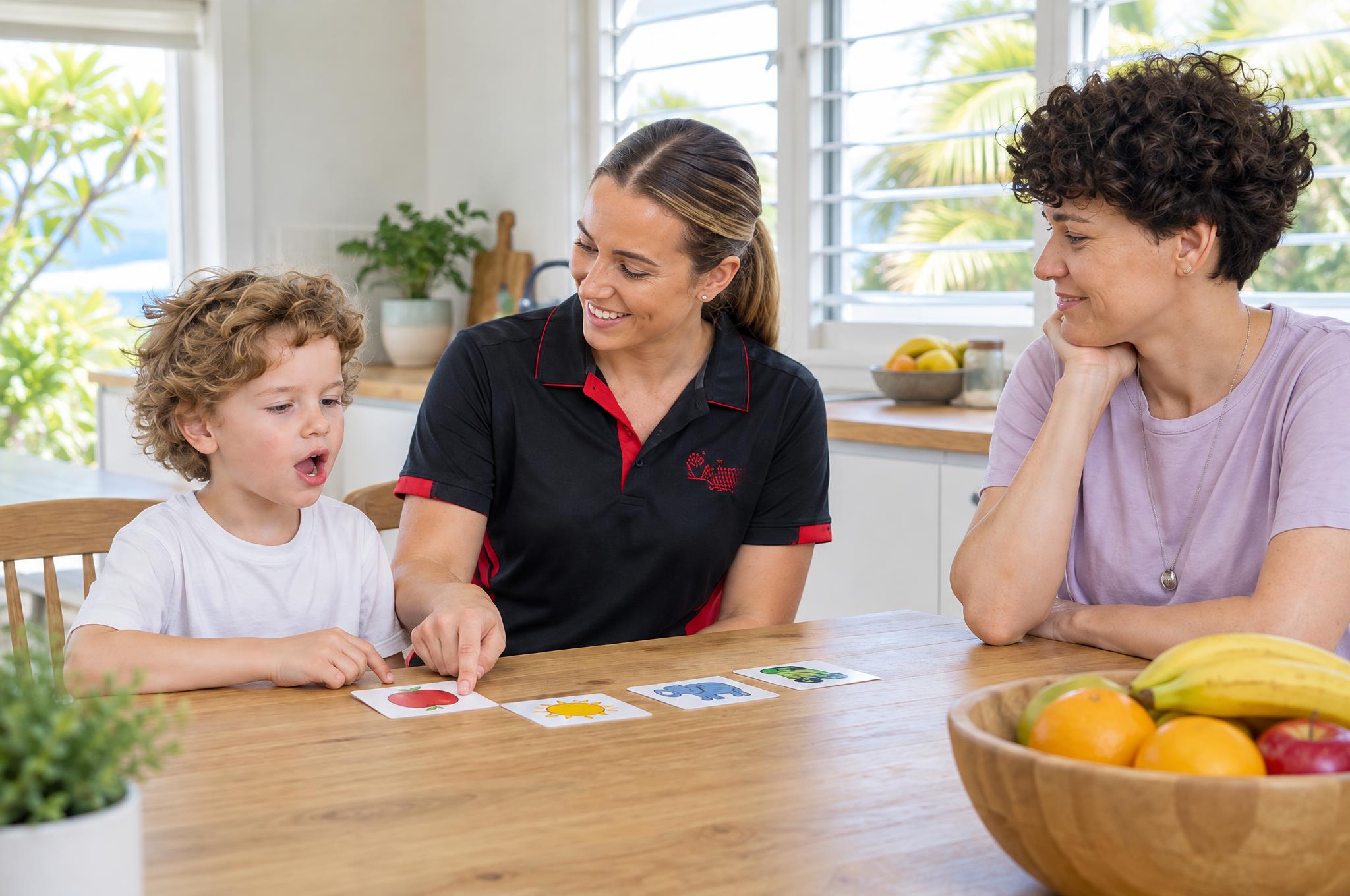
Our speech pathologists visit homes, schools and childcare centres across Tweed Heads, for children and adults. Picture your child at the kitchen table, trying to get a tricky word out before school.
Home, School, Childcare or Community
Astrad's speech pathologists visit you at home or at your child's school in Tweed Heads and nearby suburbs. They work with toddlers, school-age children, teens and adults. They are certified with Speech Pathology Australia. We see NDIS participants who self-manage or use a plan manager, plus aged care and private clients.
There are 3 steps between your first call and a working plan.
Tell us who needs support, what you'd like to change and your address. We'll talk through where sessions would work best for you.
Your speech pathologist comes to you and looks at speech, language, voice or swallowing, depending on what you need help with.
Together you set goals and a therapy plan. Sessions can carry on over time, and telehealth can help with practice between visits.
Children, Teens and Adults
Every plan starts with daily life: the words, meals and conversations that matter in your house.
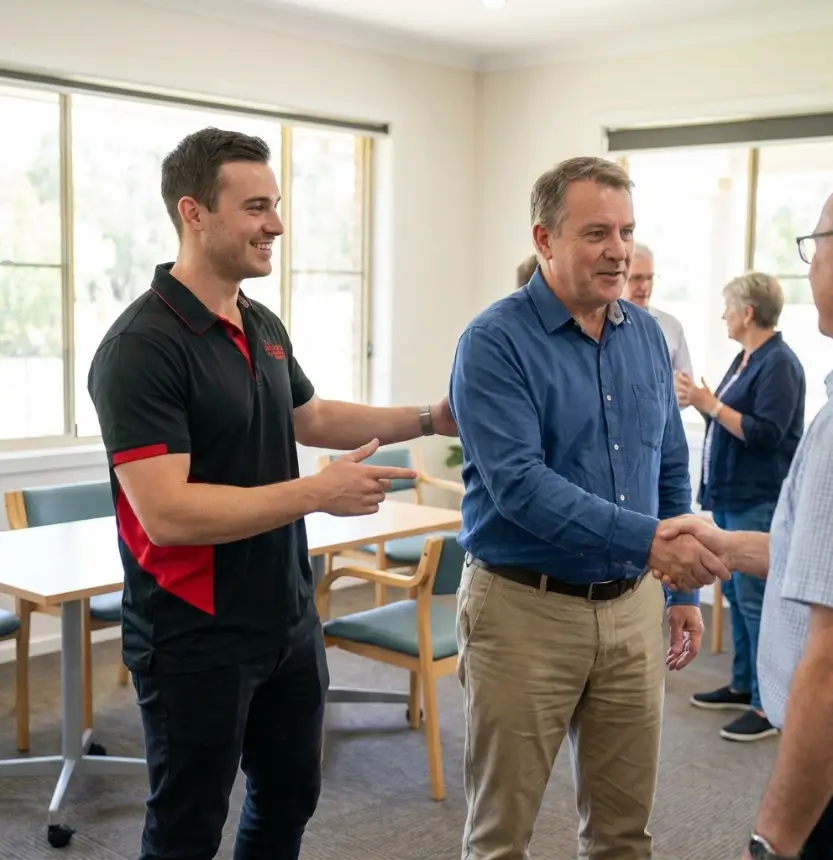
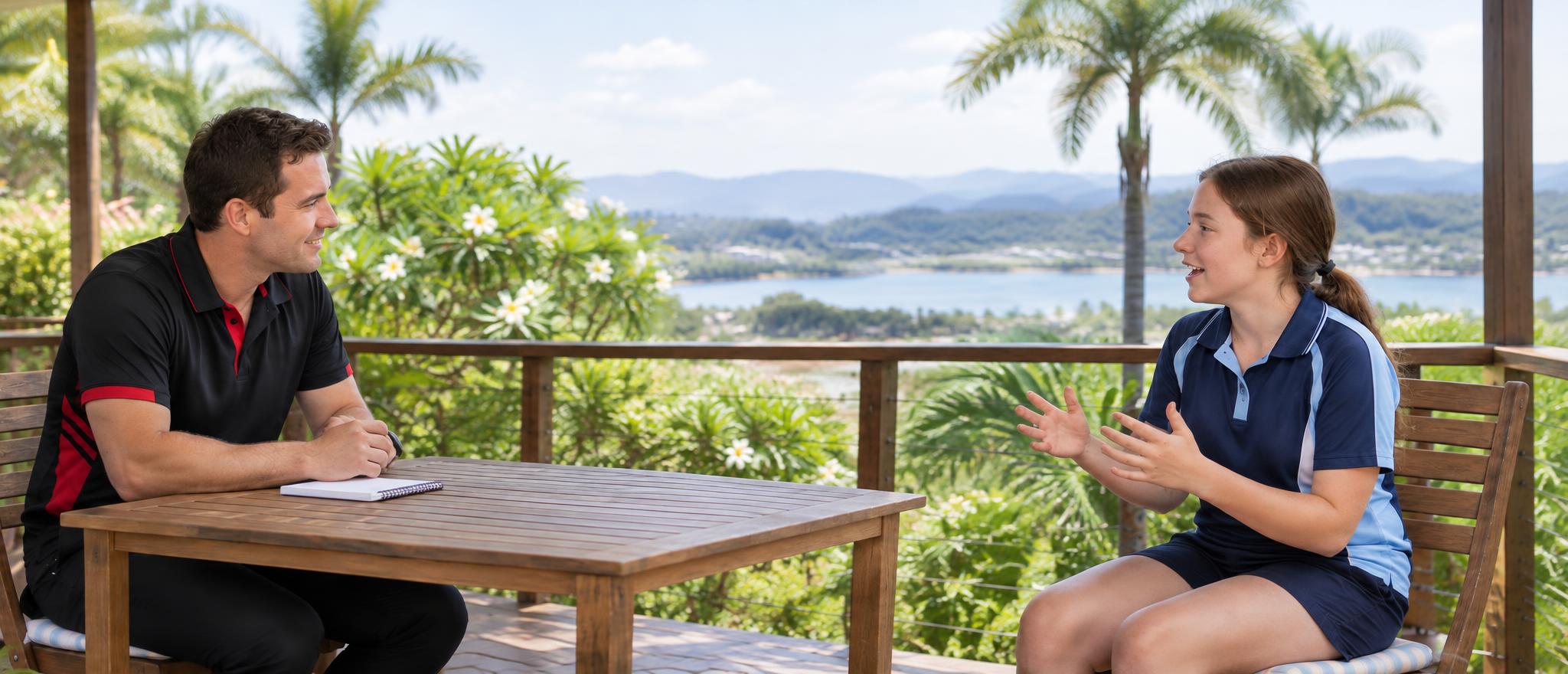
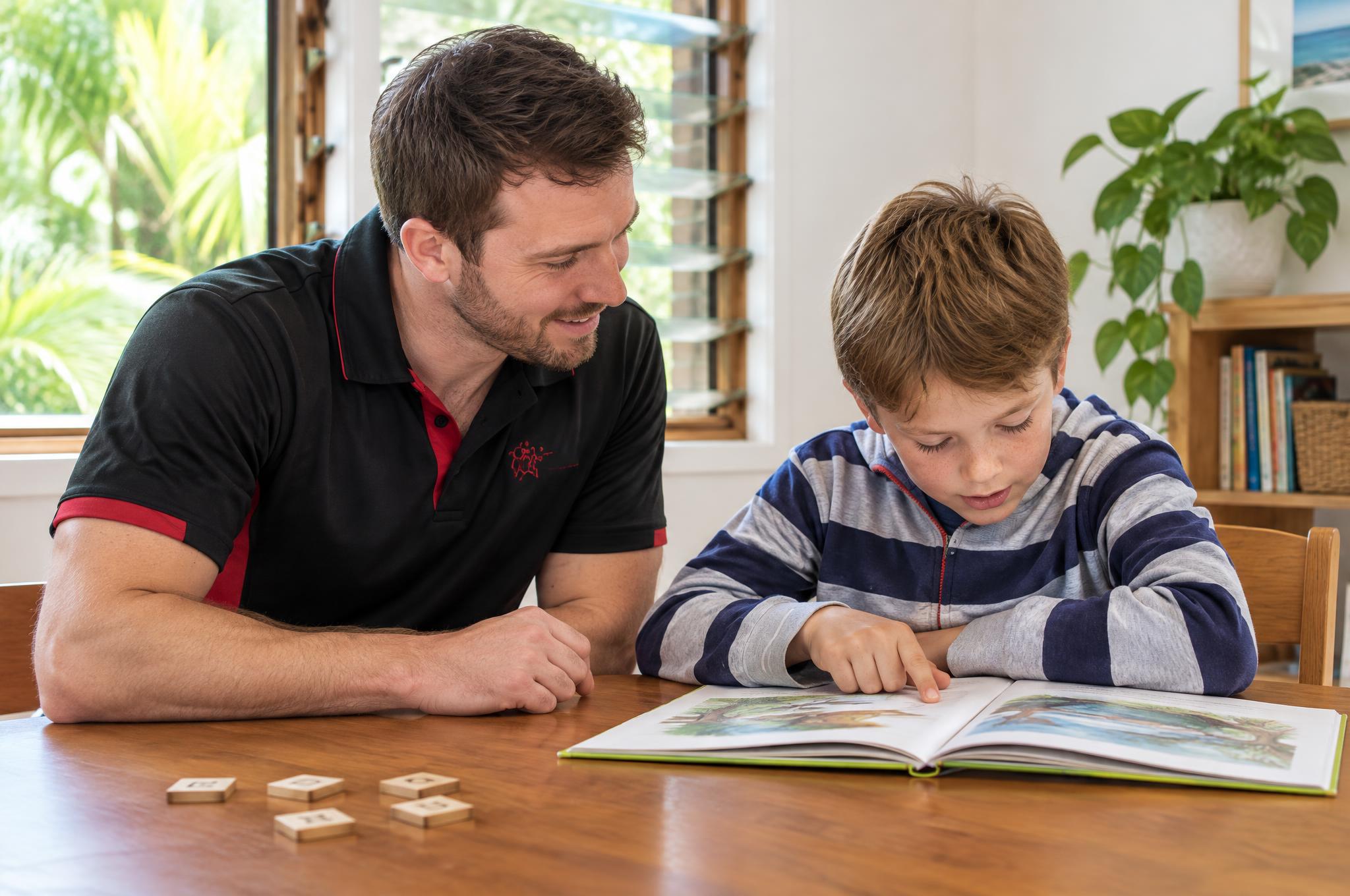
We support early reading, spelling and classroom language. Where the school agrees, your speech pathologist can visit and share ideas with your child's teacher.
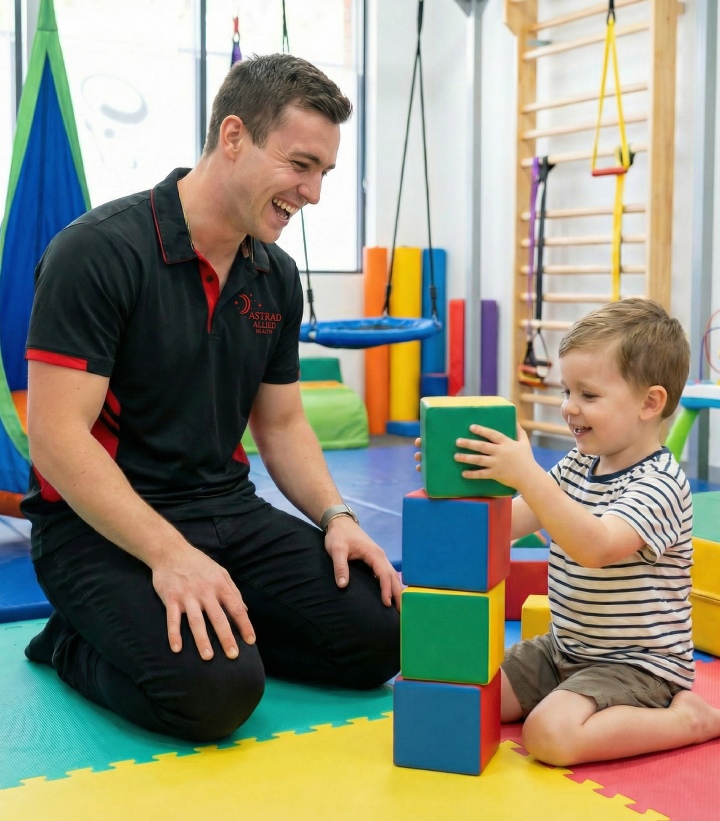
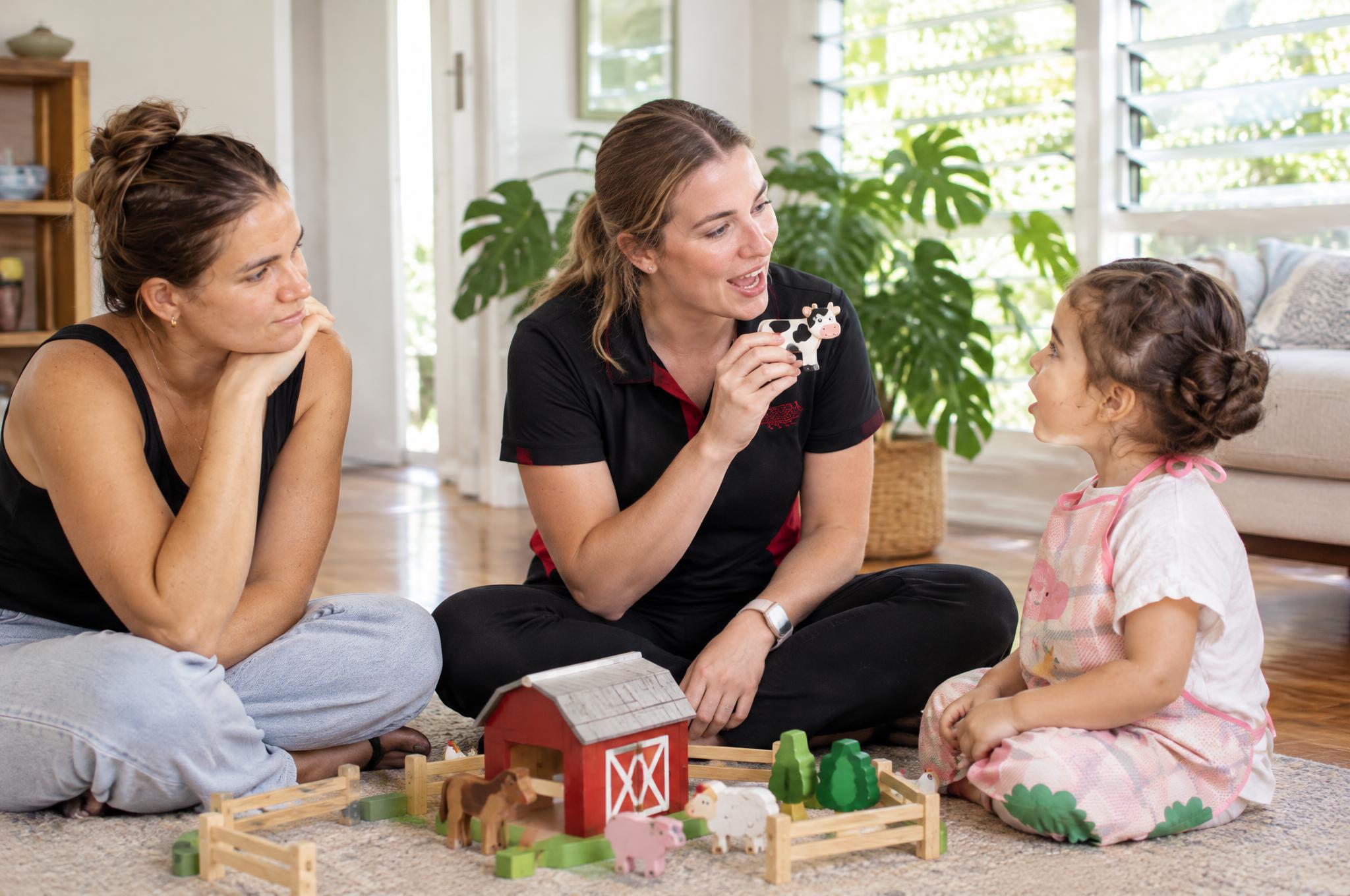
Some toddlers say fewer words than expected or are hard to understand. We use play, books and daily routines, so you can keep practising between visits.
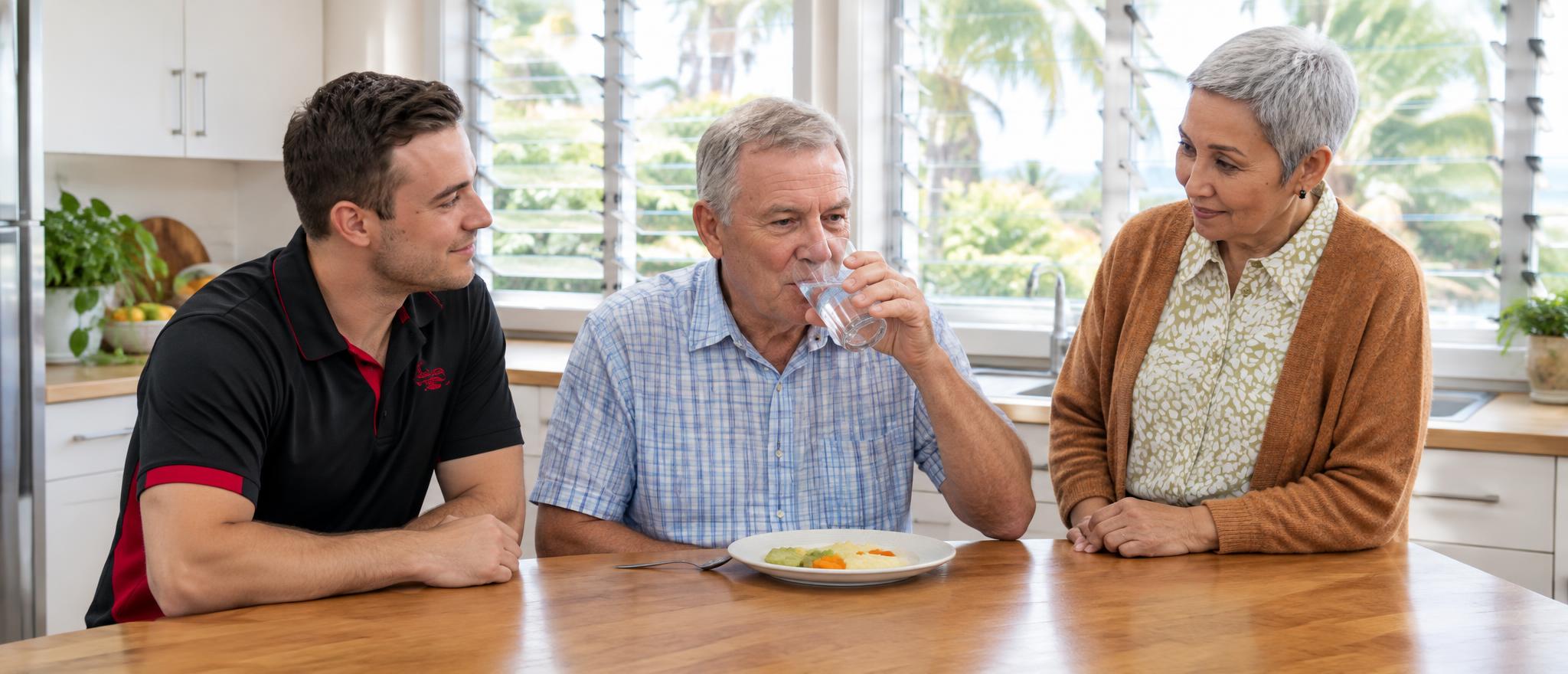
Coughing during meals can be a sign worth checking. We assess eating and drinking in your own kitchen, then suggest changes to food, drinks and positioning.
Stuttering can make school, work or phone calls feel hard. We work with children, teens and adults on smoother speech and on feeling confident talking.
Reviewed by Team Astrad, October 2026.
At a glance:
Astrad works in both Queensland and New South Wales, so the border doesn’t decide whether we can see you. On the Queensland side, we also offer mobile speech pathology on the Gold Coast. One small tip: in summer, NSW clocks run an hour ahead of Queensland. When you book, let us know which side of the border the visit is on.
Tweed Heads is the northernmost town in New South Wales. It runs straight into Coolangatta on the Gold Coast, and plenty of families cross that line every day. You might live in Banora Point, work over the border and have a child at school in Tweed Heads South.
Yes. Tweed Heads sits inside our day-to-day travel area, so we can offer ongoing speech pathology here, as well as assessments. Speech therapy usually works through practice over time. A single visit can give you a plan, but progress tends to come from sessions that keep going.
Along with Casino and Lismore, Tweed marks the furthest point we reach day to day near the Queensland border. You can read more about allied health across the Northern Rivers and the other towns in this area.
Our speech pathologists travel in to see you. How often you have sessions depends on your goals and your funding. Your speech pathologist will talk this through with you after the first assessment.
Our speech pathologists work with toddlers, school-age children and teens. Sessions can happen at home, at childcare or at school, where the setting agrees. Children are often more relaxed in a place they know. That helps us see how they talk on an ordinary day.
Parents often call when a child is talking later than other kids the same age. Others notice speech that strangers find hard to follow. Some children find reading and spelling harder once school starts.
You’re part of the session too. We’ll show you short activities that fit into meals, bath time or the drive to school.
Speech, language and swallowing can change after a stroke or a brain injury. They can also change with conditions such as Parkinson’s disease or dementia. Our speech pathologists work on finding words, speaking clearly and feeling confident in conversation.
We check swallowing at home, with your usual food and cups. That shows us how meals go on a normal day. Your speech pathologist may then suggest different food textures, cups or seating to suit your routine. Family members are welcome to join in, and they often pick up ways to make talking at home easier.
If talking has become hard for you or someone you love, you’re far from alone. Speech Pathology Australia points to ABS survey data from 2015. That survey found about 1.2 million Australians have some level of communication disability.
We travel to these suburbs and towns around the Tweed:
If you live further out in the Tweed Shire, contact us to check we can reach your address.
Most of the families and adults we see pay for sessions in one of these ways:
Many people use NDIS funding for speech pathology. It usually sits under Capacity Building, Improved Daily Living. We support self-managed and plan-managed NDIS participants, and the NDIA decides what your plan covers.
Call (07) 3477 9366 or send us a message with your suburb and a little about your goals. If a family member is making the call for you, that’s fine too. We’ll then book a first visit at your home, school or childcare.
Progress looks different for everyone, and individual results vary.
Yes. Our speech pathologists travel to your home, school, childcare centre or a community setting in and around Tweed Heads. We don’t have a walk-in clinic, so there’s no trip to make. Visits suit both children and adults. Many people find therapy easier in a familiar place, with their own toys, books or kitchen. Send us your address and we’ll confirm we can reach you.
Yes. Astrad works in both Queensland and New South Wales. We visit Tweed Heads and nearby areas on the NSW side, and suburbs across the Gold Coast on the Queensland side. If you live on one side and your child goes to school on the other, tell us when you call. We can talk through which setting suits each session best.
Yes. Tweed sits inside our day-to-day travel area near the Queensland border, so ongoing therapy is workable here. After the first assessment, your speech pathologist sets goals with you. You’ll agree together on how sessions run, based on your child’s needs and your funding. Telehealth can also help with practice between home visits.
Speech pathology is often funded through an NDIS plan, usually under Capacity Building, Improved Daily Living. We support self-managed and plan-managed NDIS participants. The NDIA decides what your plan funds, so check your plan or ask your plan manager. This is general information only, and every plan is different.
Yes. We support adults whose speech, language or swallowing has changed after a stroke or brain injury. We also see people living with progressive conditions such as Parkinson’s disease or dementia. Swallowing is assessed at home, during a usual meal, with your own food and cups. Family members can join in. Results vary from person to person.
Our speech pathologists are certified with Speech Pathology Australia, the national professional body for the profession. Speech pathology is self-regulated in Australia, so this certification is the standard to look for. If you’d like to know more about who will visit you, ask us when you call. We’re happy to talk through their background and experience.
Tell us what you’d like to work on and where you live. We’ll explain the next steps and arrange a first visit that suits you.
Supporting Positive Change