
Registered Speech Pathology for Articulation Disorders Across Australia
Speech Therapy for Articulation Disorders
Helping children and adults produce speech sounds clearly and confidently. Our registered speech pathologists deliver personalised articulation therapy through mobile services, telehealth, and clinic sessions across Australia. NDIS registered provider with flexible funding options available.
Start Your Journey to Clearer Speech
Every person with an articulation disorder has unique speech sound patterns and goals. Our speech pathologists take the time to understand your specific needs, develop a tailored therapy plan, and support you at every step towards clearer, more confident communication.
Registered Professionals
Flexible Scheduling
NDIS & Private Options
Family-Focused Care

Our Approach to Articulation Therapy
Assessment
We take time to understand each individual's speech sound profile, identifying error patterns, stimulability, and the impact of articulation difficulties on daily communication and confidence.
Collaboration
We work alongside families, educators, and other health professionals to ensure consistent support. Coordinated practice at home and school helps speech sound improvements carry over into everyday communication.
Progression
Articulation therapy follows a structured hierarchy, moving from sound isolation to words, sentences, and conversation. We celebrate each milestone and adjust targets as sounds are mastered to maintain steady progress.
Empowerment
Our goal is to support confident, clear communication. We equip clients and families with the skills and strategies to continue building speech clarity independently, fostering long-term success beyond the therapy room.

Why Choose Astrad for Articulation Speech Therapy?
Registered Speech Pathologists Supporting Clear Communication
Articulation Assessment and Diagnosis
Our speech pathologists are experienced in assessing the full range of articulation errors, including substitutions, omissions, distortions, and additions. We use standardised assessment tools alongside informal measures to build a complete picture of speech sound development and identify the most effective starting points for therapy.
Mobile and Telehealth Services
We bring articulation therapy directly to you. Our speech pathologists deliver services in your home, school, childcare centre, or workplace. Telehealth sessions are also available for families in regional or remote areas, making it easier to maintain consistent therapy without travel.
Evidence-Based Therapy Approaches
We use therapy approaches supported by current research for articulation disorders, including traditional articulation therapy, phonological approaches, and motor-based interventions such as PROMPT. Our speech pathologists select the approach best suited to each individual's error patterns and learning style.
NDIS Registered Provider
Astrad Allied Health is an NDIS provider. We can help you access your NDIS funding for articulation speech therapy, whether you are plan-managed or self-managed. We also offer private fee options for eligible clients.
Family-Centred Practice
Parents and carers play a vital role in articulation therapy. We provide clear home practice activities, coach families on how to support correct sound production in everyday conversations, and maintain open communication about progress and goals throughout the therapy process.
Certified Practising Speech Pathologists
All our speech pathologists are certified practising members of Speech Pathology Australia and hold current Working with Children Checks. Our team maintains ongoing professional development in articulation and phonological interventions to deliver best-practice care.
How Speech Pathology Supports Articulation Development
Articulation therapy focuses on teaching the correct placement and movement of the tongue, lips, and jaw to produce clear speech sounds. Our speech pathologists use evidence-based techniques including auditory discrimination training, phonetic placement cues, and structured practice hierarchies. Therapy progresses from producing sounds in isolation, to syllables, words, sentences, and finally natural conversation. Each stage builds on the last to support lasting improvement in speech clarity.

- 1
Speech Sound Assessment
We conduct a thorough assessment of all speech sounds, identifying which sounds are affected and the specific error patterns involved. This includes standardised testing, conversational speech sampling, and oral motor examination to understand the underlying cause of articulation difficulties.
- 2
Personalised Therapy Plan
Based on assessment results, we create a tailored therapy plan targeting specific speech sounds in a developmental sequence. Your plan includes clear goals, practice strategies for home, and a realistic timeline for progress based on your individual needs.
- 3
Ongoing Therapy and Review
Regular therapy sessions build speech sound accuracy through structured practice and real-world conversation. We monitor progress at each session, adjust targets as sounds are mastered, and provide families with home practice activities to support carryover between sessions.
Articulation Speech Therapy Services
Speech Sound Areas We Address
Our speech pathologists can support development across a range of articulation and speech sound difficulties, tailored to each individual's needs and developmental stage.
Sound Substitutions
Support for replacing one sound with another, such as saying 'wabbit' for 'rabbit' or 'tat' for 'cat'. We work on building awareness of the target sound and developing the motor skills needed for accurate production.
Sound Omissions
Help with leaving out sounds in words, such as saying 'nana' for 'banana' or 'poon' for 'spoon'. Therapy focuses on producing all sounds in the correct positions within words and connected speech.
Sound Distortions
Support for sounds that are produced inaccurately, such as a lateral or frontal lisp on 's' and 'z' sounds. We use placement cues and visual feedback to guide correct tongue and lip positioning for clearer production.
What Parents Should Know About Articulation Therapy
If your child has difficulty producing certain speech sounds clearly, you may be wondering whether articulation therapy could help. Many children develop speech sounds at different rates, and some sounds are naturally acquired later than others. A speech pathology assessment can clarify whether your child’s sound development is within the typical range or whether therapy may be beneficial. Early identification and support can help prevent articulation difficulties from affecting confidence, social interactions, and literacy development as your child grows.
Frequently Asked Questions
What is speech therapy for articulation disorders?
Speech therapy for articulation disorders helps children and adults who have difficulty producing specific speech sounds correctly. An articulation disorder occurs when someone consistently substitutes, omits, distorts, or adds sounds, making their speech harder for others to understand. A registered speech pathologist identifies exactly which sounds are affected, determines the underlying cause, and uses targeted, evidence-based techniques to develop clear and accurate speech production through structured practice.
What are common signs of an articulation disorder?
Common signs include replacing one sound with another (such as “wabbit” for “rabbit” or “tum” for “come”), leaving sounds off the ends of words, distorting sounds like “s” or “r”, or being difficult for unfamiliar listeners to understand. In children, some sound errors are developmentally normal at certain ages. However, if a child’s speech is significantly harder to understand than their peers, or sound errors persist past the age they are expected to resolve, a speech pathology assessment can determine whether therapy is needed.
At what age should a child be assessed for articulation difficulties?
If your child is difficult for unfamiliar listeners to understand by age three, or is still making sound errors that their peers have outgrown by age four to five, it is worth seeking a speech pathology assessment. Most children follow a predictable pattern of sound development, and your speech pathologist can compare your child’s speech against these milestones. Early intervention is generally more effective because speech patterns become more habitual over time. That said, articulation therapy can help at any age, so it is never too late to seek support.
How does articulation therapy work?
Articulation therapy follows a structured progression. Your speech pathologist first identifies the specific sounds affected and the error patterns involved. Therapy then works through stages: producing the target sound correctly in isolation, then in syllables, then in single words, then in sentences, and finally in natural conversation. Techniques include auditory discrimination (hearing the difference between correct and incorrect productions), visual and tactile cues for tongue and lip placement, and repeated practice with real-time feedback. Sessions are tailored to the individual’s age and learning style to keep them engaged and progressing.
Does NDIS funding cover speech therapy for articulation disorders?
Yes, speech therapy for articulation disorders is commonly funded through NDIS plans under Capacity Building Supports, specifically Improved Daily Living. Funding can cover initial assessments, ongoing therapy sessions, home practice programs, and progress reports. The funding available depends on your individual plan goals and level of support needed. Our team helps you understand how your NDIS plan applies to speech therapy and works within your budget to deliver the best outcomes. We also accept private and other funding pathways.
What happens during an articulation assessment?
Your speech pathologist evaluates how the individual produces all speech sounds in different word positions, beginning, middle, and end. The assessment involves naming pictures, repeating words and sentences, and a conversational speech sample to observe sound production in natural talking. The speech pathologist also examines the oral structures, including the lips, tongue, jaw, and palate, to check for any physical factors contributing to the difficulty. Results identify which sounds are affected, the severity of the disorder, and whether the errors follow a pattern. This information is used to develop a targeted therapy plan.
How do I book articulation therapy with Astrad?
You can book an initial assessment through our website or by calling our team. No GP referral is required, though we accept referrals from GPs, paediatricians, teachers, childcare centres, support coordinators, and other health professionals. At the first appointment, your speech pathologist conducts a thorough assessment and discusses goals, funding options, and a recommended therapy plan. Astrad delivers speech therapy through our mobile service across Queensland, New South Wales, Victoria, and Tasmania, with sessions in the home, school, or community setting.
Ready to Improve Speech Clarity?
Contact us to discuss how our articulation speech therapy services may support clearer communication. We offer mobile services across Australia, telehealth options, and flexible scheduling to fit your routine.
Book a ConsultationOur Allied Health Services
Astrad Allied Health offers a comprehensive range of services to support your health and independence. Our registered professionals deliver mobile and telehealth services across Australia.
Mobile Occupational Therapy
Registered occupational therapists providing support for daily living skills, independence and participation in work, school and community activities.
Mobility Equipment Assessment
Assessment and recommendations for mobility equipment and assistive technology to support participation in daily activities across your environment.
Speech Pathology Services
Registered speech pathologists helping with communication, swallowing and language development across Queensland, NSW, Victoria and Tasmania.
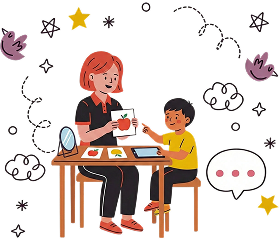
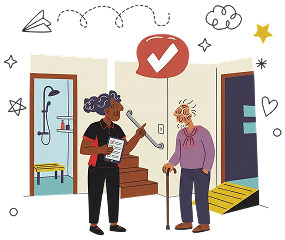
Home Assessment & Modifications
Professional home evaluations identifying modifications and equipment recommendations to improve safety, accessibility and independence.
Assistive Technology Assessment
Recommendations for assistive technology solutions like communication devices, computer access & adaptive equipment to support daily participation.

Comprehensive Therapy
Complete allied health support including ongoing therapy sessions, rehabilitation programs and personalised interventions to address all your therapy needs.