
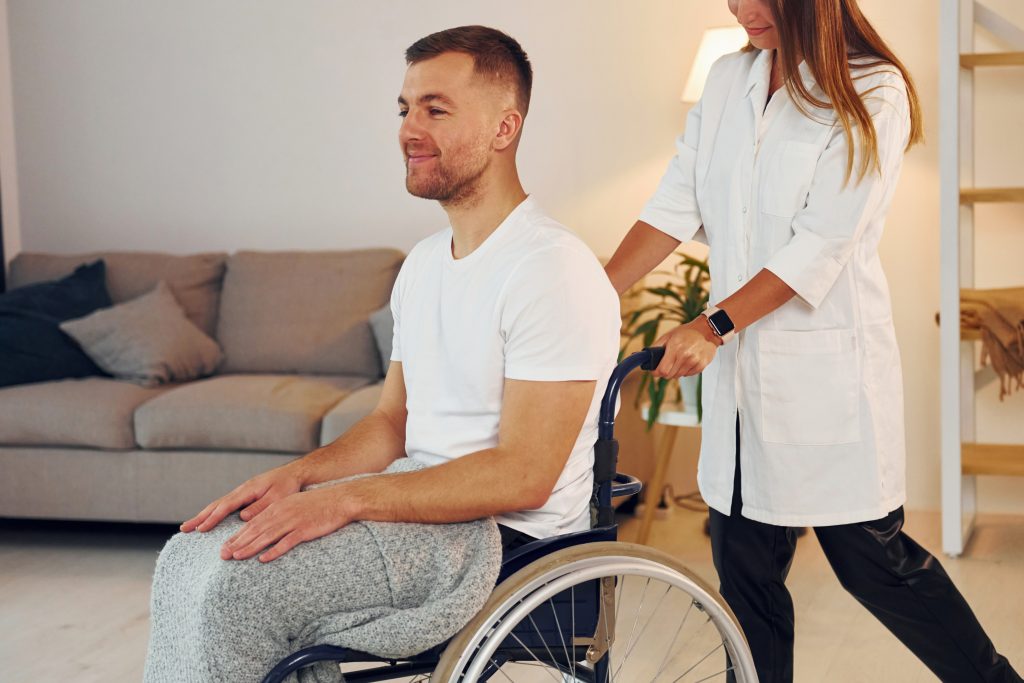
AHPRA-Registered Occupational Therapists Across Australia
Occupational Therapy for Spinal Cord Injury
Rebuilding independence after spinal cord injury takes expert guidance and personalised support. Our registered occupational therapists deliver mobile therapy in your home across QLD, NSW, VIC, and TAS, helping you adapt daily activities, access assistive technology, and regain confidence in everyday life.
Supporting Independence After Spinal Cord Injury
A spinal cord injury changes how you interact with the world, but it does not have to define your independence. Our mobile occupational therapy focuses on practical solutions that help you adapt daily tasks, modify your home, and access the assistive technology you need to live life on your terms.
Evidence-Based Practice
Flexible Scheduling
Family Involvement
Collaborative Care
Our Approach to Spinal Cord Injury Occupational Therapy
Understanding
We recognise that every spinal cord injury is different, and your rehabilitation path is uniquely yours. We take time to understand your level of injury, your goals, and your daily challenges, then build a therapy plan that reflects what matters most to you.
Collaboration
We work closely with you, your family, rehabilitation physicians, physiotherapists, and other health professionals to ensure coordinated care. This collaborative approach helps us deliver occupational therapy that fits within your broader rehabilitation plan.
Accessibility
We believe rehabilitation support should be accessible wherever you are. That is why we bring spinal cord injury occupational therapy to your home, removing the challenges of travelling to a clinic and allowing us to address barriers in your actual environment.
Excellence
We stay current with the latest spinal cord injury research, assistive technology developments, and rehabilitation techniques, continuously improving our practice to deliver the best outcomes for our clients.

Why Choose Astrad for Spinal Cord Injury Occupational Therapy
Experienced SCI Support from Registered Occupational Therapists
SCI-Informed Approach
Our occupational therapists understand the complex functional challenges that follow spinal cord injury. We use evidence-based rehabilitation strategies tailored to your level of injury, whether cervical, thoracic, or lumbar, to maximise your independence and quality of life.
Therapy in Your Home Environment
Spinal cord injury occupational therapy is most effective in the environment where you live. We deliver mobile sessions in your home, where we can assess real barriers, trial equipment, and practise daily tasks in the spaces you actually use.
Whole-Person Support
Spinal cord injury affects far more than physical mobility. Our occupational therapy addresses self-care, home accessibility, assistive technology, community participation, and emotional adjustment, supporting you across every area of daily life.
NDIS and Private Options
We are an NDIS provider and support participants with spinal cord injury through capacity-building funding. We also work with private clients, those with GP referrals, and individuals accessing compensation or insurance pathways.
Practical, Measurable Progress
We focus on functional outcomes that matter to you. Whether that means transferring independently, preparing meals from a wheelchair, or returning to work, we set meaningful goals and track your progress at every stage.
AHPRA-Registered Therapists
All Astrad occupational therapists are registered with AHPRA and committed to evidence-based rehabilitation. We bring clinical knowledge and genuine care to every session, ensuring you receive the highest standard of support.
Our Process
We follow a structured, goal-driven approach to spinal cord injury occupational therapy, helping you rebuild practical skills for daily independence.

- 1
Comprehensive SCI Assessment
We begin with a thorough assessment of your functional abilities, home environment, mobility needs, and personal goals. This helps us understand how your spinal cord injury affects daily life and where occupational therapy can have the greatest impact.
- 2
Personalised Rehabilitation Plan
Based on your assessment, we develop a tailored rehabilitation plan addressing daily living skills, adaptive techniques, assistive technology, and home modifications. Every strategy is designed around your level of injury, lifestyle, and long-term goals.
- 3
Ongoing Therapy and Support
Recovery after spinal cord injury is an ongoing process. We provide regular therapy sessions to build skills progressively, adjust strategies as your abilities change, and support you through each phase of rehabilitation.
How Spinal Cord Injury Occupational Therapy Can Help
Daily Living Skills and Self-Care
Spinal cord injury occupational therapy focuses on rebuilding independence in essential daily tasks. We teach adaptive techniques for dressing, bathing, grooming, and meal preparation, using specialised equipment and strategies tailored to your level of function.
Assistive Technology and Equipment
The right assistive technology can transform daily independence after spinal cord injury. We assess your needs and recommend equipment such as wheelchair accessories, adaptive utensils, transfer aids, and environmental control systems to support participation in all areas of life.
Home Modifications and Accessibility
We conduct comprehensive home assessments to identify modifications that improve safety and accessibility. Recommendations may include ramp installations, bathroom modifications, widened doorways, and kitchen adaptations that enable you to move through your home with greater independence.
Return to Work and Community Access
Returning to work and community activities after spinal cord injury is a key goal for many clients. We assess workplace accessibility, recommend modifications, and develop strategies that support productive participation in employment, social activities, and community life.
Understanding Spinal Cord Injury and Occupational Therapy
A spinal cord injury occurs when damage to the spinal cord results in a loss of function, sensation, or mobility below the level of injury. In Australia, approximately 20,000 people live with a spinal cord injury, with around 400 new injuries occurring each year. The impact on daily life depends on the level and completeness of the injury.
Occupational therapy plays a critical role in spinal cord injury rehabilitation by focusing on the practical skills needed for daily independence. While physiotherapy often addresses strength and mobility, occupational therapy concentrates on how you perform everyday activities, from getting dressed to cooking meals to navigating your community.
At Astrad, our registered occupational therapists deliver mobile rehabilitation support across Queensland, New South Wales, Victoria, and Tasmania. We bring therapy to your home, where we can assess your actual living environment, trial assistive equipment in real-world conditions, and practise daily tasks in the spaces where you need to perform them.
Whether you are in the early stages of rehabilitation or adjusting to long-term changes, our occupational therapists help you develop the skills, strategies, and environmental modifications needed to maximise your independence and quality of life.
Frequently Asked Questions
What is occupational therapy for spinal cord injury?
Occupational therapy for spinal cord injury helps people rebuild daily living skills and regain as much independence as possible after a spinal cord injury. A registered occupational therapist assesses your current functional abilities, identifies barriers in your environment, and works with you on practical goals such as self-care, household management, mobility, and returning to work or community activities. Whether your injury is complete or incomplete, OT focuses on what you can do and finding the right strategies, equipment, and environmental adaptations to support your life goals.
What areas of daily life can OT address after a spinal cord injury?
Occupational therapy can address a broad range of daily activities affected by spinal cord injury. This includes personal care tasks such as dressing, showering, and grooming, meal preparation and kitchen safety, wheelchair skills and transfers, home and vehicle modifications, bladder and bowel management strategies, return to work or study planning, leisure and community participation, and upper limb strengthening and fine motor skills. Your therapist tailors the focus areas to your level of injury, recovery stage, and the activities that matter most to you.
How does NDIS fund occupational therapy for spinal cord injury?
NDIS plans commonly fund occupational therapy for spinal cord injury under Capacity Building Supports, particularly Improved Daily Living. This can cover functional assessments, ongoing therapy sessions, assistive technology prescriptions, home modification reports, and equipment trials. Capital Supports may also fund recommended assistive technology and home modifications. Your plan funding depends on your individual goals and support complexity. Our team helps you navigate your NDIS plan so services are delivered within your funding allocation.
What assistive technology might an OT recommend after a spinal cord injury?
Depending on your injury level and functional goals, your occupational therapist may recommend manual or powered wheelchairs, pressure care cushions and mattresses, shower chairs and bathroom equipment, transfer boards and hoists, modified cutlery and kitchen aids, environmental control units for lights, doors, and appliances, adaptive computer access tools, and vehicle modification assessments. Your therapist trials equipment with you to confirm it meets your needs, provides hands-on training, and prepares the funding justification reports required by the NDIS or other funding bodies.
Can OT help with home modifications after a spinal cord injury?
Yes, home modification assessment is a core component of OT for spinal cord injury. Your occupational therapist conducts a detailed assessment of your home, identifying access barriers and safety risks. Recommendations may include bathroom renovations for wheelchair access, ramp installations, widened doorways, accessible kitchen layouts, ceiling hoist systems, and smart home technology. Your therapist prepares comprehensive reports with photos, measurements, and clinical justification that meet NDIS and other funding body requirements to support approval of the modifications.
What does a typical OT session involve for spinal cord injury?
Each session is hands-on and focused on your current goals. Depending on your stage of recovery, you might practise transfer techniques, work on upper limb strength and coordination, trial assistive equipment, rehearse self-care routines with adaptive strategies, or plan return-to-work steps. Because Astrad delivers mobile OT, sessions happen in your home or community, where you actually perform these tasks. This means your therapist can address real-world challenges as they arise and adjust strategies to fit your specific environment.
How do I start occupational therapy for spinal cord injury with Astrad?
You can book an initial assessment through our website or by calling our team. No GP referral is required, though we welcome referrals from GPs, rehabilitation physicians, spinal injury units, support coordinators, and other health professionals. At your first appointment, your occupational therapist assesses your functional abilities, discusses your goals, reviews your home environment, and develops a tailored therapy plan. Astrad provides mobile OT across Queensland, New South Wales, Victoria, and Tasmania. We work with NDIS participants and people using private or other funding pathways.
Ready to Explore Occupational Therapy for Spinal Cord Injury?
Take the first step towards rebuilding independence after spinal cord injury. Our mobile occupational therapy team delivers personalised rehabilitation support directly to your home across Queensland, New South Wales, Victoria, and Tasmania.
Book a Spinal Cord Injury AssessmentOur Allied Health Services
Astrad Allied Health provides a range of occupational therapy and speech pathology services:
Mobile Occupational Therapy
Registered occupational therapists providing support for daily living skills, independence and participation in work, school and community activities.

Mobility Equipment Assessment
Assessment and recommendations for mobility equipment and assistive technology to support participation in daily activities across your environment.

Speech Pathology Services
Registered speech pathologists helping with communication, swallowing and language development across Queensland, NSW, Victoria and Tasmania.

Home Assessment & Modifications
Professional home evaluations identifying modifications and equipment recommendations to improve safety, accessibility and independence.

Assistive Technology Assessment
Recommendations for assistive technology solutions like communication devices, computer access & adaptive equipment to support daily participation.

Comprehensive Therapy
Complete allied health support including ongoing therapy sessions, rehabilitation programs and personalised interventions to address all your therapy needs.