


Dyspraxia Occupational Therapy
Occupational Therapy for Dyspraxia
Astrad Allied Health provides mobile dyspraxia occupational therapy across Queensland, New South Wales, Victoria and Tasmania. Our registered occupational therapists help children and adults with developmental coordination disorder build coordination, confidence and independence.Mobile therapy in your home, school or communityRegistered occupational therapistsNDIS, aged care and private clientsReferrals welcome but not required

How Dyspraxia Occupational Therapy Supports Your Child
Occupational therapy is the primary intervention for dyspraxia, targeting the motor planning challenges that affect children's ability to participate in daily activities. Our therapists use evidence-based, task-specific approaches to help your child develop the coordination and confidence they need to thrive at home, school, and in the community.
Motor Planning and Coordination
Fine Motor Skill Development
Sensory Integration Support
Functional Independence Training

About Our Dyspraxia OT Services
Evidence-Based Dyspraxia Occupational Therapy Delivered to Your Door
Dyspraxia, also known as developmental coordination disorder (DCD), is a neurological condition that affects approximately 5 to 6 percent of school-aged children in Australia. It impacts how the brain plans and coordinates physical movements, making tasks that other children perform automatically feel difficult and frustrating. Children with dyspraxia often struggle with handwriting, using cutlery, getting dressed, catching a ball, or navigating playground equipment, and these challenges can affect academic performance, social participation and self-esteem.Our mobile dyspraxia occupational therapy service brings registered therapists directly to your child's home, school or community setting. This approach allows us to assess and address motor planning difficulties in the environments where your child needs to function, leading to more meaningful and lasting outcomes. We use evidence-based approaches including the Cognitive Orientation to daily Occupational Performance (CO-OP) method, task-specific training and sensory integration techniques to help children develop the motor skills and strategies they need.
Get Started TodayOur Services
Astrad Allied Health offers a comprehensive range of services, including:
Mobile Occupational Therapy
Registered occupational therapists providing support for daily living skills, independence and participation in work, school and community activities.

Mobility Equipment Assessment
Assessment and recommendations for mobility equipment and assistive technology to support participation in daily activities across your environment.

Speech Pathology Services
Registered speech pathologists helping with communication, swallowing and language development across Queensland, NSW, Victoria and Tasmania.
Home Assessment & Modifications
Professional home evaluations identifying modifications and equipment recommendations to improve safety, accessibility and independence.

Assistive Technology Assessment
Recommendations for assistive technology solutions like communication devices, computer access & adaptive equipment to support daily participation.

Comprehensive Therapy
Complete allied health support including ongoing therapy sessions, rehabilitation programs and personalised interventions to address all your therapy needs.

Why Choose ASTRAD for Dyspraxia Occupational Therapy
Why Choose ASTRAD
CO-OP Approach
The CO-OP method teaches children to identify their own strategies for mastering motor tasks through guided problem-solving, with research showing approximately 12 hours of structured practice for meaningful results.
Handwriting Programmes
Our occupational therapists use structured handwriting programmes addressing letter formation, pencil grip, spacing and posture to help children develop legible handwriting and classroom confidence.
Gross Motor Development
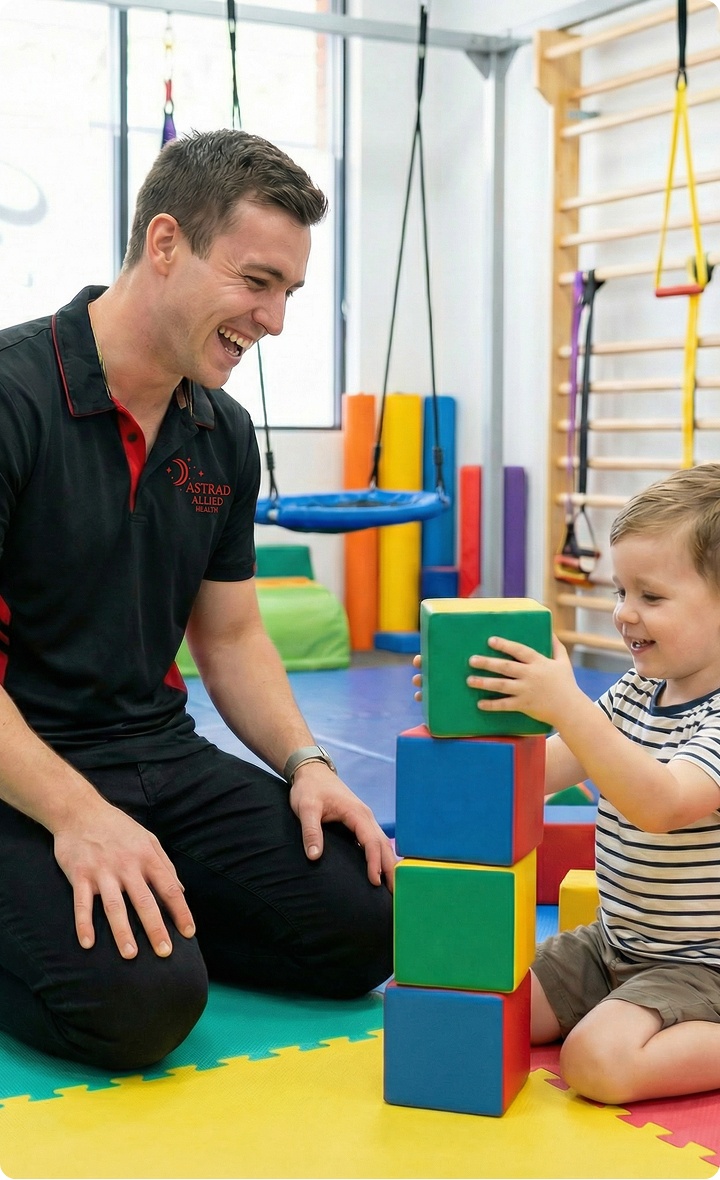
Our therapists design targeted gross motor programmes that improve balance, coordination and body awareness through play-based activities tailored to your child's needs.
NDIS-Funded Therapy
Dyspraxia occupational therapy is available through the NDIS for eligible participants. Our team helps you understand your funding options and access the support your child needs.
School-Based Support
Our therapists collaborate with teachers to implement classroom strategies for organisation, time management and task completion, along with recommendations for assistive tools.
Self-Care Skills
Our occupational therapists break self-care tasks like dressing, tying shoelaces and managing buttons into manageable steps, teaching strategies that build greater independence.
Understanding Dyspraxia and How Occupational Therapy Helps
Dyspraxia, clinically known as developmental coordination disorder (DCD), is a neurological condition that affects a child’s ability to plan, organise, and carry out physical movements. It involves a fundamental difficulty with motor planning: the brain’s ability to conceive, organise, and execute a sequence of unfamiliar actions. Even when a child understands what they need to do, translating that understanding into coordinated movement remains a significant challenge.
Affecting approximately 5 to 6 percent of school-aged children in Australia, dyspraxia is not related to intelligence. Children with dyspraxia are often bright and capable, yet they struggle with tasks their peers manage effortlessly. Dyspraxia occupational therapy is considered the primary intervention for this condition, and our registered occupational therapists at ASTRAD use evidence-based approaches to help children develop the motor planning skills and strategies they need.
Signs Your Child May Benefit from Dyspraxia Occupational Therapy
Children with dyspraxia present with a range of challenges affecting daily functioning. Recognising these signs early is important, as timely intervention can make a significant difference. Common indicators include:
- Difficulty learning new motor tasks such as riding a bike, skipping, or catching a ball
- Messy or illegible handwriting despite effort and practice
- Trouble with fine motor tasks like buttons, scissors, or zippers
- Poor balance and coordination, leading to frequent tripping or bumping into objects
- Difficulty with self-care routines including dressing, tying shoelaces, and using cutlery
If your child is experiencing several of these challenges, a comprehensive occupational therapy assessment can determine whether dyspraxia is contributing to their difficulties.
Our Evidence-Based Approach to Dyspraxia Occupational Therapy
At ASTRAD, our occupational therapists use evidence-based therapeutic approaches tailored to each child’s unique presentation. Dyspraxia affects every child differently, so treatment plans are always individualised based on detailed assessment and collaborative goal-setting with families.
Cognitive Orientation to Daily Occupational Performance (CO-OP)
The CO-OP approach teaches children cognitive strategies through a “Goal-Plan-Do-Check” framework that they can apply across multiple motor tasks. This empowers children to become active problem-solvers, generalising their learning to new activities and environments.
Task-Specific Training
Task-specific training involves practising the actual functional skills your child needs to master, whether handwriting, getting dressed, or using playground equipment. Skills learned in context transfer more readily to daily life.
Sensory Integration Therapy
Many children with dyspraxia also experience sensory processing difficulties. Our occupational therapists use sensory integration techniques to help children better process proprioceptive, vestibular, and tactile information, providing a stronger foundation for motor planning.
Handwriting Intervention Programmes
Our therapists implement structured handwriting programmes addressing the motor planning challenges behind letter formation, pencil grip, spacing, and writing speed. We also explore assistive technology options when appropriate.
Conditions That Commonly Co-occur with Dyspraxia
Dyspraxia frequently co-occurs with other neurodevelopmental conditions. Common co-occurring conditions include:
- Attention deficit hyperactivity disorder (ADHD)
- Autism spectrum disorder (ASD)
- Sensory processing disorder
- Developmental delay
Our occupational therapists are experienced in working with children who present with multiple co-occurring conditions, ensuring therapy addresses the full picture of your child’s needs.
Mobile Dyspraxia Occupational Therapy Across Australia
ASTRAD’s mobile occupational therapy service delivers dyspraxia support directly to your child’s natural environments, including homes, schools, childcare centres, and community settings across Queensland, New South Wales, Victoria, and Tasmania. Practising motor skills in the settings where they are needed leads to better skill transfer and more meaningful progress.
Our registered occupational therapists work closely with families, educators, and other health professionals to create a coordinated support network around each child.
NDIS Funding for Dyspraxia Occupational Therapy
Occupational therapy for dyspraxia is a commonly funded support under the National Disability Insurance Scheme (NDIS). If your child has an NDIS plan, dyspraxia occupational therapy may be included under Capacity Building or Core Supports. Our team can assist with understanding your plan and ensuring your child receives the therapy they need.
We also work with families who are self-funded or accessing therapy through private health insurance. Contact our team on (07) 3477 9366 to discuss your options and book an initial assessment.
Our Approach to Dyspraxia
What Makes Our Dyspraxia Occupational Therapy Different
Call (07) 3477 9366Mobile Therapy Services
We come to you. Our occupational therapists deliver dyspraxia therapy in your child's home, school, or community, so they can practise skills in the environments where they need them most.
Multi-Disciplinary Collaboration
Dyspraxia often co-occurs with conditions such as ADHD, autism spectrum disorder, and sensory processing difficulties. Our team collaborates with other health professionals to provide comprehensive, coordinated care.
Family-Centred Practice
We partner with parents and carers, providing practical strategies and activities you can use between sessions to reinforce your child's progress and support their development at home.
Individualised Treatment Plans
Every child with dyspraxia presents differently. We develop tailored therapy programmes based on comprehensive assessment of your child's specific motor planning challenges, strengths, and goals.

Meet the People Behind Your Care
Our team is passionate about helping you achieve your goals through personalised, evidence-based care.
Meet Our TeamOur Team








Book An Appointment
Our response time is impressive


Ready to Support Your Child's Motor Development?
Our registered occupational therapists are experienced in helping children with dyspraxia build the motor planning, coordination, and confidence they need. Contact us today to discuss how dyspraxia occupational therapy can make a difference for your child.
Frequently Asked Questions About Dyspraxia Occupational Therapy
What is dyspraxia and how does occupational therapy help?
Dyspraxia, also known as developmental coordination disorder (DCD), is a neurological condition that affects motor planning and coordination. Occupational therapy helps by teaching children strategies to plan and execute movements more effectively, building fine and gross motor skills, and developing practical solutions for everyday tasks like handwriting, dressing, and playing.
At what age should my child start dyspraxia occupational therapy?
Dyspraxia is typically identified in children aged 5 to 7, though signs may be noticed earlier. Early intervention is recommended, as children respond well to occupational therapy support during their primary school years. If you notice your child consistently struggling with coordination, motor tasks, or self-care activities, an occupational therapy assessment can help determine whether intervention is appropriate.
How long does dyspraxia occupational therapy take to show results?
The duration of therapy varies depending on the severity of your child’s motor planning challenges and the specific goals being targeted. Many families begin to notice improvements within 8 to 12 sessions. Evidence-based approaches like the CO-OP method typically require around 12 hours of guided practice to achieve meaningful outcomes. Your occupational therapist will discuss expected timeframes during the initial assessment.
Is dyspraxia occupational therapy covered by the NDIS?
Yes, occupational therapy for dyspraxia is commonly funded under the NDIS. It may fall under Capacity Building (Improved Daily Living) or Core Supports in your child’s plan. Our team can help you understand your funding allocations and work with your plan manager or support coordinator to ensure therapy is accessible.
What is the difference between dyspraxia and developmental delay?
Dyspraxia specifically affects motor planning, which is the brain’s ability to conceive, organise, and carry out physical movements. Developmental delay is a broader term referring to children who have not reached expected milestones across one or more areas of development. A child with dyspraxia may have age-appropriate cognitive and language skills but struggle significantly with motor coordination and planning.
Can dyspraxia occupational therapy be done at my child's school?
Yes. ASTRAD’s mobile occupational therapy service delivers dyspraxia support directly to schools, homes, and community settings across QLD, NSW, VIC, and TAS. School-based therapy is particularly beneficial as it allows your child to practise skills in the environment where they face the most challenges, and it enables our therapists to collaborate directly with teachers on classroom strategies.