Evidence and Research Behind Our Approach
Our approach is grounded in current evidence. Research supports task-specific training and cognitive strategy instruction for functional recovery, underpinned by neuroplasticity.
Brain injury occupational therapy helps people living with an acquired brain injury rebuild independence, regain function, and participate in the activities that matter most.
Astrad Allied Health's registered OTs provide mobile services across QLD, NSW, VIC, and TAS, coming directly to your home or community. We are an NDIS provider with 10+ years of combined clinical experience across traumatic brain injury, hypoxic and anoxic injury, brain tumours, and encephalitis.

What Our OT Sessions Cover
Brain injury occupational therapy with Astrad is delivered in your home or community environment, providing assessment and intervention in the real-world context where daily life happens. Here is what our ABI OT sessions typically involve.
Our approach is grounded in current evidence. Research supports task-specific training and cognitive strategy instruction for functional recovery, underpinned by neuroplasticity.
Goal setting is done with you, not for you, identifying what matters most and reviewing goals throughout your therapy journey to reflect progress and changing needs.
We observe how you manage tasks in your own environment, assessing cognitive, physical, emotional, and daily living domains to identify priority areas for intervention.
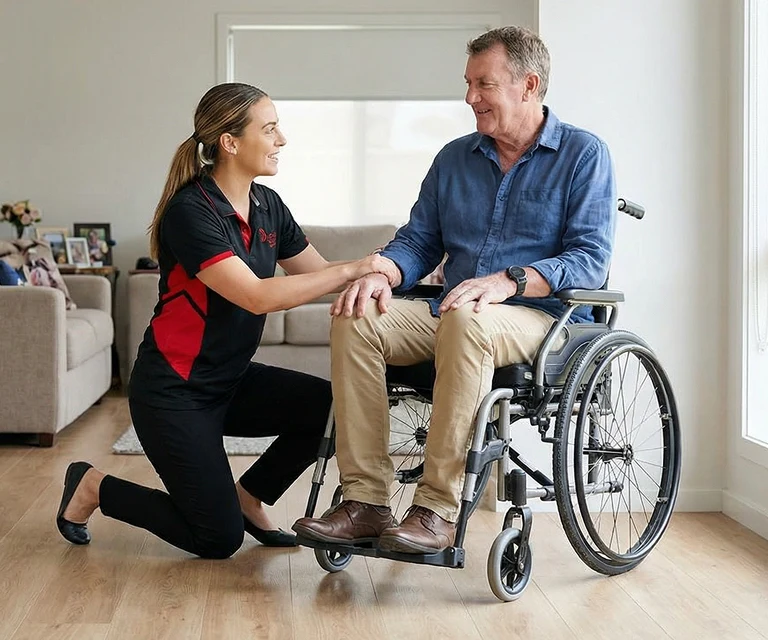

Astrad Allied Health is a dedicated mobile allied health provider serving participants across QLD, NSW, VIC, and TAS. Our AHPRA-registered occupational therapists bring brain injury OT to your home, removing the barriers of travel and clinic-based care.
We are an NDIS provider with experience supporting adults living with acquired brain injury, neurological conditions, and complex needs. Your goals, your environment, and your support network are at the centre of everything we do.
Who Can Access ABI Occupational Therapy
There are several pathways to access brain injury occupational therapy with Astrad. Our team can help you navigate the right funding and referral pathway for your situation.
ABI is a common NDIS access pathway. OT can be funded under Capacity Building, Assistive Technology, and Home Modifications. We support NDIS-managed, plan-managed, and self-managed participants.
Return to work or study is a common ABI goal. Our therapists conduct workplace assessments, develop graded return-to-work plans, and liaise with employers and rehabilitation coordinators to support a structured transition.
TBI is caused by external force, such as a fall, blow, or accident. ABI is the broader term, including TBI plus stroke, hypoxic injury, brain tumours, and encephalitis. All TBIs are ABIs, but not all ABIs are TBIs.
Private OT is available for those not eligible for NDIS or insurance funding, or who prefer independent access. Contact our team to discuss private fee arrangements and service options.
For ABIs from motor vehicle accidents or workplace incidents, CTP and WorkCover may cover OT services. Our therapists prepare reports and therapy plans help with insurance and compensation requirements.
OT is beneficial at any stage after ABI, from early reintegration and daily living retraining to long-term community return, vocational rehabilitation, and fatigue management. Neuroplasticity supports recovery beyond the acute phase.
Our brain injury occupational therapy process is structured, person-centred, and designed to meet you where you are, both physically and in your recovery journey.

We begin with a comprehensive functional assessment in your home, evaluating cognitive, physical, emotional, and daily living abilities. We work with you, your family, and your support network to understand your goals and priorities.
We identify what participation and independence mean to you, whether returning to work, managing daily routines, or engaging in the community. Your goals guide everything, with measurable outcomes and a clear therapy plan established from the outset.
We provide ongoing therapy, review progress regularly, and adjust your plan as your function evolves. We coordinate with neurologists, physiotherapists, and speech pathologists to support holistic recovery.

We support recovery across these key areas.
We target memory, attention, executive function, and processing speed through compensatory strategy training, memory aids, routine development, and errorless learning techniques.
We retrain personal care, meal preparation, household management, medication, and community access, using your real home environment for meaningful and durable skill transfer.
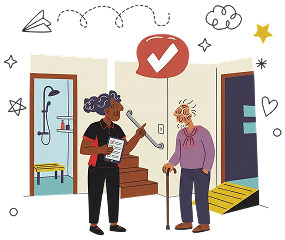
We assess your home for safety and accessibility, recommending modifications and assistive technology including grab rails, adaptive equipment, communication devices, and cognitive aids.
We conduct workplace and community assessments, identify barriers, and develop graded return-to-activity plans, liaising with employers and rehabilitation coordinators throughout.
We provide energy conservation, activity pacing, priority planning, and sleep hygiene strategies to help you understand fatigue patterns and maintain meaningful activity.
We help people with ABI and their carers develop practical strategies for managing emotional and behavioural changes, with carer education integral to our approach.
An acquired brain injury (ABI) is any damage to the brain that occurs after birth, resulting from traumatic injury, hypoxic or anoxic events, brain tumours, encephalitis, or other neurological conditions. ABI can affect cognition, physical function, behaviour, emotional regulation, fatigue, and the ability to carry out everyday activities.
Brain injury occupational therapy addresses the functional consequences of ABI. Occupational therapists assess how the injury impacts a person’s ability to participate in daily tasks, then design evidence-based interventions to rebuild skills, adapt tasks, modify environments, and introduce assistive technology.
OT works across the full rehabilitation continuum, from early community reintegration through to long-term maintenance of function. With the right support, people living with ABI can rebuild meaningful participation in daily life, work, and community.
Brain injury OT addresses the functional impact of ABI on daily life. An OT assesses how the injury affects cognition, physical function, behaviour, and daily tasks, then delivers evidence-based interventions to rebuild skills, adapt environments, and support participation at home, work, and in the community.
Yes. Cognitive rehabilitation is a core part of ABI OT. We target memory, attention, executive function, and processing speed using compensatory strategies, memory aids, structured routines, and errorless learning techniques, building practical skills that translate directly into daily life.
ABI is a common NDIS access pathway. OT services can be funded under Capacity Building (Improved Daily Living), Assistive Technology, and Home Modifications. Astrad is an NDIS provider and supports NDIS-managed, plan-managed, and self-managed participants.
As early as possible. Early OT supports safe return home, daily living retraining, and community reintegration. However, OT is beneficial at any stage, as neuroplasticity research confirms the brain retains capacity for change well beyond the acute phase of injury.
If you or someone you support is living with an acquired brain injury, our registered occupational therapists are here to help. Astrad Allied Health provides mobile brain injury occupational therapy across Queensland, NSW, Victoria, and Tasmania. Contact us today to discuss your needs and take the next step toward greater independence and participation.
Book an AssessmentAstrad Allied Health offers a comprehensive range of mobile services across QLD, NSW, VIC and TAS to support your health, independence, and quality of life.
Assistive devices and equipment assessed and prescribed to support independence at home and in the community.
Home safety assessments and modification recommendations to reduce falls and support daily living.
Detailed assessments for NDIS, insurance, legal, and workplace purposes.
AHPRA-registered OTs visiting your home across QLD, NSW, VIC and TAS.
Speech pathologists delivering communication, voice, and swallowing therapy in your home.

Coordinated OT and speech pathology addressing your full range of daily living goals.