Technology Trials
Hands-on trials with low-tech and high-tech AAC options, including communication boards, speech generating devices, and tablet-based AAC apps to identify the best system fit.
Our registered speech pathologists conduct thorough AAC assessments to identify the most effective communication systems for children and adults with complex communication needs. We deliver mobile, telehealth, and clinic-based services across Australia. NDIS registered provider with flexible funding options.

What We Evaluate
Our AAC assessments are comprehensive, examining communication abilities, motor and sensory skills, and environmental factors to recommend the most effective communication system.
Hands-on trials with low-tech and high-tech AAC options, including communication boards, speech generating devices, and tablet-based AAC apps to identify the best system fit.
Fine motor control, hand function, pointing accuracy, visual scanning ability, and switch access skills to determine the most appropriate way to operate an AAC device.
Current expressive and receptive communication methods, vocabulary level, symbolic understanding, literacy skills, and functional communication effectiveness across different settings.


Astrad Allied Health is an established provider of AAC assessment services across Australia. Our registered speech pathologists have experience assessing and supporting individuals with complex communication needs across all age groups and disability types.
Learn About UsWho May Benefit From an AAC Assessment
AAC assessments can support anyone with complex communication needs who would benefit from tools or strategies to supplement or replace spoken communication. If you or someone you support experiences any of these challenges, an assessment may help.
Children and adults on the autism spectrum who are non-speaking or have limited verbal communication may benefit from AAC. Our assessments identify communication systems that support functional interaction, social participation, and self-expression.
Following an AAC assessment, our speech pathologists provide ongoing implementation support including device programming, vocabulary customisation, communication partner training, and therapy to build AAC skills across home, school, and community settings.
NDIS participants with complex communication needs can access AAC assessments through their plan. Our reports meet NDIS assistive technology funding requirements, supporting applications for communication devices and related supports.
Conditions such as cerebral palsy, motor neurone disease, stroke, and traumatic brain injury can significantly affect spoken communication. Our AAC assessments identify systems that maintain communication access as abilities change over time.
People with intellectual disability who have difficulty communicating their needs, choices, and preferences may benefit from an AAC assessment. We match communication tools to cognitive and motor abilities for practical, everyday use.
Young children with developmental delays who are not yet using spoken words to communicate can benefit from early AAC introduction. Research shows that AAC does not hinder speech development and can support language growth alongside verbal communication.
Our AAC assessment follows a structured, person-centred approach to identify the right communication tools and strategies for each individual.

We begin by understanding the individual's current communication methods, abilities, challenges, and goals. This includes gathering information from family members, carers, educators, and other professionals who know the person well.
Our speech pathologist conducts hands-on trials with a range of AAC options, from low-tech picture boards and communication books to high-tech speech generating devices. We use a feature matching approach to identify which system best suits the individual's motor, cognitive, and sensory abilities.
You receive a comprehensive report with our clinical findings, recommended AAC system, implementation strategies, and funding justification. Reports are written to meet NDIS requirements for assistive technology funding applications.

Registered Speech Pathologists With AAC Experience
We bring our AAC assessment service directly to you. Our speech pathologists conduct assessments in your home, school, day program, or community setting across Australia. Assessing communication in familiar environments provides more accurate results.
All our speech pathologists are registered with the Australian Health Practitioner Regulation Agency (AHPRA) and are certified practising members of Speech Pathology Australia. Our team maintains current training in AAC systems, assistive technology, and communication access.
Every AAC assessment includes a detailed report with clinical findings, feature matching analysis, recommended AAC system specifications, implementation strategies, and NDIS assistive technology funding justification aligned with current NDIS guidelines.
We understand the NDIS assistive technology funding pathway. Our AAC assessment reports include the clinical justification required for NDIS funding applications, whether for low-cost, mid-cost, or high-cost assistive technology. We support plan-managed, self-managed, participants.
We focus on the individual's communication goals, preferences, and daily routines. Our assessments consider motor abilities, cognitive skills, sensory needs, cultural background, and the environments where communication is most important.
An AAC assessment is the starting point. We also provide AAC implementation support, training for families and support workers, programming of communication devices, and ongoing therapy to build AAC competence and confidence over time.
An AAC assessment is a clinical evaluation conducted by a registered speech pathologist to determine the most appropriate communication system for a person with complex communication needs. AAC stands for Augmentative and Alternative Communication and includes any tool, strategy, or device that supplements or replaces spoken communication. This can range from simple picture exchange systems and communication boards to sophisticated speech generating devices and tablet-based apps. An AAC assessment identifies the individual’s communication strengths, evaluates potential AAC options through hands-on trials, and recommends the system most likely to support functional, everyday communication.
An AAC (Augmentative and Alternative Communication) assessment is a comprehensive evaluation conducted by a registered speech pathologist to determine the most appropriate communication system for someone who has difficulty using speech alone to meet their daily communication needs. The assessment examines the individual’s current communication abilities, physical and cognitive skills, communication partners, and the environments where they communicate. Results guide recommendations for AAC systems, which may range from low-tech options like picture boards to high-tech speech-generating devices.
AAC assessments can support a wide range of people, including children with developmental delays or autism spectrum disorder who have limited or no speech, adults who have lost speech due to stroke, traumatic brain injury, or progressive neurological conditions such as motor neurone disease or Parkinson’s disease, and people with intellectual disability who need additional support to communicate effectively. Anyone whose speech does not reliably meet their everyday communication needs may benefit from an AAC assessment to explore tools and strategies that can enhance their ability to express themselves.
AAC systems are broadly grouped into low-tech and high-tech options. Low-tech systems include picture exchange communication systems (PECS), communication boards, symbol charts, and choice boards that do not require electricity or digital devices. High-tech systems include tablet-based communication apps, dedicated speech-generating devices, and eye-gaze technology for people with limited physical movement. Many people use a combination of low-tech and high-tech tools depending on the situation. Your speech pathologist will assess which systems best match the individual’s abilities, preferences, and communication environments.
Yes, AAC assessments and communication devices are commonly funded through NDIS plans. Assessments are typically covered under Capacity Building Supports (Improved Daily Living), while AAC devices and equipment may be funded under Assistive Technology supports. The level of funding available depends on your individual plan goals and the complexity of the communication needs. Our speech pathologists prepare detailed assessment reports and equipment justifications that meet NDIS requirements, supporting the approval process for both the assessment and any recommended AAC systems.
During an AAC assessment, your speech pathologist will gather information about the individual’s communication history, current abilities, physical and cognitive skills, and the environments where they need to communicate. The assessment involves observing how the person currently communicates, trialling different AAC tools and strategies, and assessing motor skills relevant to device access such as pointing, touching a screen, or using switches. Family members, carers, and other communication partners are often involved to ensure the recommended system works across all settings. The assessment may take one or more sessions depending on complexity.
Learning to use an AAC system is an ongoing process that varies significantly depending on the individual’s age, cognitive abilities, the type of system recommended, and how consistently the system is used across environments. Some people begin using basic functions within weeks, while building fluency with a more complex system may take months of regular practice and support. Your speech pathologist will provide training for the individual, family members, and carers, and will schedule regular follow-up sessions to support skill development, troubleshoot challenges, and expand the system as communication abilities grow.
Booking an AAC assessment is straightforward. You can request an appointment through our website or by calling our team directly. No GP referral is required, though we accept referrals from GPs, paediatricians, speech pathologists, support coordinators, and other health professionals. Our registered speech pathologists deliver AAC assessments through our mobile service across Queensland, New South Wales, Victoria, and Tasmania, conducting sessions in the individual’s home, school, or community setting. We work with NDIS participants and families accessing private funding to ensure AAC assessment services are accessible.
Contact us to discuss how an AAC assessment may support better communication. We offer mobile services across Australia, telehealth consultations, and flexible scheduling to meet your needs.
Book Your AssessmentAstrad Allied Health provides a range of occupational therapy and speech pathology services across Australia.
Registered occupational therapists providing support for daily living skills, independence and participation in work, school and community activities.

Assessment and recommendations for mobility equipment and assistive technology to support participation in daily activities across your environment.
Registered speech pathologists helping with communication, swallowing and language development across Queensland, NSW, Victoria and Tasmania.

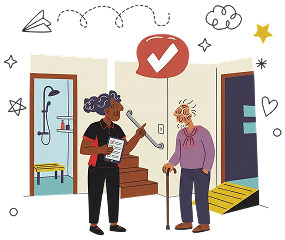
Professional home evaluations identifying modifications and equipment recommendations to improve safety, accessibility and independence.
Recommendations for assistive technology solutions like communication devices, computer access & adaptive equipment to support daily participation.

Complete allied health support including ongoing therapy sessions, rehabilitation programs and personalised interventions to address all your therapy needs.