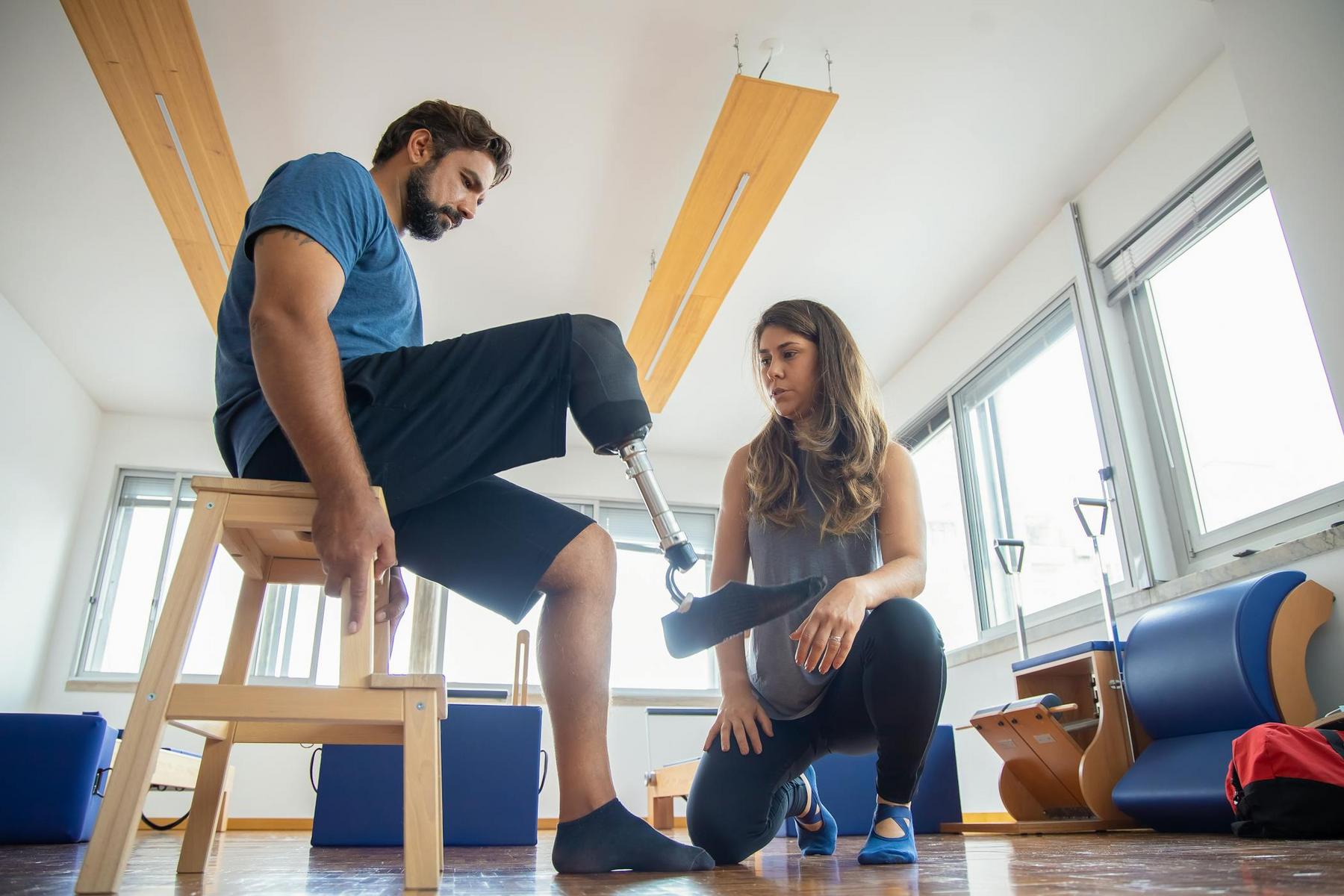
Movement is something many of us take for granted – until it becomes a daily challenge. For Australians living with disability, managing the effects of ageing, or recovering from illness or injury, the ability to stand up from a chair, carry groceries, or walk safely through their home can represent a profound and deeply personal goal. When occupational therapy (OT) and structured strength training work together, the results can be meaningful and measurable. Yet this integrated approach remains underutilised in many care settings. Understanding how combining strength training with OT mobility goals works – and why the evidence supports it – is a vital step towards more effective, person-centred care.
Disclaimer: This article is intended for general informational purposes only and does not constitute medical advice or a substitute for individual assessment. The information provided should not be used as the basis for starting any new strength or mobility programme. Please consult a qualified occupational therapist or registered health professional before beginning any new exercise or rehabilitation programme, as individual needs, health conditions, and circumstances vary significantly.
What Does Combining Strength Training with OT Mobility Goals Actually Involve?
At its core, combining strength training with OT mobility goals means aligning progressive resistance exercise with the functional outcomes that matter most to each individual. Occupational therapy focuses on enabling people to participate in the activities that give their lives meaning – whether that’s making a cup of tea, moving safely around the bathroom, or walking to the local shops. Strength training, when purposefully integrated into this framework, provides the physical foundation needed to achieve those real-world goals.
This is not simply about lifting weights in a clinic. It is a structured, person-centred process that begins with a comprehensive OT assessment covering strength, flexibility, balance, coordination, and the environmental factors that influence daily function. From there, intervention plans are tailored to reflect each person’s specific mobility goals, their home environment, and any health considerations that affect exercise capacity.
The approach typically unfolds in phases:
Phase 1 – Assessment and Goal Setting
A thorough evaluation of physical capacity, functional task performance, and the home or community environment forms the foundation. Goals are set collaboratively using client-centred frameworks such as the Canadian Occupational Performance Measure (COPM), ensuring that what is being worked towards is genuinely meaningful to the individual.
Phase 2 – Strength Building with Functional Integration
Progressive resistance training targets the specific muscle groups required for identified daily tasks. Activities are selected because they translate directly into the activities of daily living (ADLs) that the person wants or needs to perform. An occupational therapist can advise on specific exercises suited to individual goals and capacity.
Phase 3 – Maintenance and Community Integration
As strength and mobility improve, the focus shifts to sustaining gains, applying skills in real-world environments, and supporting ongoing independence. Home exercise programmes and carer education play an important role at this stage.
What Does the Evidence Say About Integrated Strength and Mobility Training?
The research base supporting this combined approach is substantial and continues to grow. High-certainty evidence from systematic reviews, including a Cochrane Review published in 2022, demonstrates that mobility training improves scores on the Short Physical Performance Battery (SPPB) by a mean of 1.00 point – an 8% absolute improvement that exceeds the clinically significant change threshold of 0.5 points. Moderate-certainty evidence shows functional capacity, as measured by the Barthel Index, improves by 8.58 points on a 100-point scale, with gains maintained at six months post-intervention.
Importantly, evidence also shows that mobility training reduces adverse effects by 19% compared to control groups – meaning fewer falls, injuries, and declines in function for those who participate in structured programmes.
Research published in Frontiers in Aging (2024) highlights an important nuance: combining traditional resistance training (focused on building raw strength) with functional, task-specific training produces the best overall outcomes. Traditional training yielded significantly greater strength improvements, while task-specific functional training showed greater gains in gait speed and performance on the Timed Up and Go (TUG) test. A hybrid model that incorporates both is now considered best practice.
For older Australians, the picture is stark. According to Australian Institute of Health and Welfare data, only 25% of people aged 65 and over met the recommended 30 minutes of daily physical activity, and 84% completed no strength-based activities at all. This gap between recommended and actual participation underscores why a supported, structured approach through OT services is so important.
Which Exercise Categories Support OT Mobility Goals in Everyday Life?
Evidence-based programmes that combine strength and mobility goals are largely centred on movement categories that directly replicate or prepare for daily tasks. The following table outlines key functional exercise categories and their ADL application. Specific activities within each category should always be determined in consultation with a qualified occupational therapist, based on individual assessment and goals.
| Exercise Category | ADL Application |
|---|---|
| Lower body functional strength | Transfer independence, stair navigation |
| Upper body and functional reaching | Carrying, lifting, kitchen and bathroom tasks |
| Core and balance integration | Postural stability, fall prevention |
| Grip and fine motor strength | Object manipulation, self-care tasks |
| Endurance and gait | Community mobility, sustained activity |
Lower body strength work, for example, often targets movements that translate directly into one of the most common – and most meaningful – independence milestones: the ability to rise from a seated position independently. The specific activities used to support this goal will depend on individual capacity and should be recommended by a qualified occupational therapist.
For individuals with conditions affecting the upper extremities, functional reaching and strengthening activities that relate to kitchen, bathroom, and household tasks can help ensure that strength improvements carry over into the activities that matter most day-to-day. Again, a tailored assessment is essential to determine the most appropriate approach.
How Does This Approach Benefit NDIS Participants and aged care recipients?
For NDIS participants, combining strength training with OT mobility goals aligns directly with capacity building outcomes – improving functional capacity, daily living skills, and overall wellbeing. Measurable improvements in walking confidence, stair climbing, wheelchair transfers, and balance on uneven surfaces have all been documented in relevant populations.
The psychosocial benefits are equally significant. As physical capacity improves, many individuals report reduced anxiety about falling, greater confidence in movement, and increased participation in community activities. These gains reinforce the NDIS’s focus not just on what a person can do physically, but on their quality of life and social participation.
For aged care recipients, the evidence is compelling. A 24-week progressive resistance and balance training programme conducted across Brisbane with 245 adults aged 65–92 years – all receiving in-home Commonwealth aged care support – found that participants more than doubled their upper body, lower body, and core strength. The programme also produced reductions in depression and anxiety, and steady reductions in overall health care costs. Participants ranged in age from 65 to 92, demonstrating that meaningful strength gains are achievable across the full spectrum of older adulthood.
The TOP-UP Telephysiotherapy Trial (2024) further supports integrated delivery models: 53% of intervention participants met or exceeded their mobility goals, compared to just 7% in the control group – a notable difference in functional outcome.
How Is Progress Measured When Combining Strength and OT Mobility Programmes?
Objective, standardised assessment tools are central to tracking meaningful progress. Commonly used measures include:
The Timed Up and Go (TUG) Test
This assesses the ability to stand from a chair, walk a set distance, turn, and return to seated – capturing balance, gait, and fall risk in a single functional measure.
The Berg Balance Scale (BBS)
A practical tool assessing static and dynamic balance through tasks reflecting real daily challenges, including reaching, turning, and single-leg standing.
The Canadian Occupational Performance Measure (COPM)
Meta-analyses confirm that OT interventions using COPM significantly improve both occupational performance and satisfaction (p = 0.001 and p = 0.002, respectively), making it a particularly valuable outcome tool in client-centred practice.
The Short Physical Performance Battery (SPPB)
A comprehensive measure of lower extremity function incorporating balance, walking speed, and sit-to-stand performance.
Monitoring typically occurs at four-weekly intervals, with both objective measures (grip strength, TUG times, sit-to-stand repetitions) and subjective measures (goal attainment, confidence in daily activities, quality of life questionnaires) informing programme adjustments.
How Does Mobile OT Delivery Support Combined Strength and Mobility Goals?
Mobile occupational therapy delivery – where the OT comes to the client’s home or community setting – offers distinct advantages when combining strength training with OT mobility goals. The most meaningful benefit is environmental relevance: when activities are practised in the actual spaces where daily tasks occur, the transfer of skills to real-life function is more immediate and more durable.
A home-based approach also enables direct environmental assessment and modification – identifying hazards, recommending adaptive equipment, and ensuring that improvements in strength and mobility are supported by a safe and accessible living environment. Grab bars, appropriate furniture height, non-slip mats, and improved lighting are all factors that an OT can assess and address in context, rather than in a generic clinical setting.
Mobile OT services may be available across a range of locations including Brisbane, North Lakes, the Gold Coast, the Sunshine Coast, Sydney, and Melbourne, with telehealth options available across Queensland, New South Wales, Victoria, and Tasmania. Service availability varies by location and provider.
Building Towards Independence: Why an Integrated Approach Matters
Strength and mobility do not exist in isolation. The ability to function independently in daily life depends on a complex interplay of muscular strength, balance, coordination, confidence, and environment. Combining strength training with OT mobility goals addresses each of these dimensions in a coordinated, evidence-based way that neither approach achieves alone.
When resistance training is guided by OT mobility goals, exercise becomes purposeful. Every movement and balance challenge is connected to something that genuinely matters to the individual – walking safely to the letter box, cooking a meal, or attending a community event. This connection between effort and meaningful outcome is not just motivating; it is clinically sound.
For Australians navigating the NDIS, aged care, or private allied health services, an integrated approach to strength training and OT mobility is one of the most evidence-supported pathways available to improved function, reduced fall risk, and greater independence in daily life.
Can strength training be incorporated into an existing OT plan?
Yes, in many cases structured strength training can complement and enhance an existing OT programme. An occupational therapist can assess individual goals, physical capacity, and health considerations to determine how resistance-based exercises might be incorporated in a way that supports identified mobility goals. This would always be tailored to the individual’s current functional level and any relevant health considerations.
Is combining strength training with OT mobility goals suitable for people with complex disabilities?
A personalised, carefully structured approach to combining strength and OT mobility goals can be appropriate for a wide range of individuals, including those with complex or multiple disabilities. The key is thorough assessment and individualised goal setting. What activities are used, how intensively they are progressed, and how outcomes are monitored will all depend on each person’s unique needs and circumstances.
How long does it take to see improvements when combining strength training and OT mobility goals?
Research indicates that observable functional improvements can occur within as little as six to eight weeks with a structured programme delivered at minimum recommended frequencies. However, the timeframe for meaningful gains varies between individuals based on factors such as starting capacity, consistency of participation, health status, and the specific goals being pursued. Longer programmes of 12–24 weeks tend to produce more substantial and sustained outcomes.
Are mobile OT services available in my area for this type of programme?
Mobile occupational therapy services may be available in various locations including Brisbane, North Lakes, the Gold Coast, the Sunshine Coast, Sydney, and Melbourne, with telehealth options available across Queensland, New South Wales, Victoria, and Tasmania. Service availability varies by location and provider. Contacting a local OT service directly is the best way to confirm availability in your specific area.
Can NDIS funding be used for combined strength training and OT mobility programmes?
For NDIS participants, occupational therapy services that address functional capacity, daily living skills, and independence may be supported under relevant NDIS funding categories. Individual funding arrangements vary depending on each participant’s plan, goals, and approved supports. It is advisable to discuss funding options with your NDIS planner or support coordinator alongside your occupational therapist.