

Aged Care Occupational Therapy
Occupational Therapy for Older Adults at Home
Looking for an aged care occupational therapist who comes to you? Our AHPRA-registered occupational therapists visit older people at home across Queensland, New South Wales, Victoria and Tasmania. We work with aged care, private and NDIS clients. Call (07) 3477 9366 to talk it through.

What Does an Aged Care Occupational Therapist Do?
An aged care occupational therapist helps older people stay safe and independent in daily life. They look at how you manage tasks like showering, dressing and cooking. Then they suggest practical changes, equipment and strategies that fit your home and your goals.

Everyday Tasks

Moving Safely
Equipment and Aids

Carer Support
Therapy Where You Live
Why Occupational Therapy at Home Makes Sense
When an aged care occupational therapist comes to you, they see the bathroom you use every day. They see your steps, your kitchen bench and the chair you like to sit in. That means the advice fits the home you live in.
A home visit also means less travel for you, which matters when getting out is hard. Family members and carers can join the visit and ask questions. Everyone hears the same advice at the same time.
Astrad is a mobile service across QLD, NSW, VIC and TAS. Occupational therapy for older adults happens at home, so we can work on the daily tasks that matter most to you.
Our Services
Astrad Allied Health offers a comprehensive range of services, including:
Mobile Occupational Therapy
Registered occupational therapists providing support for daily living skills, independence and participation in work, school and community activities.

Mobility Equipment Assessment
Assessment and recommendations for mobility equipment and assistive technology to support participation in daily activities across your environment.

Speech Pathology Services
Registered speech pathologists helping with communication, swallowing and language development across Queensland, NSW, Victoria and Tasmania.

Home Assessment & Modifications
Professional home evaluations identifying modifications and equipment recommendations to improve safety, accessibility and independence.

Assistive Technology Assessment
Recommendations for assistive technology solutions like communication devices, computer access & adaptive equipment to support daily participation.

Comprehensive Therapy
Complete allied health support including ongoing therapy sessions, rehabilitation programs and personalised interventions to address all your therapy needs.


Worried About How a Parent Is Managing?
For Older People and Their Families
Personal Care
We look at how you shower, dress and groom. Then we suggest simpler ways to do each step, or equipment that can make it safer and easier.
Meals and Kitchen
Cooking can get harder with age. We can help you set up the kitchen, plan simpler routines and find tools that make preparing meals less tiring.
Around the House
We check how you move between rooms, get in and out of bed, and use any steps. Then we suggest changes that can support safer movement.
Home Changes
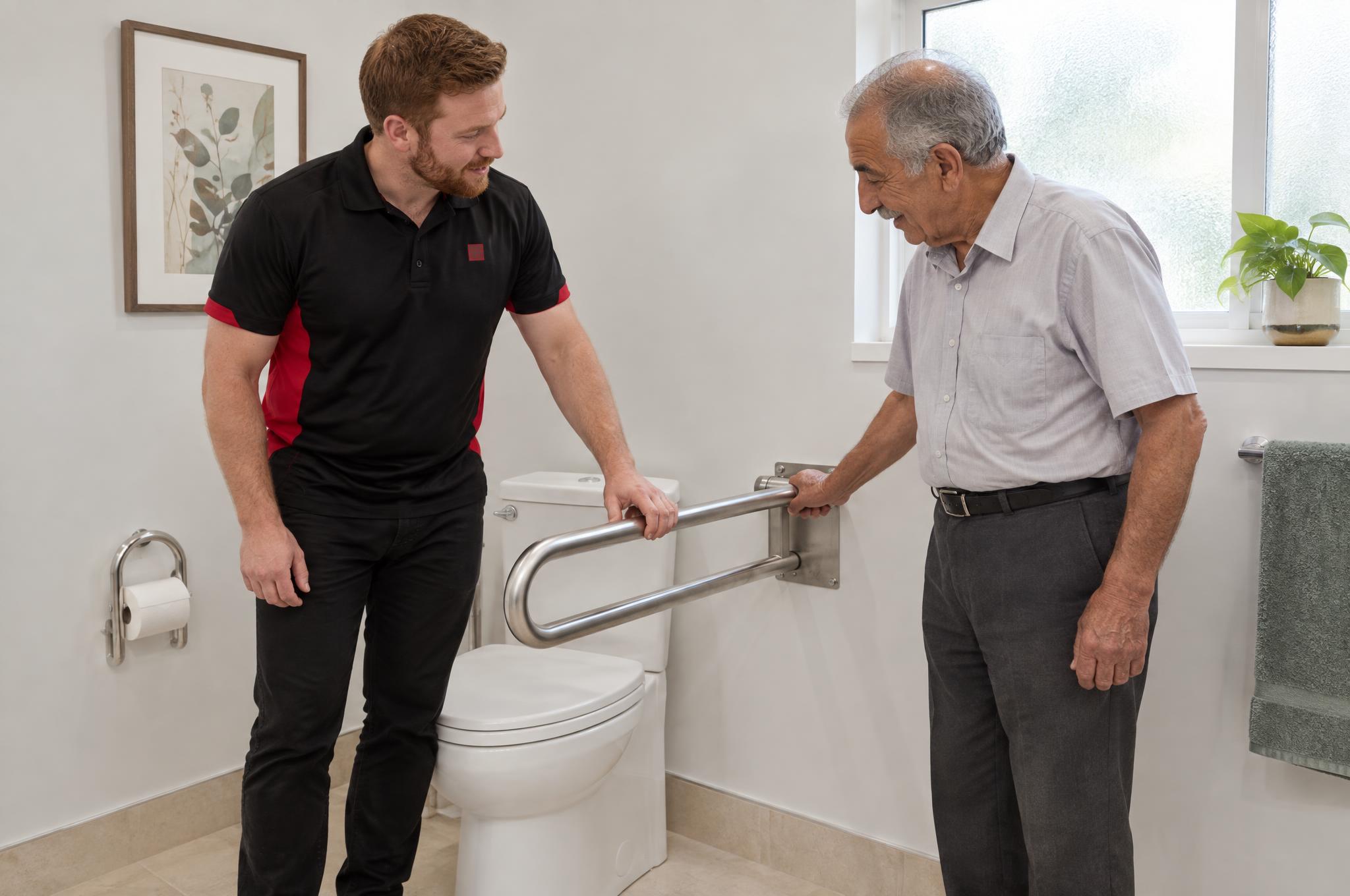
Grab rails, ramps and a raised toilet seat can make daily tasks easier. We recommend what suits your home and explain how each change can help.
Out in the Community
Getting out matters for wellbeing. We look at how you manage outings and suggest ways to make them easier.
Memory and Routine
For people with memory changes, we can set up routines, visual prompts and simple systems. These aim to help you stay organised and confident at home.
Signs it might be time to call an OT. Often it is an adult son or daughter who notices the changes first. Small signs can build up slowly. Any of these could be a good reason to talk to an occupational therapist.
- Showering or dressing takes longer or feels unsafe.
- There has been a recent fall, or a near miss.
- Your parent is coming home after a hospital stay.
- They hold onto furniture to get around the house.
- They have given up hobbies or outings they used to enjoy.
- You have noticed new changes in memory or daily routine.
- The main carer is feeling stretched.
These signs do not always mean big changes are needed. Often a few small adjustments can make daily life easier and safer.
Staying Safe and Steady at Home
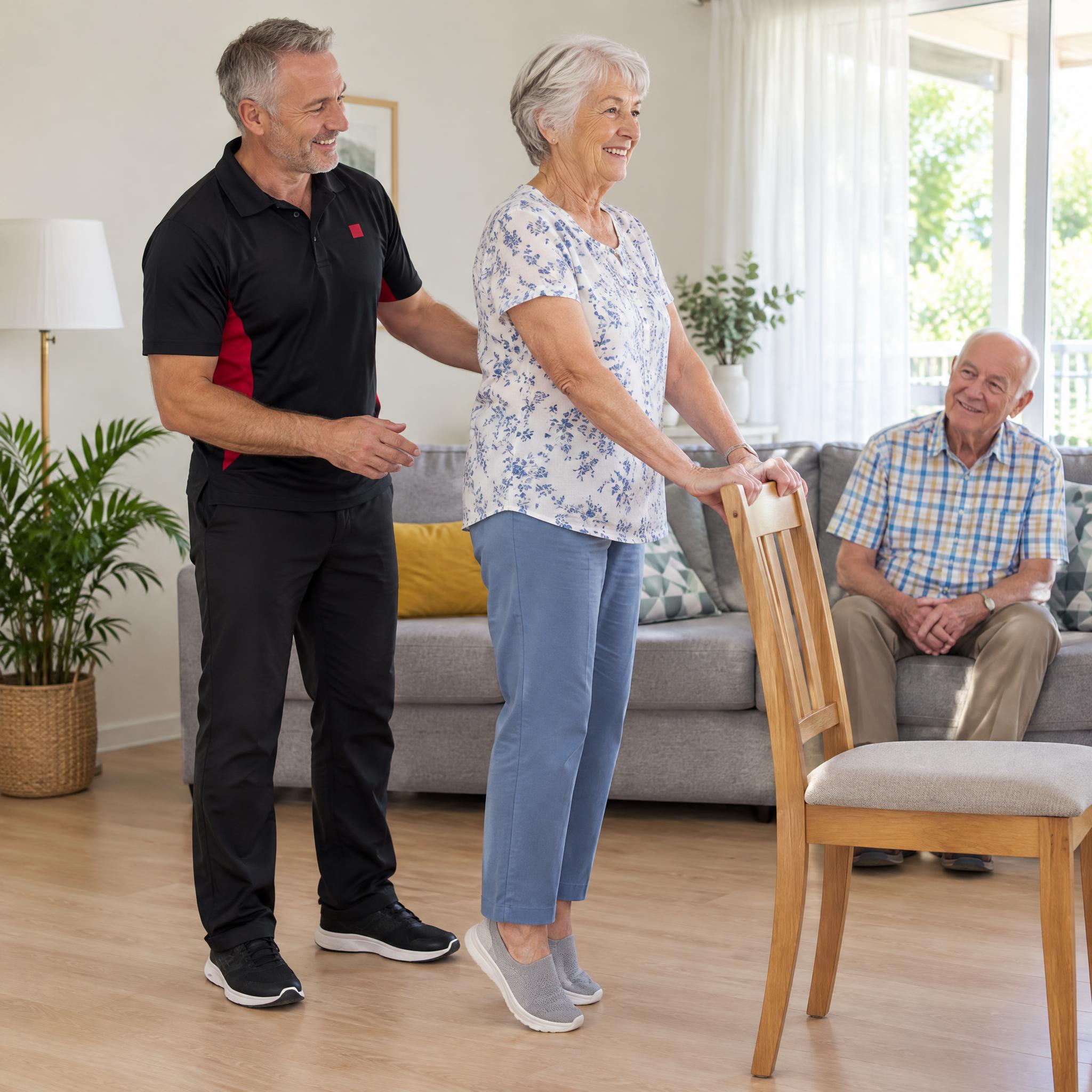
Falls are a common worry for many families. An occupational therapist looks at the places where falls tend to happen. That includes the bathroom, steps, loose rugs, lighting and the path to the toilet at night. We then suggest changes and habits that may help lower the risk. This might mean moving furniture, adding a night light or practising safer ways to stand up. We can also talk through worries about falling. To learn more, read about our falls prevention occupational therapy.
Equipment and Home Changes That Help
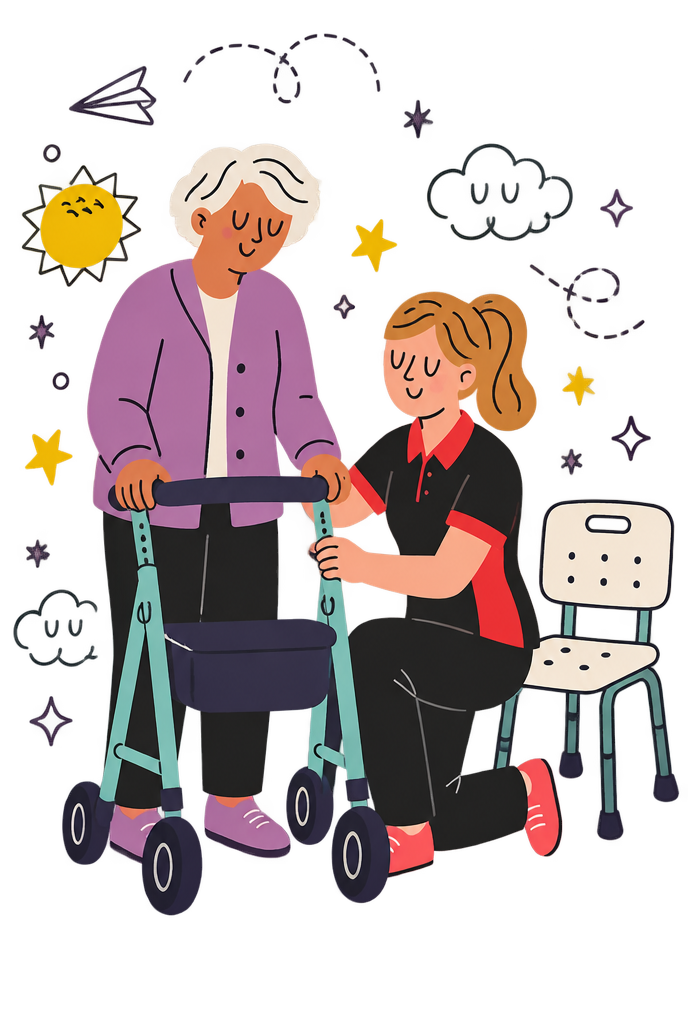
The right equipment can make daily tasks easier and safer. Common examples include shower chairs, grab rails, raised toilet seats, walking aids and bed rails. Your occupational therapist recommends items that suit your body, your house and what you want to achieve. We also check that you can use each item safely.
Some people need larger home changes, such as a ramp or a bathroom update. We can recommend these too. Funding for equipment and home changes depends on your program, and approval is never guaranteed.
Support for People Living with Dementia, Arthritis and Other Conditions
Our occupational therapists often work with older people living with:
- Dementia and memory changes
- Arthritis and joint pain
- Parkinson’s disease
- Recovery after a stroke
- Frailty after an illness or hospital stay
Each plan is shaped around the person and their goals. Two people with the same condition can need very different support at home.
How Aged Care OT Is Funded
There are a few ways to pay for an aged care occupational therapist at home. Support at Home is the main government program for older people living at home. It replaced Home Care Packages on 1 November 2025. The Commonwealth Home Support Programme (CHSP) still offers entry-level help. Both start with an assessment through My Aged Care.
You can also pay privately and start without waiting for a funding decision. Eligible people under 65 may use the NDIS if they are self-managed or plan-managed. What you can access depends on your assessed needs and your care plan. To compare each pathway, read our guide to aged care funding options.
Working Alongside Families and Care Providers
Family members and carers are an important part of the picture. We can also share safer ways for carers to help with daily tasks. This can take some of the strain off everyone.
Your aged care occupational therapist can also work alongside your GP and your aged care provider. With your consent, we can talk with your GP and aged care provider. That way, everyone works towards the same goals.
Reviewed by the Astrad Allied Health clinical team.
Your First Appointment
What Happens at Your First Home Visit
Call (07) 3477 9366Talk About Goals
We start by listening. You tell us what feels harder at home and what you want to keep doing. Family members are welcome to join the visit.
Watch Daily Tasks
With your permission, we watch how you manage a few everyday tasks. This might be getting up from a chair, using the shower or making a cuppa.
Look at the Home
We look at steps, lighting, flooring and the bathroom layout. We note anything that could make daily tasks harder or raise the risk of a fall.
Agree on a Plan
We agree on goals and next steps together. If you need a formal written report, we also offer a separate aged care assessment service.

Meet the People Behind Your Care
Our team is passionate about helping you achieve your goals through personalised, evidence-based care.
Meet Our TeamOur Team







Book An Appointment
Our response time is impressive



Book a Home Visit with Astrad
Our occupational therapists travel to homes in QLD, NSW, VIC and TAS. Call us or send an enquiry to talk about what you or your parent needs.
Common Questions About Aged Care OT
What does an aged care occupational therapist do?
An aged care occupational therapist helps older people manage everyday tasks safely at home. This includes showering, dressing, cooking and moving around the house. They may also recommend equipment or home changes. They can also share safer ways for carers to help.
Can an aged care occupational therapist visit me at home?
Yes. Astrad is a mobile service, so our occupational therapists come to your home. We visit older people across Queensland, New South Wales, Victoria and Tasmania. Seeing your home helps us give advice that fits the way you live.
Is occupational therapy covered by Support at Home?
Under Support at Home, occupational therapy is treated as a clinical support. Government information says clinical supports are fully funded. Your assessed needs and care plan decide what you can access. Your Support at Home provider can confirm what is included for you.
Do I need a referral to see an occupational therapist?
Private clients can contact Astrad directly to book a home visit. For government-funded support, the process usually starts with an assessment through My Aged Care. If you are unsure which path suits you, call us on (07) 3477 9366.
How is an OT different from a physiotherapist for older people?
A physiotherapist focuses mainly on movement, strength and balance. An occupational therapist focuses on everyday tasks and how you do them at home. The two often work well together. For example, a physio may work on leg strength while an OT sets up a safer shower.
Can I start aged care occupational therapy while I wait for funding?
Yes. You can start aged care occupational therapy as a private client while your funding is being sorted. This means support can begin before a funding decision is made. Ask us about fees before your first visit.