Mobile Speech Pathology for Kids
Speech Pathology for Children
Paediatric speech therapy at home, childcare, kindy or school. Our speech pathologists visit families across QLD, NSW, VIC and TAS. Sessions are play-based and built around your child.
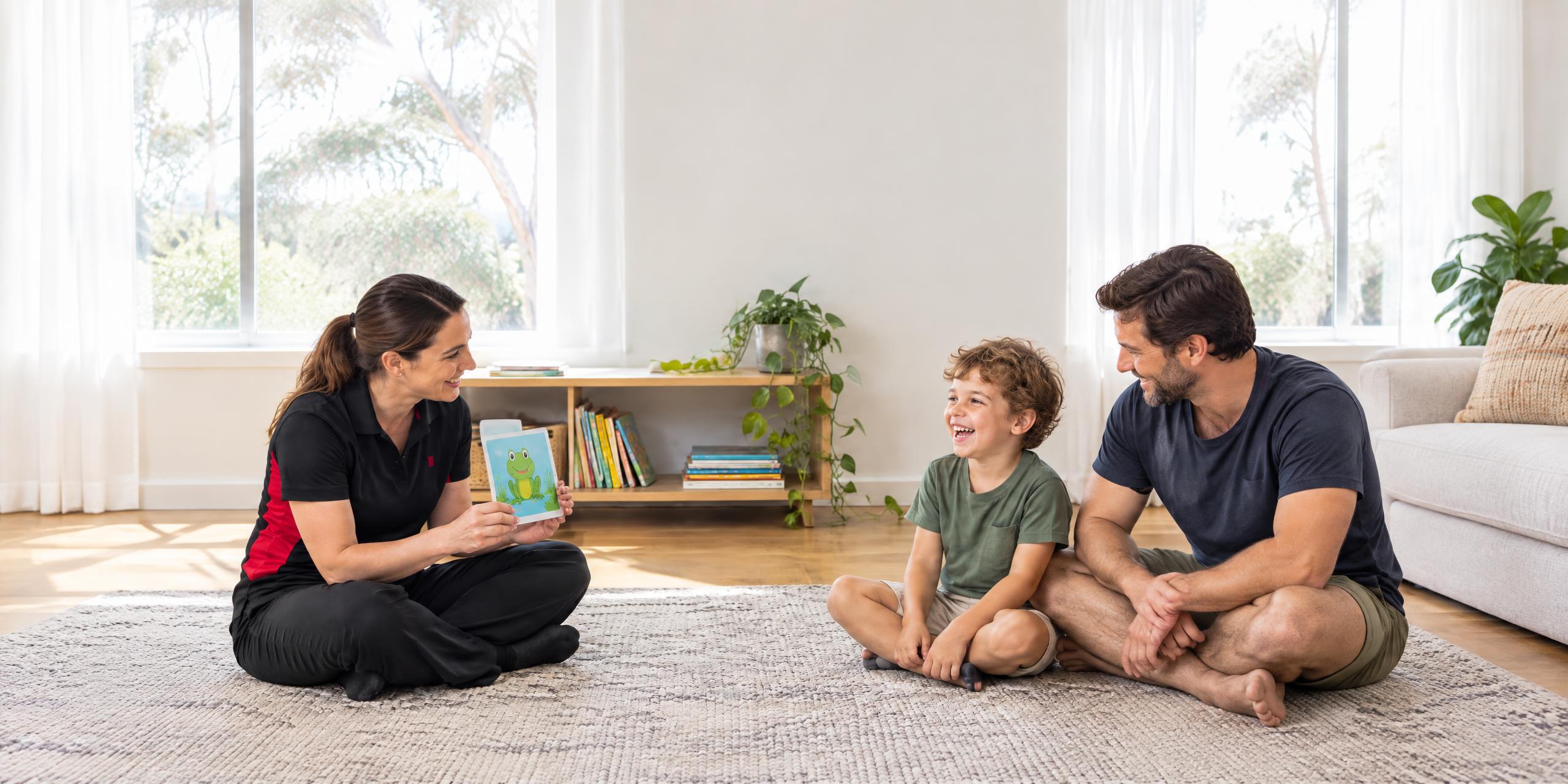
Speech Therapy Where Your Child Feels at Ease
Children often talk more in places they know. That is why our paediatric speech therapy happens at home, childcare, kindy or school. Therapy fits into everyday play and routines.
Home Visits
NDIS and Private
Play-Based Sessions
How We Work With Families
Parent Coaching
We show you simple ways to build talking into your day. You learn the strategies during sessions, so practice can carry on at home between visits.
Team Approach
We can work with your child's educators and other therapists. Sharing goals helps everyone support your child's communication in the same way.
Child-Led Play
Sessions follow your child's interests. We use their own toys, books and games, so learning to communicate feels like play instead of a lesson.
Clear Updates
We explain what we see in plain words. You know your child's goals, how therapy is going and what to try next at home.
Why Families Choose Astrad
Paediatric Speech Therapy That Comes to You
We start with what matters to your family. Goals might be saying first words, being understood at kindy or joining in play. Therapy is planned around those goals.
Your speech pathologist travels to your child, instead of the other way around. Your child stays somewhere familiar, and you skip long drives and waiting rooms.
Some children need help with talking as well as play, focus or fine motor skills. Our speech pathologists and occupational therapists can share goals and plan together.
Families using self-managed or plan-managed NDIS funding are welcome, and so are private clients. We can explain how your child's therapy may be funded.
Therapy targets the words and skills your child uses every day. That might be asking for a snack, telling you about their day or playing with friends.
Every speech pathologist on our team holds certification with Speech Pathology Australia. They use evidence-based approaches and keep your child's needs at the centre of every session.
What Happens at the First Session
The first visit helps us understand how your child communicates. Here is what it looks like.

- 1
A Chat With You
We ask about your child's health, development, daily routines and what worries you. Your insights help shape the whole assessment.
- 2
Play and Observation
We play with your child and watch how they talk, listen and understand. Standardised tests may be used where they help answer your questions.
- 3
Findings and Next Steps
We explain what we found in plain words. Together we agree on goals and decide whether paediatric speech therapy, a written report or a later review makes sense.
Parent Coaching
How Parents Help Therapy Work
Parents and carers play a big part in paediatric speech therapy. Here are three ways you can help.
Learn the Strategies
Watch and join in during sessions. Your speech pathologist shows you what to say and how to respond, then coaches you as you try it.
Short Home Activities
You get a few short activities to practise between visits. They take minutes, fit into busy days and use things you already have at home.
Talk Through Routines
Bath time, meals, car rides and bedtime are all chances to talk. We help you turn everyday moments into easy practice for your child.
Paediatric speech therapy can help children understand words, talk and connect with the people around them. At Astrad, our speech pathologists are certified with Speech Pathology Australia. They come to your home, childcare centre, kindy or school across Queensland, New South Wales, Victoria and Tasmania. Sessions are play-based, so your child learns while doing things they enjoy. We work with self-managed and plan-managed NDIS participants. We also work with families who pay privately. If you have a question about your child’s talking, call us on (07) 3477 9366.
What Does a Children’s Speech Pathologist Do?
A children’s speech pathologist helps kids who find it hard to talk, understand or be understood. They assess how your child communicates. Then they plan therapy to build new skills, one small step at a time.
Speech therapy for kids can support:
- understanding words, questions and instructions (receptive language)
- using words and sentences to share ideas (expressive language)
- saying speech sounds clearly (articulation)
- smooth, easy talking for children who stutter (fluency)
- social communication, such as taking turns and joining in play
- early literacy skills, such as rhyming and hearing the sounds in words
Is My Child’s Talking on Track?
Every child develops at their own pace. Still, there are some general speech and language milestones to look for. Many children:
- babble and play with sounds in their first year
- say their first words around their first birthday
- start joining two words together by about two
- are mostly understood by strangers by about four
A child who is not doing these things yet may simply need more time. Others may need some extra support. If you are worried, you do not need to wait. An assessment can help you know either way.
Speech Therapy at Home, Childcare or School
Children often talk more where they feel comfortable. That is why we bring paediatric speech therapy to the places your child already knows. At home, we can use your child’s own toys, books and routines. At childcare, kindy or school, we can see how your child talks with other children.
Visits to a centre or school need their agreement. We can help you ask. Parents, carers and educators can all watch sessions and learn the strategies. That way, your child can practise new skills in the places they use them every day.
Conditions and Needs We Support
Our paediatric speech therapy covers a wide range of needs. Your child does not need a diagnosis to start. We support children with:
- late talking and language delay
- speech sound and articulation difficulties
- childhood apraxia of speech
- stuttering
- autism and social communication differences
- Down syndrome
- cerebral palsy
- reading and spelling difficulties
- augmentative and alternative communication (AAC) for children who use devices, pictures or signs
Late talking is a common worry for parents. You can read more about our speech therapy for language delay. For autistic children, therapy focuses on communication that feels natural to them. Learn more about our speech therapy for autism.
When Your Child Needs Speech and OT
Some children need support with more than talking. They may also find play, attention, handwriting or self-care hard. Astrad has occupational therapists and speech pathologists in the same team. They can share notes and work on goals together, so your child gets joined-up care.
Paying for Your Child’s Speech Therapy
There are a few ways to pay for paediatric speech therapy. We support self-managed and plan-managed NDIS participants. Families can also pay privately. Astrad is not a registered NDIS provider, so we cannot work with NDIA-managed plans.
NDIS arrangements for young children are changing. We can talk you through your options when you call.
Frequently Asked Questions
When should my child start paediatric speech therapy?
You can reach out as soon as you have a concern. Your child does not need a diagnosis first. An assessment can show whether your child is on track or would benefit from support. If therapy is not needed yet, we can suggest things to try at home.
What is the difference between a speech delay and a language delay?
A speech delay is about how clearly a child says sounds and words. A language delay is about understanding and using words and sentences. Some children have one, and some have both. A speech pathologist can assess which areas need support.
Do I need a referral for paediatric speech therapy?
Private clients can contact Astrad directly. If you plan to use NDIS funding, your plan needs to be self-managed or plan-managed. Call us on (07) 3477 9366 and we can talk through what applies to your family.
Can speech therapy happen at my child's childcare or school?
Yes, sessions can take place at childcare, kindy or school when the centre or school agrees. Seeing your child with other children can help us set useful goals. We can also share strategies with educators so they can use them in class.
How can I help my child's speech at home between sessions?
Talk about what you are doing as you do it. Give your child time to respond before you jump in. Repeat back what they say using the right words, without asking them to copy you. Read together often. Your speech pathologist can also give you activities matched to your child’s goals.
What is the difference between a speech therapist and a speech pathologist?
In Australia, they are the same profession. Speech pathologist is the professional title, while many parents search for speech therapy. Our speech pathologists are certified with Speech Pathology Australia, the national professional body for speech pathologists.

Book Speech Therapy for Your Child
Call (07) 3477 9366 or send us a message to talk about paediatric speech therapy for your child. We can tell you whether we visit your area.
Our Services
Astrad Allied Health offers a comprehensive range of services, including:
Mobile Occupational Therapy
Registered occupational therapists providing support for daily living skills, independence and participation in work, school and community activities.
Mobility Equipment Assessment
Assessment and recommendations for mobility equipment and assistive technology to support participation in daily activities across your environment.
Speech Pathology Services
Registered speech pathologists helping with communication, swallowing and language development across Queensland, NSW, Victoria and Tasmania.
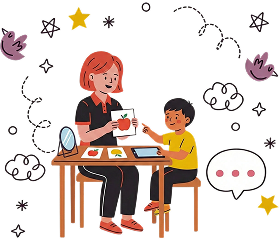
Home Assessment & Modifications
Professional home evaluations identifying modifications and equipment recommendations to improve safety, accessibility and independence.
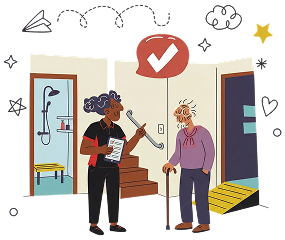
Assistive Technology Assessment
Recommendations for assistive technology solutions like communication devices, computer access & adaptive equipment to support daily participation.
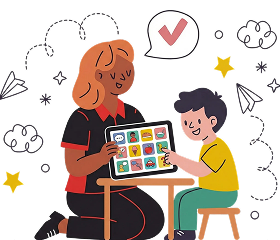
Comprehensive Therapy
Complete allied health support including ongoing therapy sessions, rehabilitation programs and personalised interventions to address all your therapy needs.