Disclaimer: The information in this article is general in nature and is intended for educational purposes only. It is not a substitute for professional assessment or advice. Every child is different, and families should seek tailored guidance from their own healthcare or therapy provider regarding their child’s individual needs.
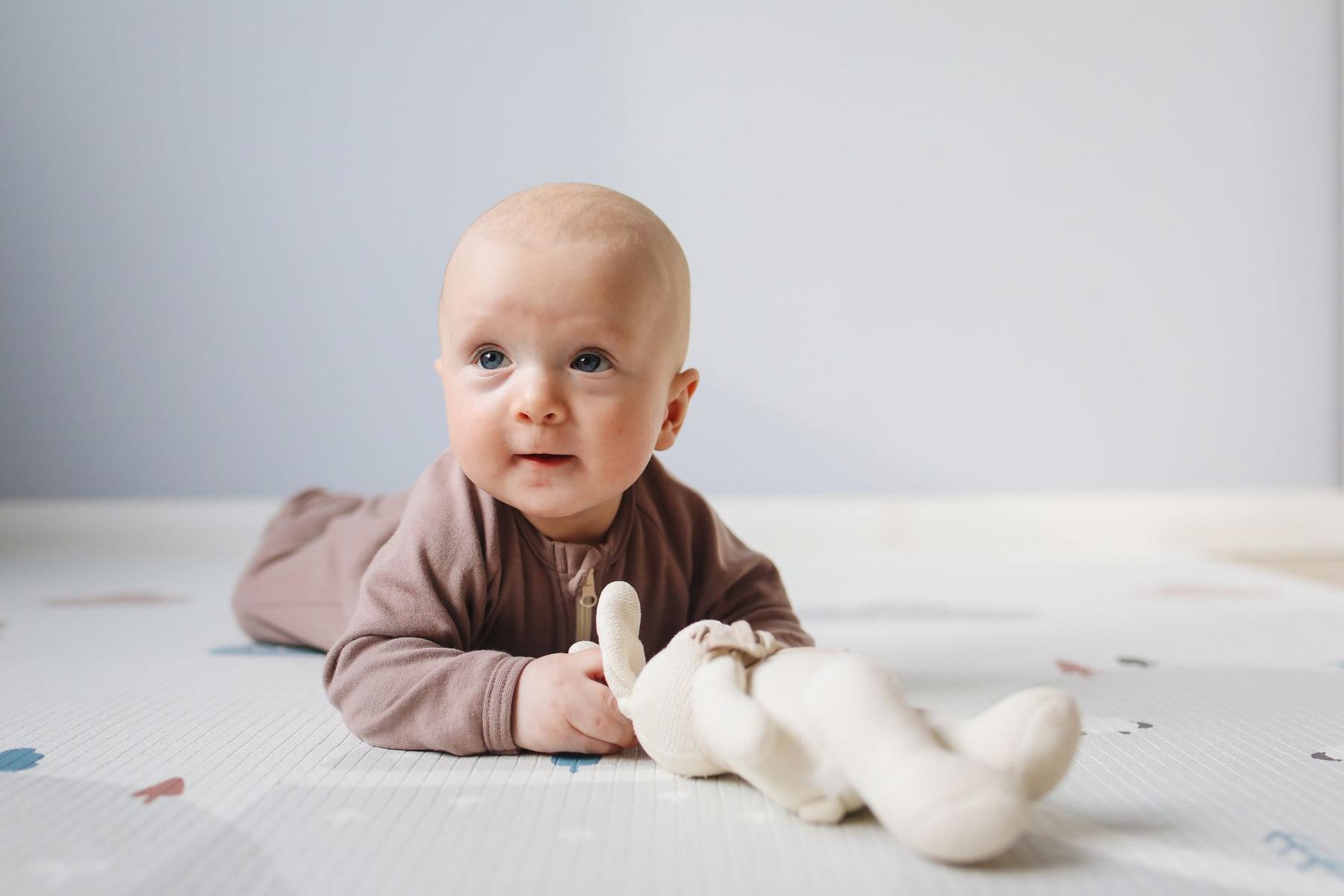
There is a moment many parents know all too well: you place your baby on their tummy and within seconds, the crying begins. It can feel counterintuitive – even distressing – to persist with an activity your baby seems to dislike. Yet this simple act of supervised, awake tummy time is one of the most well-supported, evidence-based activities for infant motor development available. And for families navigating developmental concerns, occupational therapy (OT) strategies for tummy time and core development can make a meaningful difference in how confidently their child grows, moves, and engages with the world.
This article outlines what the research says, how Occupational therapists approach tummy time and core strengthening, and what strategies families can apply at home. Families are encouraged to speak with a qualified professional in their area for guidance tailored to their child’s specific circumstances.
Why Is Tummy Time So Important for Core Development?
Tummy time is the intentional placement of an infant on their stomach during supervised, awake hours. The guiding principle established by the American Academy of Pediatrics (AAP) is simple: “Back to sleep, tummy to play.” Sleep should always occur on the back to reduce the risk of Sudden Infant Death Syndrome (SIDS), while tummy time is reserved for wakeful, supervised periods.
When a baby is placed on their stomach, they must work against gravity to lift their head. This activates the cervical (neck), thoracic (mid-back), and spinal extensor muscles – initiating what is essentially an infant’s first experience of anti-gravitational movement. Over time, this repeated effort builds the foundational strength needed for sitting, crawling, standing, and walking.
For specific guidance on how much tummy time is appropriate for your infant, speak with your healthcare provider, as recommendations will depend on your child’s age, development, and individual needs.
A systematic review published in Pediatrics (2020), examining 16 research articles involving 4,237 participants from eight countries, found that tummy time was positively associated with gross motor development, improved movement in prone and supine positions, rolling, crawling, and the prevention of brachycephaly (flattening at the back of the head). These findings underline why OT strategies for tummy time and core development are prioritised in early intervention practice.
What Are the Key OT Strategies for Tummy Time?
Occupational therapists use a graded, progressive approach to tummy time – particularly when an infant resists prone positioning. Rather than placing a baby flat on the floor from day one, the process is scaffolded to build tolerance and muscle endurance incrementally. The specific progression used will depend on each infant’s individual needs, and families should seek tailored guidance from their own healthcare or therapy provider.
Progressive Positioning Modifications
A clinically graded progression for tummy time commonly used in OT practice moves through a series of increasingly demanding positions:
Skin-to-skin (modified prone on adult’s chest) Placing the newborn on a caregiver’s chest while the adult reclines encourages early bonding, allows the baby to make eye contact, and works the neck extensor muscles at a gentler incline.
Inclined prone on a firm sofa arm With the caregiver positioned at the infant’s head level, this inclined position offers a mechanical advantage, reducing the effort required to lift the head.
Floor-based tummy time on a soft mat Practised on a firm, flat surface – the standard tummy time position.
Tummy time with chest support A rolled towel or firm bolster placed under the infant’s chest elevates the upper body slightly, positioning the arms forward to encourage weight-bearing through the hands.
Full prone positioning with reaching activities The infant is fully prone and encouraged to reach for toys placed in various directions, promoting symmetrical muscle development and core engagement.
Sensory Enrichment Strategies
Sensory input plays a meaningful role in sustaining an infant’s interest during tummy time. OT-informed strategies include:
- Placing high-contrast toys or mirrors within the infant’s visual field to encourage sustained head lifting
- Varying textures beneath the baby – carpet, a foam mat, or a soft blanket – to provide tactile stimulation
- Removing socks to allow the baby to feel sensations underfoot, which also aids traction for rolling and scooting
- Caregiver engagement – getting down to the baby’s eye level, using funny faces, singing, and imitating the infant’s vocalisations – to create positive associations with prone positioning
How Can Tummy Time Be Built Into Daily Routines?
One of the most practical insights from occupational therapy practice is that consistency, not duration, drives results. Infants benefit more from multiple short sessions throughout the day than from one extended period.
Research indicates that accumulating sessions in short, frequent bursts – such as after each nappy change, after a nap, or during towel-drying after a bath – embeds tummy time naturally into existing family rhythms. This routine integration supports neuromuscular adaptation and builds positive associations with the activity over time.
Practical routine anchors include:
- After every nappy change (a natural, low-effort transition)
- After nap time, when the baby is calm and alert
- During bath-time routines – placing the baby prone across your lap while drying or applying lotion
- Reading time or quiet play in prone position for older infants
For infants who resist, beginning with very brief sessions and stopping before the baby becomes fatigued or distressed is a widely recommended starting point. Resistance to tummy time is often a sign of muscle fatigue rather than true dislike – a distinction that helps many families persist with patience. Speak with a qualified professional in your area for guidance on duration and frequency suited to your infant.
What OT Strategies Support Core Development Beyond Tummy Time?
Core strength is not limited to tummy time alone. The core encompasses the lower back, abdominal, pelvic, and hip muscles – all of which must work together through a process called co-contraction to stabilise the body during movement.
The table below outlines the developmental milestones associated with tummy time and core development, along with relevant OT strategies. These milestones are approximate and intended as general reference only; families should consult their healthcare provider for guidance specific to their child.
| Age Range | Developmental Milestone | OT Strategies |
|---|---|---|
| 2–4 weeks | Begins turning head side-to-side in prone | Chest-to-chest tummy time; caregiver eye contact |
| 1–2 months | Attempts to lift head briefly | Inclined prone positioning; auditory engagement |
| 2–3 months | Presses up onto hands; lifts and holds head | Bolster/towel support; high-contrast visual toys |
| 3–5 months | Mini push-ups; lifts head and chest | Floor-based tummy time; reaching activities |
| 6 months | Pivots on tummy; reaches for nearby toys | Multi-directional toy placement; rolling facilitation |
Beyond the prone position, occupational therapists incorporate a range of activities to support ongoing core development:
Sidelying Positioning
Sidelying is a complementary position that promotes midline orientation, hand-to-mouth behaviours, and trunk flexion. Proper sidelying involves aligning the head with the trunk, flexing the hips and knees toward the tummy, and supporting the back with a rolled towel. Alternating sides is important to prevent asymmetrical development and head flattening.
Active Play for Core Engagement
For older infants and toddlers, OT strategies for core development expand to include:
Animal Walks
Bear crawls, crab walks, and frog hops engage core muscles through active, whole-body movement.
Therapy Ball Activities
Gentle rolling, sitting, or lying on a therapy ball in a supported environment activates the deep stabilising muscles of the trunk.
Supervised Climbing and Obstacle Activities
Simple crawling through tunnels, under blankets, or navigating low climbing structures encourages the core to stabilise against movement – a natural and engaging form of strengthening.
Reaching and Pulling During Floor Play
Positioning toys in a circle around the baby during prone play encourages reaching in multiple directions, symmetrically activating the muscles on both sides of the body.
When Should Families Seek OT Support for Tummy Time and Core Development?
Occupational therapists can offer graduated, individualised strategies when tummy time is not progressing as expected or when specific developmental concerns arise.
Indicators that professional guidance may be beneficial include:
- Head tilt consistently to one side, which may suggest torticollis (a tightening of the neck muscles on one side)
- Flat areas developing on the back or side of the head (positional plagiocephaly)
- Significant asymmetry in how the infant moves or holds their body
- Persistent difficulty tolerating tummy time despite progressive modifications
- Delay in expected motor milestones relative to the developmental timeline
Occupational therapists assess each infant’s positioning needs, screen for potential postural concerns, educate caregivers on the physiological reasoning behind positioning strategies, and monitor progress over time. For NDIS participants, OT services supporting tummy time and core development may be incorporated into an individualised therapy plan focused on motor skill development, prevention of postural deformities, and family capacity building.
Families are encouraged to speak with a qualified professional in their area to explore what support may be available to them.
Building a Strong Foundation From the Ground Up
Tummy time is often described as an infant’s first gymnasium – and for good reason. Every brief moment spent in prone position contributes to the neuromuscular foundation that underpins all future movement: sitting, crawling, walking, and the fine motor precision needed for learning and self-care.
OT strategies for tummy time and core development are not one-size-fits-all. They are responsive, graduated, and built around each child’s unique tolerance, developmental stage, and family context. When implemented consistently – beginning from the earliest weeks of life and progressing thoughtfully – these strategies offer lasting benefits that extend well beyond infancy.
Families who have questions or concerns about their child’s development are encouraged to reach out to a qualified occupational therapist or healthcare professional in their area.
This article is intended as general information only and does not constitute professional advice. It is not a substitute for a formal assessment by a qualified occupational therapist or other healthcare professional. If you have concerns about your child’s development, please seek advice from a qualified professional in your area.
How early can OT strategies for tummy time begin?
The AAP recommends beginning tummy time as soon as a baby comes home from hospital. OT strategies for tummy time can be introduced from birth, starting with modified positions such as skin-to-skin prone on the caregiver’s chest. The approach is always tailored to the individual infant’s age, tolerance, and developmental readiness.
My baby cries every time I do tummy time – is that normal?
Resistance is common and is generally considered a sign of muscle fatigue rather than an aversion to the activity itself. Starting with very brief sessions, ensuring the baby is rested and calm, and using engaging sensory strategies such as face-to-face interaction and high-contrast toys can help build gradual tolerance. An occupational therapist can provide personalised strategies if resistance persists.
Can OT strategies for core development be accessed through the NDIS?
Yes. For eligible NDIS participants, occupational therapy services addressing tummy time, core development, and motor skill progression may be incorporated into an individualised therapy plan. Families should speak with a qualified professional in their area to explore what options may be available to them.
Is tummy time safe for babies with reflux?
Infants with gastroesophageal reflux (GERD) may find prone positioning uncomfortable. A paediatrician and occupational therapist can work together to identify the most suitable timing and positioning approach for an individual infant. Families should seek tailored guidance from their own healthcare provider regarding safe tummy time practices for their child.
What is the difference between tummy time and core development exercises for older children?
Tummy time refers specifically to supervised prone positioning for infants, which builds foundational neck, shoulder, and core strength. As children grow, OT strategies for core development expand to include active play-based activities such as animal walks, therapy ball exercises, climbing, and structured movement games – all designed to continue building postural stability and motor function in age-appropriate ways.