Spelling and Writing
Single word spelling accuracy, spelling error pattern analysis, written sentence construction, and the ability to express ideas in writing fluently and accurately.
Our registered speech pathologists and allied health professionals conduct thorough dyslexia assessments for children, teens, and adults. We deliver mobile, telehealth, and clinic-based assessment services across Australia. NDIS registered provider with flexible funding options available.

What We Evaluate
Our dyslexia assessments are thorough, examining multiple areas of literacy and language processing to build a complete picture of reading and writing abilities.
Single word spelling accuracy, spelling error pattern analysis, written sentence construction, and the ability to express ideas in writing fluently and accurately.
Phonological awareness skills including sound blending, segmenting, and manipulation, plus rapid automatised naming speed and phonological memory capacity.
Single word reading accuracy, nonsense word decoding, reading fluency and rate, reading comprehension, and sight word recognition.


Astrad Allied Health is an established provider of dyslexia assessment services across Australia. Our registered clinicians have experience assessing and supporting individuals with literacy difficulties across all age groups, from early primary school through to adulthood.
Learn About UsWho May Benefit From a Dyslexia Assessment
Dyslexia assessments can benefit anyone experiencing persistent difficulties with reading, spelling, or written expression that do not resolve with standard classroom instruction. If you recognise any of the following, an assessment may provide valuable clarity.
Children struggling with learning to read, falling behind peers in literacy despite adequate instruction, or showing signs of reading avoidance may benefit from early identification. A dyslexia assessment can clarify whether targeted reading intervention is needed.
Following a dyslexia assessment, our speech pathologists can provide structured literacy intervention using evidence-based approaches such as Sounds-Write, MultiLit, and other phonics-based programs to build reading and spelling skills.
NDIS participants with literacy difficulties can access our assessment services through their plan. Our detailed reports support funding applications for speech pathology intervention targeting reading and writing skills.
Adults who have always found reading and writing challenging but were never formally assessed can benefit from a dyslexia assessment at any age. A diagnosis can provide understanding, self-acceptance, and access to workplace or tertiary education accommodations.
Older students who have compensated for reading difficulties but find the demands of secondary school overwhelming may benefit from formal assessment. A diagnosis can support access to reasonable adjustments, extra time in exams, and targeted literacy support.
If your child is struggling with reading and you want to understand why, a dyslexia assessment provides clear answers. Knowing whether dyslexia is present helps families access the right support, advocate effectively at school, and build confidence.
Our dyslexia assessment follows a structured, evidence-based approach to identify literacy difficulties and provide clear recommendations for support.

We begin by gathering your developmental, educational, and medical history. This includes understanding reading and writing milestones, school performance, family history of literacy difficulties, and any previous assessments or interventions.
Our clinician conducts a detailed assessment of reading accuracy, reading fluency, spelling, phonological awareness, rapid naming, and written expression. We use standardised, norm-referenced assessment tools to compare performance against age expectations.
You receive a comprehensive written report with assessment findings, a clear explanation of strengths and areas of difficulty, and evidence-based recommendations for home, school, and therapy support. Reports are suitable for school funding applications and NDIS planning.

Qualified Clinicians With Literacy Assessment Experience
We bring our dyslexia assessment service directly to you. Our clinicians conduct assessments in your home, school, or community setting across Australia, making the process comfortable and reducing disruption to your routine.
Our speech pathologists are registered with the Australian Health Practitioner Regulation Agency (AHPRA) and are certified practising members of Speech Pathology Australia. Our team maintains current training in literacy assessment and evidence-based reading interventions.
Every dyslexia assessment includes a detailed report with standardised test results, clinical observations, a profile of strengths and difficulties, and practical recommendations for parents, teachers, and support professionals. Reports meet school and funding body requirements.
Our assessment reports are written to support NDIS planning meetings, school funding applications, and applications for reasonable adjustments in educational settings. We understand what evidence is needed and structure our reports to meet these requirements.
We focus on the whole person, not just test scores. Our assessments consider emotional wellbeing, confidence, learning preferences, and individual goals. We create a supportive assessment experience that recognises effort and celebrates strengths alongside identifying areas for support.
We understand that waiting for a dyslexia assessment can delay access to the right support. Our team works to schedule assessments promptly, with comprehensive reports provided within a reasonable timeframe to support timely intervention planning.
A dyslexia assessment is a comprehensive evaluation conducted by a qualified clinician to identify specific learning difficulties related to reading, spelling, and written language. Dyslexia is a neurological condition that affects how the brain processes written and spoken language. It is not related to intelligence. People with dyslexia often have average or above-average cognitive abilities but experience persistent difficulties with decoding words, reading fluency, spelling, and sometimes written expression. A formal assessment provides clarity, identifies specific strengths and weaknesses, and guides targeted intervention strategies.
A dyslexia assessment is a comprehensive evaluation conducted by a qualified professional to determine whether an individual has dyslexia, a specific learning difficulty that primarily affects reading, spelling, and writing. The assessment examines a range of skills including phonological awareness, reading accuracy and fluency, spelling, writing, working memory, and processing speed. Results provide a clear picture of the individual’s strengths and challenges, and form the basis for targeted intervention strategies and any accommodations needed for school, university, or the workplace.
Signs of dyslexia can vary by age. In younger children, common indicators include difficulty learning letter names and sounds, trouble rhyming, slow development of spoken vocabulary, and difficulty following multi-step instructions. In school-aged children and adolescents, signs may include reading significantly below expected level, persistent spelling difficulties, avoidance of reading tasks, slow or effortful writing, and difficulty organising written work. Adults with undiagnosed dyslexia may experience ongoing reading and spelling challenges, difficulty with written communication at work, and slower reading speed compared to peers.
At Astrad, dyslexia assessments are conducted by registered speech pathologists with experience in literacy and learning difficulties. Speech pathologists are qualified to assess the language and phonological processing skills that underpin reading and spelling, making them well-suited to identify dyslexia and recommend evidence-based intervention strategies. Our clinicians use standardised, validated assessment tools and follow current best-practice guidelines to ensure accurate, reliable results that are accepted by schools, universities, and funding bodies.
Dyslexia assessments may be funded through NDIS plans if the individual has an NDIS plan that includes Capacity Building Supports for Improved Daily Living. Funding eligibility depends on your individual plan goals and how the assessment relates to your functional support needs. Our team can help you understand whether your NDIS funding applies to a dyslexia assessment and work within your plan to deliver the service. For individuals without NDIS funding, we also offer assessments on a private fee-for-service basis.
A dyslexia assessment typically takes place over one or two sessions. Your speech pathologist will begin by gathering background information about developmental history, educational experiences, and current concerns. The assessment itself involves a series of standardised tasks that evaluate phonological awareness, reading accuracy, reading fluency, spelling, writing, working memory, and processing speed. The clinician may also assess oral language skills to build a complete picture. After the assessment, you receive a detailed report with findings, a diagnosis if appropriate, and recommendations for intervention, school accommodations, or workplace adjustments.
Dyslexia can be assessed from around age six or seven, once a child has had sufficient exposure to formal reading instruction. However, pre-literacy screening can identify risk factors in children as young as four or five, allowing early intervention to begin before significant reading difficulties develop. There is no upper age limit for a dyslexia assessment. Many adolescents and adults seek assessment to understand lifelong reading and spelling challenges, access accommodations for university exams, or receive workplace support. Early identification leads to better outcomes, but assessment at any age can provide valuable insights and open pathways to support.
Booking a dyslexia assessment is straightforward. You can request an appointment through our website or by calling our team directly. No GP referral is required, though we accept referrals from GPs, paediatricians, psychologists, teachers, and school support teams. Our registered speech pathologists deliver assessments through our mobile service, coming to your home, school, or community setting across Queensland, New South Wales, Victoria, and Tasmania. We work with NDIS participants and families accessing private funding to ensure assessment services are accessible.
Contact us to discuss how our dyslexia assessment services may support your understanding of reading and literacy difficulties. We offer mobile services across Australia, telehealth options, and flexible scheduling.
Book Your AssessmentAstrad Allied Health provides a range of occupational therapy and speech pathology services across Australia.
Registered occupational therapists providing support for daily living skills, independence and participation in work, school and community activities.

Assessment and recommendations for mobility equipment and assistive technology to support participation in daily activities across your environment.

Registered speech pathologists helping with communication, swallowing and language development across Queensland, NSW, Victoria and Tasmania.

Professional home evaluations identifying modifications and equipment recommendations to improve safety, accessibility and independence.
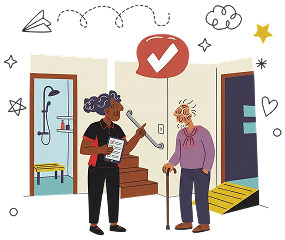
Recommendations for assistive technology solutions like communication devices, computer access & adaptive equipment to support daily participation.

Complete allied health support including ongoing therapy sessions, rehabilitation programs and personalised interventions to address all your therapy needs.