

Evidence-Based Stuttering Treatment Across Australia
Speech Therapy for Stuttering
Stuttering can hold you back from speaking with confidence at work, school and in everyday conversations. Our registered speech pathologists deliver evidence-based stuttering treatment in your home, school or community, helping children, teenagers and adults develop greater fluency and communication confidence across Australia.
Begin Your Fluency Journey Today
Every person who stutters has unique communication needs and goals. Whether you want to increase fluency, build communication confidence or learn to manage stuttering more effectively, we develop treatment plans aligned with your priorities.

Registered Professionals
Flexible Scheduling
NDIS & Private Options
Family-Focused Care

Our Approach to Stuttering Treatment
Understanding
We take time to understand each person's unique stuttering pattern, triggers, communication attitudes and therapy goals. By understanding your individual patterns, we design therapy that targets the moments and contexts that matter most to you.
Collaboration
We work alongside families, educators and other professionals to create consistent support across all environments. When the people around you are informed and supportive, therapy gains transfer more effectively into everyday life.
Flexibility
We adapt our approaches to suit each individual's age, stuttering severity, learning style and personal goals. We also adjust therapy delivery to fit your life, offering sessions at home, school, work or in the community.
Respect
We respect that stuttering is part of a person's communication experience. We work with each client to define what meaningful progress looks like for them, whether that is greater fluency, increased confidence or reduced avoidance.

Why Choose Astrad for Stuttering Treatment?
Mobile stuttering treatment Australia-wide
Dedicated Stuttering Expertise
Our speech pathologists have dedicated training and a strong focus on stuttering treatment. We use contemporary therapy methods supported by research, including the Lidcombe Program, fluency shaping techniques and stuttering modification strategies.
Mobile Stuttering Treatment Services
We bring stuttering treatment directly to you in your home, school, workplace or community setting across Australia. Mobile therapy allows us to develop fluency strategies in the real environments where you communicate every day.
Research-Supported Treatment Approaches
We use therapy approaches supported by current research, including the Lidcombe Program, Camperdown Program, smooth speech techniques and cognitive-behavioural approaches. Every treatment plan draws from the strongest available evidence.
NDIS Registered Provider for Stuttering
Astrad Allied Health is an NDIS provider. We can help you access stuttering treatment through your NDIS plan, working with self-managed or plan-managed participants.
Family-Centred Stuttering Support
We work closely with families because stuttering treatment does not happen in isolation. For children, we coach parents to support fluency practice at home. For teenagers and adults, we involve partners and family members when helpful.
Certified Practising Speech Pathologists
All our speech pathologists are certified practising members of Speech Pathology Australia with current working with children checks and NDIS worker screening clearances. Our clinicians maintain ongoing professional development in stuttering treatment.
How Speech Pathology Can Support People Who Stutter
Our speech pathologists use evidence-based approaches tailored to each person's age, stuttering severity and therapy goals. For children, treatment may involve play-based fluency activities and parent coaching. For teenagers and adults, therapy combines fluency techniques with strategies for communication confidence.

- 1
In-Depth Fluency Assessment
We begin with a thorough assessment of stuttering patterns, communication attitudes and overall speech fluency to understand each person's unique presentation. Our assessment examines stuttering frequency, types of disfluencies, secondary behaviours and the real-world impact on daily communication and participation.
- 2
Personalised Fluency Therapy Plan
Based on assessment findings, we develop personalised therapy goals targeting the fluency skills most relevant to you. Speech therapy for stuttering may include fluency shaping techniques, stuttering modification strategies, breathing control exercises and communication confidence building, all tailored to your age, goals and lifestyle.
- 3
Ongoing Support & Tracking
We provide regular stuttering treatment sessions with structured progress monitoring and therapy adjustments as your fluency develops. We also support families, educators and employers to create communication-friendly environments that reduce speaking pressure and encourage fluency development.
Comprehensive Stuttering Treatment Services
Communication Areas We Address in Stuttering Treatment
Our speech pathologists provide stuttering treatment across multiple communication areas, tailored to your individual presentation and goals.
Fluency Development
Support with reducing stuttering frequency, managing moments of stuttering, practising fluency techniques and building smooth speech patterns across different communication situations, from casual conversations to high-pressure presentations.
Communication Confidence
Help with reducing communication anxiety, addressing avoidance behaviours, building positive speaking attitudes and developing confidence for challenging situations like phone calls, presentations, job interviews and social conversations.
Stuttering Modification
Support with learning to stutter more easily, reducing physical tension during moments of stuttering, managing secondary behaviours and developing strategies to move through blocks and repetitions with less effort and frustration.
Understanding Stuttering: Causes, Types and Impact
Stuttering is a speech disorder that disrupts the natural flow and rhythm of speech. It typically begins in childhood, with most cases emerging between the ages of 2 and 5 years. Research points to interactions between neurological, genetic and environmental factors, though the precise cause remains not fully understood.
People who stutter experience disruptions in their speech flow including repetitions of sounds or syllables, prolongations where sounds are stretched out, and blocks where speech stops completely. For many, stuttering severity varies by situation. Speaking on the phone, talking to authority figures or presenting to a group may increase tension and stuttering frequency.
The impact extends well beyond physical speech disruptions. Many people develop secondary behaviours such as eye blinking, facial tension or avoidance of certain words. Communication anxiety can significantly affect quality of life, influencing educational participation, career choices and social relationships. Our speech pathology team recognises several types of stuttering, including developmental stuttering (the most common form emerging in early childhood), neurogenic stuttering (following brain injury or neurological conditions), and rare psychogenic stuttering (emerging after psychological trauma). Each type requires careful assessment to determine the most appropriate stuttering treatment approach.
Evidence-Based Stuttering Treatment Approaches
Effective speech therapy for stuttering draws on evidence-based approaches tailored to the individual’s age, stuttering severity and personal goals. For children under 6, early intervention is strongly recommended. The Lidcombe Program involves parent-delivered therapy under speech pathologist guidance, with strong research support for reducing stuttering frequency and supporting natural fluency development. The earlier intervention begins, the better the potential outcomes.
For school-age children and teenagers, treatment typically combines fluency shaping (smooth speech techniques including gentle onsets and relaxed breathing), stuttering modification (reducing physical tension during moments of stuttering), and communication confidence building to address anxiety and avoidance behaviours. Teenagers often benefit most from therapy addressing both the physical aspects and the emotional impact on social participation.
Adult stuttering treatment focuses on practical fluency management skills. The Camperdown Program teaches prolonged speech techniques in a structured, self-managed format with strong research support. Many adults benefit from combining fluency techniques with cognitive-behavioural approaches that address communication anxiety and avoidance behaviours developed over years of stuttering. Some adults focus more on stuttering acceptance and reducing negative impact rather than eliminating all disfluencies. Learn more about our full range of allied health services.
The Role of Family in Stuttering Treatment
Family involvement is essential for successful stuttering treatment, particularly for children and teenagers. Research consistently shows that therapy outcomes improve when parents and carers are active participants in the treatment process. Our speech pathologists coach families on how to support fluency development at home, including adjusting communication styles, creating low-pressure speaking environments and providing appropriate feedback during moments of stuttering.
For young children receiving speech therapy for stuttering, parents often deliver therapy strategies under speech pathologist supervision. This parent-led approach maximises daily practice opportunities and embeds fluency strategies naturally into everyday interactions. Family education also builds understanding about the neurological basis of stuttering. When families understand that stuttering is not caused by anxiety, nervousness or parenting style, they can respond more effectively and reduce unhelpful pressure on the person who stutters. Our allied health team takes a holistic, family-centred approach across all services.
When to Seek Speech Therapy for Stuttering
Parents should consider seeking speech therapy for stuttering if their child has been stuttering for 6 months or longer without signs of improvement, shows frustration or avoidance related to speaking, has a family history of persistent stuttering, or develops secondary behaviours like facial tension or word avoidance. Children over 3.5 years of age whose stuttering frequency is not decreasing should be assessed promptly.
For adults, stuttering treatment may be beneficial if stuttering affects work performance, social participation or quality of life. It is also worth exploring if you want to develop better fluency management strategies or reduce communication avoidance behaviours. Early intervention provides the strongest opportunity for children to develop natural fluency. However, evidence-based stuttering treatment can be effective at any age. Adults can develop improved fluency control and communication confidence regardless of how long they have stuttered. If you are unsure whether to seek assessment, contact our team to discuss your situation.
Accessing Stuttering Treatment Through NDIS
If you or your child has NDIS funding, you may be able to access speech therapy for stuttering through your plan. Stuttering treatment typically falls under capacity building supports, helping to develop communication skills and reduce barriers to participation in education, employment and community life.
As a NDIS provider, Astrad Allied Health delivers stuttering treatment using your NDIS funding. We work with self-managed, plan-managed and NDIA-managed participants, making the process straightforward regardless of your plan type. Our speech pathologists have extensive experience within the NDIS framework and can help you understand how to use your funding effectively. We provide comprehensive reports and documentation to support your current plan and future plan reviews. Sessions are delivered with flexibility and client choice at the centre, at your preferred location and at times that suit your family.
Mobile Speech Therapy: Stuttering Treatment in Your Environment
One significant advantage of our service model is mobile speech therapy delivery. We bring stuttering treatment directly to your home, school, workplace or community setting anywhere across Australia. Working in natural communication environments allows us to develop fluency strategies that apply directly to real-life situations and observe how stuttering presents in different contexts.
For children, home-based speech therapy enables parents to observe sessions firsthand and learn techniques they can integrate throughout the day. For adults, workplace-based therapy addresses the specific communication demands of your professional environment, from phone calls to meetings and presentations. Mobile services also eliminate transport barriers, making stuttering treatment more accessible for families in regional and remote areas. Our speech pathologists service communities across Queensland, New South Wales, Victoria and Tasmania. Explore our comprehensive therapy services for more on how mobile delivery works.
What to Expect from a Stuttering Assessment
Your first step in accessing speech therapy for stuttering is a comprehensive assessment. Our speech pathologists use standardised tools and detailed clinical observation to evaluate stuttering frequency and severity, types of disfluencies (repetitions, prolongations, blocks or combinations), secondary behaviours (physical tension, avoidance strategies, word substitutions), communication attitudes and impact on daily activities including work, education and relationships.
The assessment includes detailed discussion about your communication goals and what you want to achieve through treatment. This collaborative approach ensures therapy targets the areas most important to you. Following assessment, your speech pathologist will explain findings clearly, discuss appropriate stuttering treatment options and develop a personalised therapy plan. We provide transparent information about evidence-based approaches and work with you to choose strategies that align with your goals, preferences and lifestyle.
Stuttering Myths and Facts
Many misconceptions about stuttering persist despite decades of research. Understanding the facts helps families respond appropriately and access effective stuttering treatment without delay.
Myth: Stuttering is caused by anxiety or nervousness.
Fact: Stuttering has neurological origins. While anxiety can temporarily worsen stuttering, it does not cause the disorder. Many confident, relaxed people stutter.
Myth: Children should be ignored when they stutter and they will grow out of it.
Fact: Early intervention with evidence-based stuttering treatment provides the strongest outcomes. Ignoring stuttering does not make it go away and may delay access to effective therapy.
Myth: People who stutter are less intelligent.
Fact: Stuttering has no relationship to intelligence. People who stutter have the same range of intellectual abilities as the general population.
Myth: Adults who stutter cannot improve.
Fact: Research-supported stuttering treatment can help adults develop improved fluency control and communication confidence at any age, regardless of how long they have stuttered.
Get Started with Speech Therapy for Stuttering
If you or your child stutters, speech therapy for stuttering can provide evidence-based strategies to support fluency development, reduce communication barriers and build lasting confidence. Our registered speech pathologists deliver stuttering treatment using contemporary, research-supported approaches tailored to individual needs and goals.
Astrad Allied Health provides mobile speech pathology services across Australia, working with both NDIS participants and private clients in homes, schools, workplaces and community settings. Whether you are seeking support for a preschool child showing early signs of stuttering, a teenager navigating social and academic communication demands, or an adult looking to develop stronger fluency management skills, our team is ready to help.
The first step is a conversation about your communication goals. Contact Astrad Allied Health to discuss how stuttering treatment may support you or your family, or explore our broader speech pathology services for children, teenagers and adults across Australia.
Common Questions About Stuttering Treatment
What happens during stuttering therapy?
Speech therapy may focus on developing smoother speech patterns, improving breathing and speech coordination, and building confidence in communication. For children, sessions are often play-based and involve parent participation. For adolescents and adults, therapy may include fluency techniques, cognitive strategies and real-world speaking practice.
At what age should stuttering treatment begin?
Early intervention is often recommended, particularly for young children who have been stuttering for several months or who show signs of frustration. Speech therapy can also be highly effective for teenagers and adults. Treatment approaches vary depending on age and individual needs.
What causes stuttering?
Stuttering is a speech condition that affects the flow of speech. It may involve repetitions, prolongations or blocks when trying to produce sounds or words. Research suggests stuttering is influenced by neurological, genetic and developmental factors. It is not caused by anxiety or poor parenting, although stress can sometimes increase its severity.
Ready to Explore Stuttering Treatment?
Contact us to discuss how speech therapy for stuttering may support you or your child. We provide mobile services across Australia and work with NDIS participants and private clients.
Book a Free ConsultationOur Allied Health Services
Astrad Allied Health offers a comprehensive range of services to support your health and independence:
Mobile Occupational Therapy
Registered occupational therapists providing support for daily living skills, independence and participation in work, school and community activities.
Mobility Equipment Assessment
Assessment and recommendations for mobility equipment and assistive technology to support participation in daily activities across your environment.
Speech Pathology Services
Registered speech pathologists helping with communication, swallowing and language development across Queensland, NSW, Victoria and Tasmania.
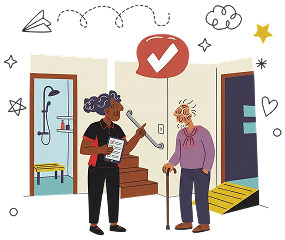
Home Assessment & Modifications
Professional home evaluations identifying modifications and equipment recommendations to improve safety, accessibility and independence.
Assistive Technology Assessment
Recommendations for assistive technology solutions like communication devices, computer access & adaptive equipment to support daily participation.

Comprehensive Therapy
Complete allied health support including ongoing therapy sessions, rehabilitation programs and personalised interventions to address all your therapy needs.