
AHPRA-Registered Occupational Therapists Across Australia
Occupational Therapy for Down Syndrome
Helping children and adults with Down syndrome build independence, confidence and quality of life. Our AHPRA-registered occupational therapists deliver mobile Down syndrome therapy in your home, school or workplace across QLD, NSW, VIC and TAS.
Supporting Independence Through Occupational Therapy
Children with Down syndrome have unique developmental profiles that benefit from targeted occupational therapy. The right intervention can help enhance participation in self-care, school readiness, social engagement and community access.
Evidence-Based Practice
Flexible Scheduling
Family Involvement
Collaborative Care

Our Approach to Down Syndrome Occupational Therapy
Understanding
Every child with Down syndrome is unique, with their own strengths and developmental pace. We listen to your concerns and priorities before designing a therapy approach tailored specifically to your child.
Collaboration
We work closely with families, educators, paediatricians, speech pathologists and physiotherapists to deliver coordinated support. This team approach means your child receives integrated care rather than fragmented services.
Accessibility
We bring occupational therapy directly to your home, childcare or school across Queensland, New South Wales, Victoria and Tasmania. Our mobile service removes common barriers including travel time, clinic waiting rooms and routine disruption.
Excellence
We stay current with the latest Down syndrome research and intervention approaches. Our commitment to clinical excellence includes regular peer supervision, ongoing professional development and internal quality reviews.
Why Choose Astrad for Down Syndrome Occupational Therapy
Mobile Down syndrome therapy
Down Syndrome-Informed Practice
Our occupational therapists understand the developmental profile associated with Down syndrome, including low muscle tone, joint laxity and sensory processing differences. We assess each child's unique strengths and challenges to deliver targeted, evidence-based therapy.
Therapy in Familiar Environments
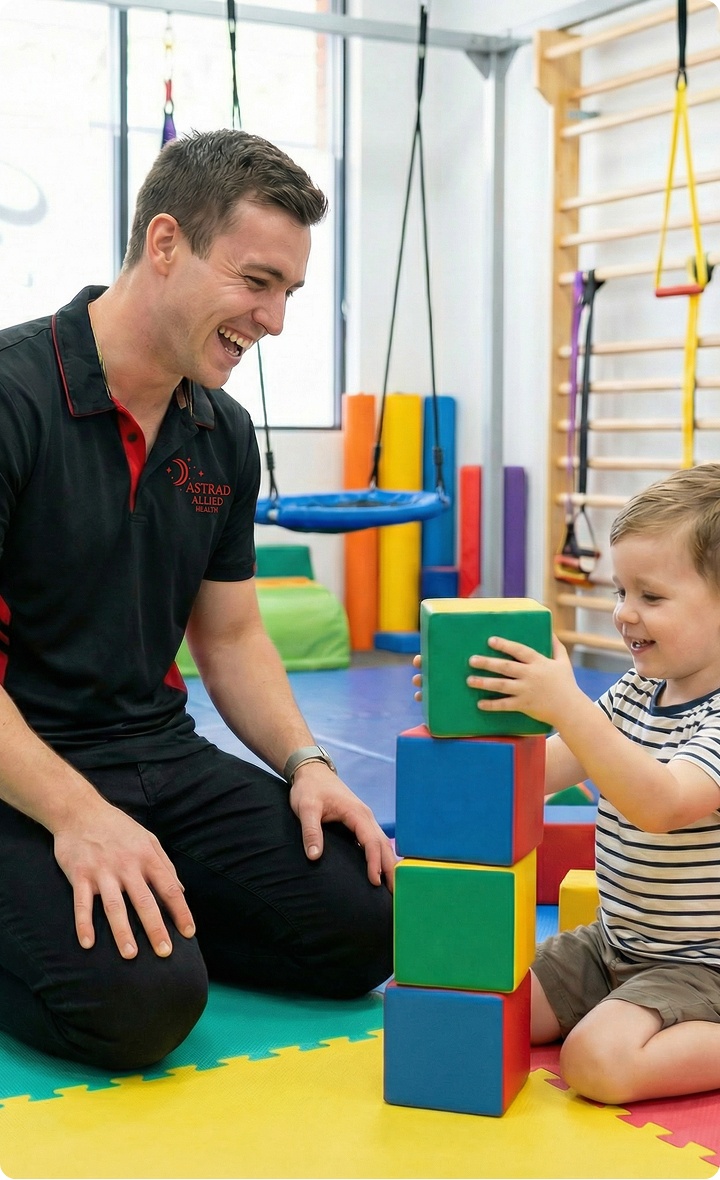
We bring occupational therapy to your home, childcare, school or community where skills can be practised within daily routines. Children often respond better in familiar environments, and our mobile model removes the stress of clinic travel.
Whole-Child Development
Down syndrome can affect multiple developmental areas simultaneously. Our therapy addresses fine motor skills, gross motor coordination, self-care, sensory regulation and social participation to support meaningful engagement in daily life.
NDIS, Medicare & Private Funding Options
We support NDIS participants through capacity building and early childhood intervention funding. We also work with private clients and can assist with Medicare referrals through your GP.
Practical, Measurable Progress
We focus on functional outcomes that can enhance daily participation, from independent dressing to improved pencil grasp and mealtime confidence. Progress is tracked through regular outcome measures and family feedback.
AHPRA-Registered Therapists
All Astrad occupational therapists are registered with AHPRA and committed to evidence-based practice. Our therapists maintain ongoing professional development in paediatric and developmental practice.
Our Process
We follow a structured, family-centred approach to occupational therapy for Down syndrome. From initial assessment through to ongoing support, our process is designed to build functional independence and meaningful participation at every stage.
- 1
Initial Down Syndrome Assessment
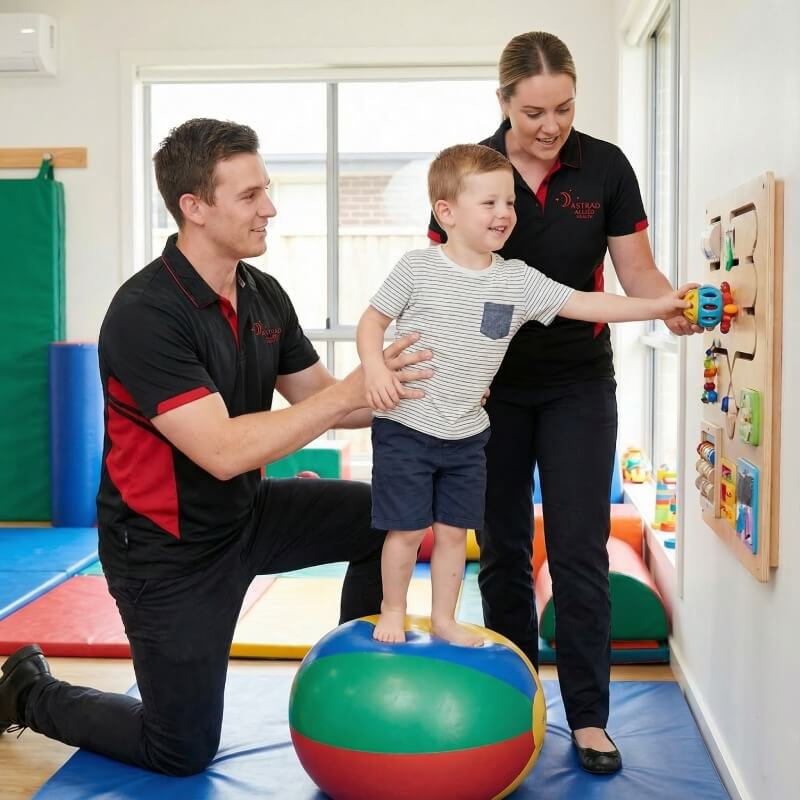
We take time to understand your child's unique strengths, challenges and developmental goals. Our comprehensive assessment considers motor skills, daily living abilities, sensory needs and participation across home, school and community settings.
- 2
Personalised Therapy Plan
Based on assessment findings, we develop tailored interventions targeting fine motor skills, gross motor development, self-care independence and functional participation. Every plan reflects your family's priorities and your child's developmental stage.
- 3
Ongoing Support & Progress Reviews
We work alongside your child and family to implement strategies, celebrate milestones and adapt approaches as development unfolds. Regular reviews track skill development and keep therapy aligned with changing needs and goals.
How Occupational Therapy Can Support Children with Down Syndrome
Fine Motor Development
Occupational therapy may support pencil grasp, cutting skills, object manipulation and handwriting development for children with Down syndrome. We use play-based activities to strengthen hand muscles and improve dexterity for functional tasks.
Gross Motor Skills & Coordination
Children with Down syndrome often experience low muscle tone and joint laxity affecting balance, coordination and strength. Our therapists design activities targeting core stability, motor planning and movement confidence for physical play.
Self-Care Independence
From toileting and dressing to feeding and grooming, we help children develop age-appropriate self-care skills. Task breakdown, visual supports and adaptive strategies may assist skill development and promote greater independence.
Sensory Processing Support
Many children with Down syndrome experience sensory processing differences affecting participation and regulation. We assess sensory needs and develop individualised strategies to support sensory modulation, attention and engagement.
Early Intervention for Down Syndrome: Why the First Years Matter
Starting occupational therapy early can make a meaningful difference for children with Down syndrome. The first years of life represent a critical window for neuroplasticity, when the brain is most responsive to learning new movement patterns and functional skills. Research suggests that children who access early intervention services from infancy may demonstrate improved motor development, cognitive growth and adaptive functioning compared to those who begin therapy later.
Early therapy typically focuses on foundational skills like head control, reaching, grasping and transitioning between positions. Our occupational therapists work with families to embed therapeutic strategies within daily routines like feeding, bathing and play. This approach helps maximise learning opportunities without disrupting family life. When therapy feels natural, children and families are more likely to practise consistently.
The benefits of early intervention extend beyond immediate skill development. Early therapy can help establish positive movement patterns, reduce compensatory strategies that may limit function long-term, and build parent confidence in supporting their child’s growth. Families who engage in mobile occupational therapy through our service often report feeling more equipped to nurture their child’s potential across home and community settings.
Building Fine Motor Skills for Children with Down Syndrome
Fine motor challenges are common in children with Down syndrome due to low muscle tone, joint laxity and differences in hand anatomy. These factors can affect precision grasp, in-hand manipulation, bilateral coordination and motor planning for tasks requiring finger dexterity. Without targeted support, fine motor difficulties may limit participation in feeding, dressing, writing and craft activities.
Occupational therapy focuses on strengthening intrinsic hand muscles, developing grasp patterns and improving hand-eye coordination through engaging, play-based activities. Our therapists assess each child’s current fine motor profile and design individualised intervention plans considering muscle strength, joint stability, hand dominance and visual-motor integration.
Sessions incorporate activities like playdough manipulation, threading beads, scissor practice and handwriting exercises that children find motivating. Fine motor development may progress at a different pace for children with Down syndrome, but consistent therapy and practice can support functional independence in school participation, self-care tasks and recreational activities. Explore our comprehensive therapy services for children with developmental needs.
Motor Planning and Coordination Support
Motor planning challenges affect many children with Down syndrome. A child may understand what they want to do but struggle to sequence and execute the steps required. These difficulties can affect activities ranging from simple gestures to complex multi-step tasks like getting dressed, tying shoelaces or riding a bike.
Occupational therapy addresses motor planning through graded practice, repetitive sequencing and consistent reinforcement. We break complex tasks into manageable steps, provide visual and verbal cues, and gradually increase difficulty as motor patterns become established. Our therapy activities target both gross motor coordination and fine motor precision simultaneously, helping children build planning and execution skills for everyday independence.
Children with Down syndrome may also benefit from sensory-motor integration activities that combine movement with sensory input to reinforce neural pathways. This comprehensive approach supports participation in school, home and community settings. Our sensory processing disorder therapy can complement motor planning interventions for children who experience both challenges.
Developmental Milestones and Setting Realistic Goals
Children with Down syndrome achieve developmental milestones on a different timeline. While there is significant variability among individuals, motor milestones are generally reached at a slower pace compared to typically developing peers. Understanding these timelines helps families set realistic expectations and celebrate progress along the way, rather than comparing against standard developmental charts.
Occupational therapy supports milestone progression by targeting skills that are emerging or within the child’s zone of proximal development. This balanced approach provides enough challenge to promote growth while respecting each child’s readiness and unique developmental pace. Our therapists provide families with developmental guidance, milestone expectations and practical strategies to support skill acquisition at home.
We tailor goals based on individual presentation rather than applying rigid timelines, recognising that every child’s journey is unique. Goal-setting is a collaborative process involving families, educators and other allied health professionals. Regular progress reviews help ensure therapy remains aligned with your child’s evolving needs. Learn more about our speech therapy for language delay services that can complement occupational therapy goals.
School Readiness and Classroom Participation
Preparing for school is a key focus of occupational therapy during the preschool years. School readiness skills include fine motor abilities for writing and craft, gross motor skills for playground participation, self-care independence for toileting and eating, attention skills for classroom learning, and social skills for peer interaction. Each of these areas may be affected by Down syndrome to varying degrees.
Our therapists work with families and educators to support smooth transitions into educational settings. We provide recommendations for classroom modifications, assistive technology, adaptive equipment and teaching strategies that accommodate the learning styles commonly associated with Down syndrome. Collaboration with teachers helps ensure consistent support across home and school environments.
This integrated approach may help maximise learning opportunities and support skill retention throughout the school week. Contact our team at Astrad Allied Health to discuss how occupational therapy can support your child’s development. Our mobile occupational therapy service brings AHPRA-registered therapists to your home, childcare or school across Queensland, New South Wales, Victoria and Tasmania.
Common Questions About Occupational Therapy for Down Syndrome
When should I start occupational therapy for my child with Down syndrome?
Early intervention can be beneficial for children with Down syndrome. Occupational therapy may begin in infancy to support developmental milestones, motor skills and feeding. Starting therapy early may help establish positive movement patterns and build foundational skills for greater independence.
How can OT help with low muscle tone (hypotonia)?
Children with Down syndrome often experience low muscle tone affecting posture, strength and coordination. Occupational therapy may support core stability, muscle strengthening and motor control through play-based activities. Therapists design graded exercises to help improve muscle tone and functional movement.
What fine motor skills can occupational therapy target?
Occupational therapy may support pencil grasp, cutting skills, hand-eye coordination and handwriting development for children with Down syndrome. Sessions use engaging activities such as playdough manipulation, threading beads and craft tasks to strengthen hand muscles and improve dexterity for everyday tasks.
How often will my child need therapy sessions?
Therapy frequency varies according to individual needs, goals and funding arrangements. Many children benefit from weekly sessions initially, with frequency adjusted as skills develop. Your occupational therapist will recommend a schedule based on your child’s presentation and progress.
Does NDIS cover occupational therapy for Down syndrome?
NDIS participants with Down syndrome may access occupational therapy through capacity building or early childhood intervention funding. We can assist with NDIS reporting requirements and work within your plan budget to maximise support.
Can occupational therapy help with school readiness?
Occupational therapy may support school readiness by targeting fine motor skills for writing, gross motor skills for playground participation, self-care independence and attention skills. We work with families and educators to support smooth transitions into educational settings.
Ready to Explore Occupational Therapy for Down Syndrome?
Take the first step towards supporting your child's development and independence. Our mobile occupational therapy services bring experienced, AHPRA-registered OTs directly to your door across Queensland, New South Wales, Victoria and Tasmania.
Book an Assessment for Your ChildOur Allied Health Services
Astrad Allied Health provides a range of occupational therapy and speech pathology services across Australia:
Mobile Occupational Therapy
Registered occupational therapists providing support for daily living skills, independence and participation in work, school and community activities.
Mobility Equipment Assessment
Assessment and recommendations for mobility equipment and assistive technology to support participation in daily activities across your environment.
Speech Pathology Services
Registered speech pathologists helping with communication, swallowing and language development across Queensland, NSW, Victoria and Tasmania.
Home Assessment & Modifications
Professional home evaluations identifying modifications and equipment recommendations to improve safety, accessibility and independence.
Assistive Technology Assessment
Recommendations for assistive technology solutions like communication devices, computer access & adaptive equipment to support daily participation.
Comprehensive Therapy
Complete allied health support including ongoing therapy sessions, rehabilitation programs and personalised interventions to address all your therapy needs.