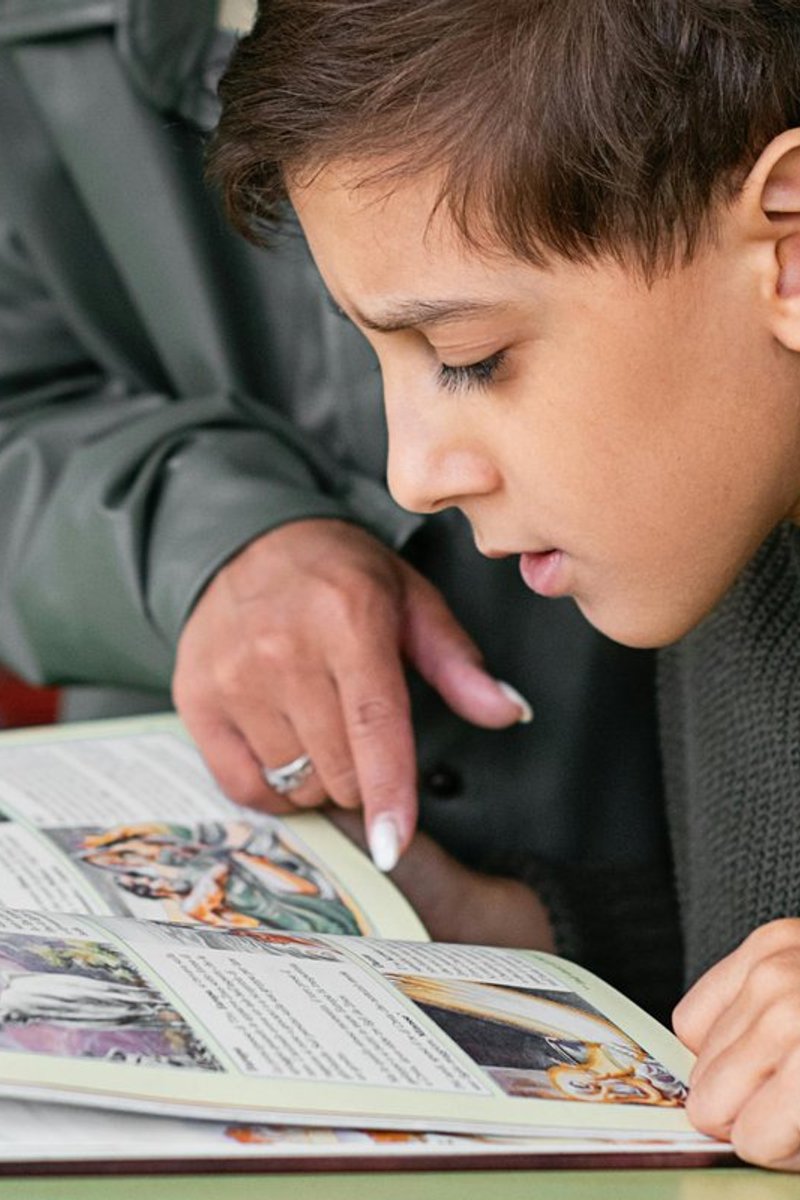
Child reading a book with an adult during a literacy assessment session at ASTRAD Allied Health

Qualified Speech Pathology Services

Literacy Assessment

Our SPA-certified speech pathologists conduct literacy assessments to identify reading, writing and spelling difficulties in children. Using standardised tools, we uncover the root causes of literacy challenges and provide clear, actionable recommendations to support your child’s learning.

Book a Literacy AssessmentCall (07) 3477 9366
Speech pathologist teaching letter recognition to children during a literacy assessment activity

Why Choose ASTRAD for Your Child's Literacy Assessment?

Trusted by families, schools and NDIS participants across QLD, NSW, VIC and TAS

Astrad Allied Health offers literacy assessments conducted by SPA-certified speech pathologists. Our speech pathologists are experienced in identifying literacy difficulties early, using standardised assessment tools to evaluate reading, writing, spelling and phonological awareness skills. We provide services to NDIS, private and school-referred clients.

How Our Literacy Assessment Works

From referral to recommendations, our literacy assessment process is structured, family-centred and designed to give you clear answers about your child's reading and writing abilities.

Child receiving reading support from an adult during a literacy assessment consultation
  • 1

    1. Initial Consultation

    We begin with a parent interview to understand your child's learning history, school concerns and developmental background. This helps us tailor the assessment to your child's specific needs and select the most appropriate standardised tools.

  • 2

    2. Assessment Session

    Your child completes a series of standardised tasks that evaluate phonological awareness, decoding, reading fluency, comprehension, spelling and written expression. We use tools such as the CTOPP-2, WIAT and Sutherland Phonological Awareness Test to build a complete picture of their literacy profile.

  • 3

    3. Report and Recommendations

    You receive a detailed written report that explains your child's strengths and areas of difficulty. The report includes specific recommendations for classroom adjustments, home strategies and intervention approaches, and can be used as evidence for NDIS funding applications or school support plans.

Understanding Literacy Difficulties

What Does a Literacy Assessment Evaluate?

A literacy assessment examines the foundational skills that underpin reading and writing success. Our speech pathologists assess multiple areas to identify where your child may be experiencing difficulty, so that intervention can be targeted and effective.

  • Reading Accuracy and Fluency

    We evaluate your child's ability to decode words accurately and read connected text at an appropriate pace. Difficulties with reading accuracy and fluency often indicate underlying issues with phonics knowledge or phonological processing, which are key areas addressed in a literacy assessment.

    Child writing and developing literacy skills during a classroom assessment
  • Phonological Awareness

    Phonological awareness is the ability to recognise and manipulate the sounds within words. It is one of the strongest predictors of reading success. We assess skills such as rhyme recognition, syllable segmentation, phoneme blending and phoneme deletion using standardised tools like the CTOPP-2 and Sutherland Phonological Awareness Test.

  • Reading Comprehension

    Reading comprehension involves understanding and interpreting written text. We assess your child's ability to recall information, make inferences and identify main ideas. Comprehension difficulties may relate to vocabulary, language processing or working memory, and our assessment helps pinpoint the contributing factors.

  • Spelling and Written Expression

    Spelling difficulties can signal problems with phonological awareness, orthographic knowledge or morphological understanding. Our assessment examines your child's spelling patterns to determine whether errors are phonological, visual or language-based, and identifies the most effective strategies for improvement.

Literacy Assessment: Identifying Reading and Writing Difficulties in Children

A literacy assessment is an evaluation conducted by a speech pathologist to identify difficulties with reading, writing, spelling and phonological awareness. At ASTRAD Allied Health, our SPA-certified speech pathologists use standardised tools to uncover the root causes of literacy challenges and provide families, schools and therapists with clear, evidence-based recommendations.

Our mobile team delivers assessments across Queensland, New South Wales, Victoria and Tasmania, coming to your home, school or early childhood centre.

What Is a Literacy Assessment?

A literacy assessment uses standardised tools that compare your child’s performance to age-matched peers, providing an objective measure of their strengths and areas of difficulty. Speech pathologists are well-placed to conduct these assessments because reading and writing are language-based skills, and the connection between spoken language and literacy is well established in research.

Who Should Get a Literacy Assessment?

A literacy assessment may be recommended for children who show signs of reading or writing difficulty, including:

  • Difficulty learning letter sounds or blending sounds together
  • Slow or inaccurate reading compared to same-age peers
  • Poor spelling that does not improve with practice
  • Difficulty understanding what they have read
  • A history of speech or language difficulties in early childhood

What Does a Literacy Assessment Include?

Our speech pathologists assess multiple areas during a literacy assessment. The specific tools and tasks used are selected based on your child’s age, presenting concerns and developmental history.

Phonological Awareness

Phonological awareness is the ability to recognise and manipulate the sound structures of language. It is one of the strongest predictors of reading success, and weaknesses in this area are a hallmark of dyslexia. We use tools such as the CTOPP-2 and Sutherland Phonological Awareness Test (SPAT-R) to measure these skills.

Decoding and Word Reading

We assess both real word reading and non-word reading to determine whether your child can apply letter-sound rules consistently. Difficulty with decoding is a common finding in children with reading difficulties.

Reading Fluency and Comprehension

We evaluate your child’s ability to read connected text accurately and at an appropriate speed, as well as their understanding of written text. This includes recalling factual information, making inferences and identifying main ideas.

Spelling and Written Expression

We analyse the types of spelling errors your child makes to determine whether they are phonological, orthographic or morphological. For older children, we also assess sentence structure, grammar and the ability to organise ideas into coherent paragraphs.

Standardised Assessment Tools We Use

  • CTOPP-2: Assesses phonological awareness, phonological memory and rapid naming
  • WIAT: Evaluates reading comprehension, word reading, oral reading fluency and spelling
  • SPAT-R: An Australian-developed tool measuring phonological awareness in primary school children
  • YARC: Assesses reading accuracy, reading rate and comprehension through passage reading tasks

What Happens After a Literacy Assessment?

Following the assessment, you receive a detailed written report that includes a summary of performance on each measure, comparison to age-matched norms, and targeted recommendations for classroom adjustments, home strategies and therapy goals. The report can support NDIS funding applications, school support plans or referrals to other professionals.

Our speech pathologists also offer follow-up consultations to discuss the report with parents, teachers and other members of your child’s support team.

The Link Between Speech, Language and Literacy

Children with speech and language difficulties are at greater risk of developing literacy problems. A literacy assessment conducted by a speech pathologist considers these underlying language factors, not just surface-level reading and writing skills. This is why speech pathologists are ideally placed to assess literacy and design intervention programs that address the root causes.

NDIS and Literacy Assessments

Assessment results can demonstrate the functional impact of a disability on a child’s ability to participate in educational activities. Our reports are written with NDIS requirements in mind and can support applications for funding, plan reviews and capacity-building supports. ASTRAD Allied Health accepts NDIS funding for literacy assessments. Our mobile speech pathologists conduct assessments across QLD, NSW, VIC and TAS.

Book a Literacy Assessment Today

Individual results vary. Assessment findings do not guarantee a particular outcome or diagnosis.

If your child is struggling with reading, writing or spelling, a literacy assessment can provide the clarity your family needs. Contact ASTRAD Allied Health on (07) 3477 9366 or book online to arrange a mobile literacy assessment with one of our SPA-certified speech pathologists.

Frequently Asked Questions About Literacy Assessments

A literacy assessment is a comprehensive evaluation conducted by a speech pathologist that measures a child’s reading, writing, spelling and phonological awareness skills using standardised tools. The results are compared to age-matched norms to identify specific areas of strength and difficulty.

Children can be assessed from around 5 years of age, though the specific tools used depend on the child’s age and developmental stage. If your child is struggling with reading or writing in the early years of school, an assessment can help identify difficulties early when intervention is most effective.

A comprehensive literacy assessment typically takes between 1.5 and 2.5 hours, depending on the number of areas assessed and your child’s age. This includes a parent interview, standardised testing and informal observations. The assessment may be conducted across one or two sessions.

A literacy assessment evaluates a broad range of reading, writing and spelling skills. A dyslexia assessment focuses specifically on identifying dyslexia by examining phonological processing, decoding and spelling patterns. Our speech pathologists can conduct both types of assessment depending on the concerns raised.

Yes. Our literacy assessment reports are written with NDIS requirements in mind and can be used as evidence to support funding applications, plan reviews and requests for capacity-building supports. ASTRAD Allied Health is a registered NDIS provider.

Yes. Our speech pathologists travel to your child’s home, school or early childhood centre. We provide mobile literacy assessment services across Queensland, New South Wales, Victoria and Tasmania. Contact us on (07) 3477 9366 to arrange a booking.

Happy child smiling while reading a book in a classroom, representing literacy support for children

Book a Literacy Assessment for Your Child

A literacy assessment is the first step toward understanding your child’s reading and writing challenges. Our mobile speech pathologists come to your home, school or centre across QLD, NSW, VIC and TAS. Contact ASTRAD Allied Health today to book a literacy assessment.

Supporting Positive Change

Our Services in Action

Astrad occupational therapist with women lying on bed