The moment a wheelchair becomes part of daily life – whether after an injury, diagnosis, or change in functional ability – the world looks different. Doorways feel narrower. Kerbs seem taller. The gentle slope of a footpath becomes something to calculate. For many wheelchair users, the gap between having a wheelchair and feeling genuinely confident in it is not about the equipment itself – it’s about skills.
Wheelchair skills are the specific abilities that wheelchair users develop to navigate their environments effectively and safely. They cover everything from propelling across a smooth floor to descending a kerb independently. And crucially, these skills can be learned, practised, and refined with the right guidance and support.
For Australians living in Brisbane, the Gold Coast, North Lakes, Sydney, Melbourne, and the Sunshine Coast – or accessing support via Telehealth across Queensland, New South Wales, Victoria, and Tasmania – understanding what wheelchair skills involve, and how occupational therapy supports their development, can be genuinely life-changing.
What Are Wheelchair Skills and Why Are They Critical for Independence?
Wheelchair skills encompass the full range of abilities required to use a wheelchair effectively in daily life. According to the Spinal Cord Injury Research Evidence (SCIRE) Project, these skills are critical not only for mobility but for independence, safety, and meaningful community participation.
The Wheelchair Skills Training Program (WSTP), developed by Dalhousie University in Canada, is the most extensively researched and evidence-based training intervention available. It organises wheelchair skills into a progressive framework – from foundational indoor manoeuvres through to advanced community-level techniques – and is freely available to wheelchair users, caregivers, and rehabilitation professionals.
The relationship between wheelchair skills and quality of life is well-established. Higher wheelchair skill performance has been associated with greater participation in work, social life, and community activities. For powered wheelchair users in particular, research has identified that the most frequently cited environmental challenges include potholes, doorways, rolling backwards, and soft surfaces – all of which can be addressed through structured training.
What Indoor Wheelchair Skills Should Every Wheelchair User Develop?
Indoor wheelchair skills form the foundation of safe, independent mobility. Developing competence in these core areas helps users navigate their immediate home environment with confidence before progressing to more complex community settings.
Forward and Backward Propulsion
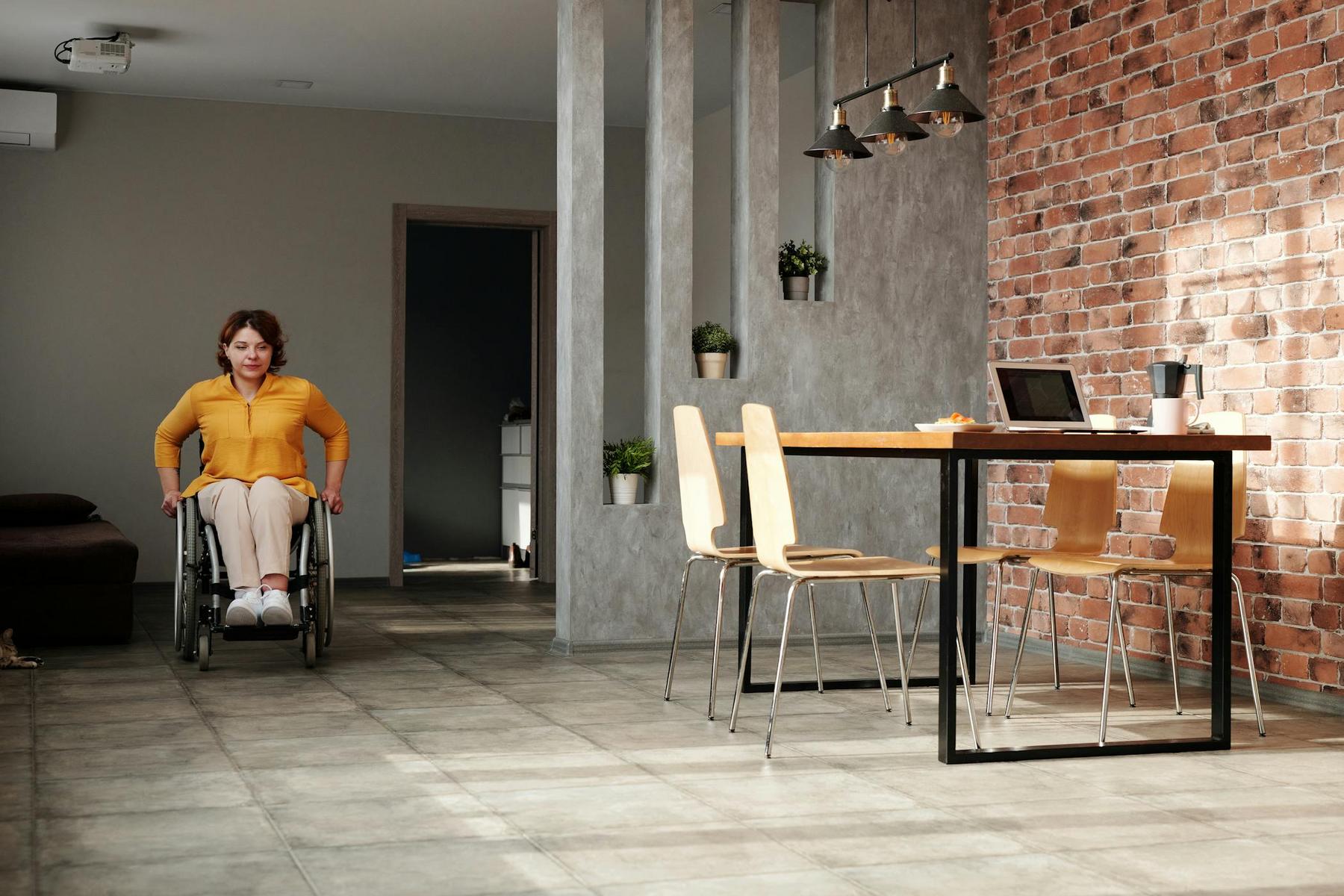
Propelling a manual wheelchair efficiently on level surfaces – both forwards and backwards – requires coordination, technique, and an understanding of how the chair responds to different floor types. Users are generally encouraged to use smooth, arc-style strokes to reduce strain on the upper limbs over time.
Turning and Manoeuvring in Tight Spaces
Turning a wheelchair in place or while moving – including within the confined spaces common in Australian homes, particularly bathrooms and hallways – is a foundational indoor skill. Understanding the chair’s turning radius helps users anticipate spatial requirements.
Stopping Safely
Controlled stopping is essential to injury prevention. Research from the WSTP Manual highlights that sudden stops can cause a wheelchair user to tip forward or sideways. On level surfaces, controlled stopping is achieved by gripping the hand-rims with hands positioned ahead of top dead centre (approximately the 1 o’clock position). When stopping while moving forward quickly, leaning back reduces the risk of forward tipping. When stopping while moving backward, users are advised to avoid grabbing the wheels suddenly and to lean slightly forward instead.
Navigating Doors
Negotiating different door types – including doors that swing inward, outward, or are spring-loaded – requires anticipation, timing, and precise wheelchair positioning. This is a skill that is routinely practised in structured training programmes.
Object Retrieval and Reaching
Picking up objects from the floor and reaching upward – while maintaining postural stability in the wheelchair – are everyday tasks with significant functional implications. These skills are particularly important for supported independence in the home.
How Can Wheelchair Users Navigate Outdoor and Community Environments Safely?
Community-level wheelchair skills extend the user’s world beyond the front door. They encompass the unpredictable environments of public footpaths, shopping centres, parks, and public transport – environments that rarely accommodate wheelchair users without some level of skill and adaptation.
Ramp and Slope Navigation
Safe negotiation of ramps is one of the most commonly required community skills for Australian wheelchair users, given the prevalence of ramps in public buildings governed by AS 1428 accessibility standards.
Ascending ramps is generally approached by leaning forward to maintain momentum, using short, strong strokes, and building speed before reaching the incline. A trained spotter positioned behind the wheelchair provides added safety during early learning.
Descending ramps requires a different approach. Users are encouraged to allow the hand-rims to run smoothly through their hands to control speed, with gloves recommended for hand protection. On steeper descents, a diagonal or zigzag pattern can help reduce the effective gradient. A spotter positioned with one hand in front of the user’s shoulder adds an important layer of safety.
Kerb Navigation
Kerbs remain one of the most common accessibility barriers in Australian urban and suburban environments, including in Brisbane, the Gold Coast, and across the Sunshine Coast.
Going up kerbs typically involves approaching with momentum, lifting the front casters by pulling back sharply on the hand-rims, and transferring weight to the rear wheels before pushing forward. This technique is often introduced with the support of trained spotters during early skill-building.
Going down kerbs is typically performed by positioning the wheelchair with the back to the kerb, rolling the large rear wheels over the edge first, then lowering the caster wheels in a controlled manner. Advanced users may descend kerbs in a wheelie position, maintaining forward visibility – but this is an advanced skill requiring careful progression and supervision.
Varied Surfaces
Outdoor environments present a wide range of surface challenges, including grass, gravel, uneven pavement, and sand. Each surface affects rolling resistance, stability, and manoeuvrability differently. Building experience across these surfaces – in a progressive, supervised manner – helps wheelchair users develop adaptable, confident mobility.
What Are Advanced Wheelchair Skills and When Are They Appropriate?
Advanced wheelchair skills represent the highest tier of the WSTP framework and are generally introduced only once foundational and community-level skills are well established. They require strong core stability, trunk control, and reactive balance strategies.
Wheelie Skills
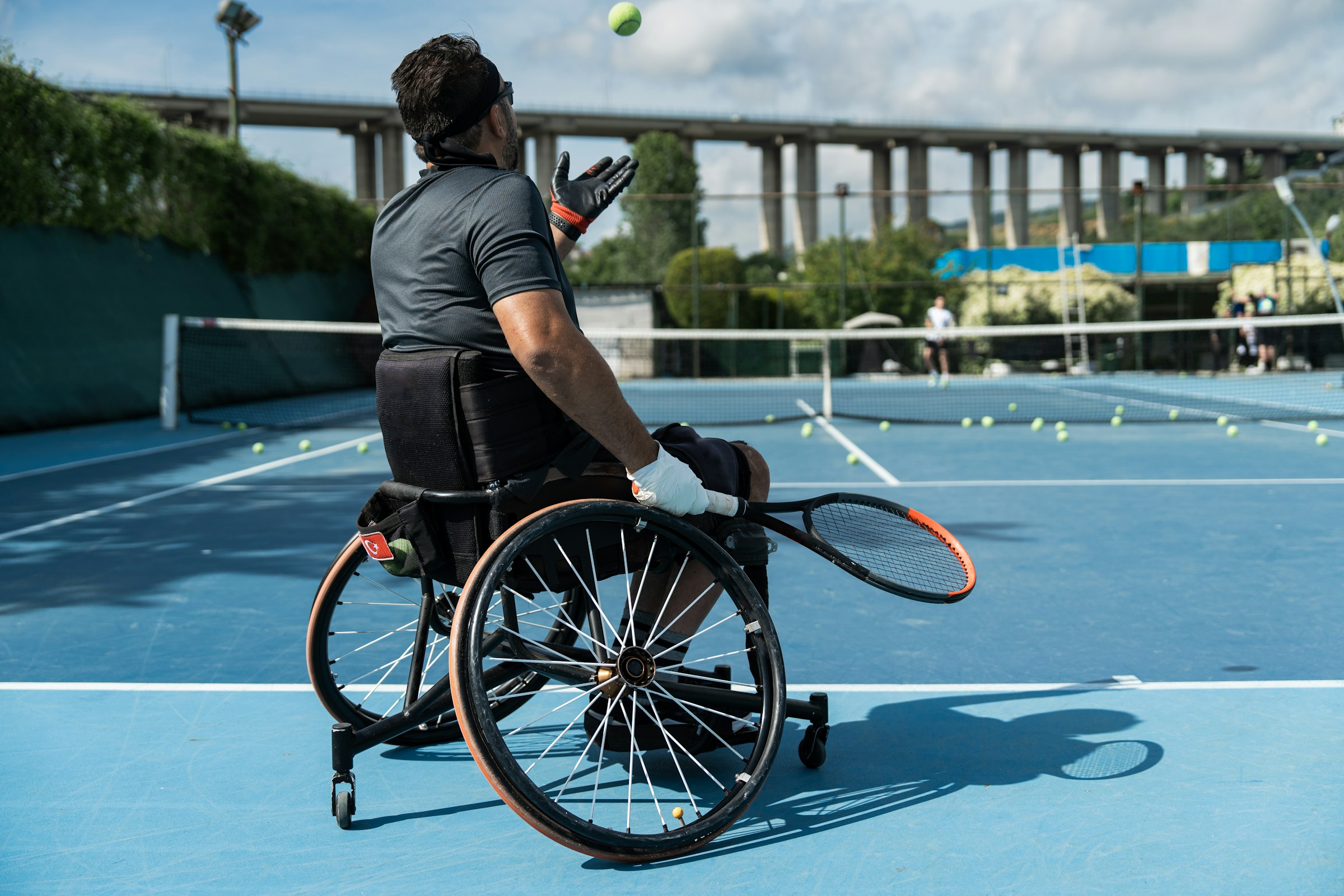
The wheelie – balancing on the rear wheels with the front casters elevated – is one of the most useful advanced wheelchair skills. It underpins a range of other abilities including kerb descent, stair descent, and manoeuvring in very tight spaces. Wheelie training typically begins in a stationary position with wheels blocked, progressing gradually to dynamic movement across natural surfaces.
Stair Negotiation
Descending stairs in a wheelie position – always with multiple trained spotters – represents the upper end of manual wheelchair skill capability. This skill is situational and highly context-dependent, and its appropriateness should always be assessed carefully against individual capacity and environmental factors.
How Does Occupational Therapy Support the Development of Wheelchair Skills?
Occupational therapists (OTs) play a central role in supporting wheelchair users to develop and refine their skills. The occupational therapy approach to wheelchair service provision is comprehensive, addressing not only equipment selection but the functional training and environmental context that determine whether someone can truly use their wheelchair to its full potential.
At Astrad Allied Health, mobile occupational therapy services are delivered directly to clients in their homes and communities across Queensland, Victoria, New South Wales, and Tasmania – including in-person services across Brisbane, North Lakes, the Sunshine Coast (including Peregian Springs, Noosa, Buderim, and Gympie), the Gold Coast, Sydney, and Melbourne, as well as Telehealth options for eligible clients across supported states.
OT wheelchair assessments conducted by Astrad typically involve:
- Physical assessment: Postural analysis, pelvic and spinal alignment, and pressure distribution evaluation
- Environmental assessment: Measuring doorway widths, identifying threshold barriers, evaluating floor surfaces, outdoor pathways, and bathroom layouts
- Functional assessment: Evaluating the user’s capacity to perform daily tasks, transfers, and community participation
- Goal setting: Collaborative identification of measurable objectives aligned with the individual’s personal and NDIS goals
- Equipment trials: Where appropriate, trialling different wheelchair options to evaluate practical fit and function
- Skills training: Structured, evidence-based support using programs like the WSTP to develop the user’s capacity progressively
For NDIS participants, OT reports must demonstrate how recommended equipment meets the “reasonable and necessary” criteria under Section 34 of the NDIS Act 2013. Documenting baseline functional measures and evidence of improvement through equipment trials forms the clinical foundation of well-supported NDIS applications.
What Does the Evidence Tell Us About Wheelchair Skills Training Outcomes?
The evidence base for structured wheelchair skills training is strong and continues to grow. The SCIRE Project classifies multiple randomised controlled trials (Level 1b evidence) as demonstrating that manual wheelchair skills training causes immediate, measurable improvements in wheelchair skills performance.
The table below summarises the three-level WSTP skills progression framework and associated training considerations:
| Skill Level | Skill Focus | Environment | Training Considerations |
|---|---|---|---|
| Level 1 – Indoor Skills | Propulsion, turning, stopping, door negotiation, object retrieval, basic transfers | Home, indoor facilities | Safe, controlled surfaces; spotter support recommended |
| Level 2 – Community Skills | Outdoor propulsion, kerb negotiation (assisted), ramp navigation, transitions, folding/unfolding | Community settings, footpaths | Progressive surface complexity; outdoor environment introduction |
| Level 3 – Advanced Skills | Wheelies, steep slopes, stair negotiation, high kerbs, tight-space manoeuvring | Challenging real-world environments | Multiple spotters; high skill prerequisite; individual goal-dependent |
Research further demonstrates that:
- A four-week structured skills training programme for manual wheelchair users produced significant improvements in both performance and safety immediately following training (Ozturk et al., 2011)
- After eight weeks, participants who received wheelchair skills training showed significantly better skills and upper extremity motor performance compared to control groups (Yao et al., 2018)
- One study found meaningful improvements in Wheelchair Skills Test scores after five training sessions, maintained at 12 months post-intervention (Kirby et al., 2016)
- Powered wheelchair users receiving formal WSTP-based training demonstrated substantial improvements in individualised goal attainment, with high reported satisfaction
Importantly, research also highlights that formal wheelchair skills training remains underutilised in clinical practice. Addressing this gap through structured, individualised OT-led training represents one of the most meaningful ways to improve outcomes for wheelchair users across Australia.
Building Confidence and Capability – One Skill at a Time
Wheelchair skills are not a fixed destination – they are a developing, evolving set of capabilities shaped by the user’s environment, goals, and changing needs over time. The evidence is clear: structured, progressive training leads to real, measurable improvements in skill performance, user confidence, and community participation.
For Australians navigating NDIS funding pathways, returning to community life after injury or illness, or simply seeking greater independence in their day-to-day activities, wheelchair skills training delivered within a comprehensive occupational therapy framework offers a meaningful and evidence-backed pathway forward.
Whether it’s mastering the controlled stop on a tiled hallway floor, navigating a kerb on a Sunshine Coast footpath, or developing the wheelie skills needed to access a favourite community space – every skill practised is a step toward a fuller, more independent life.