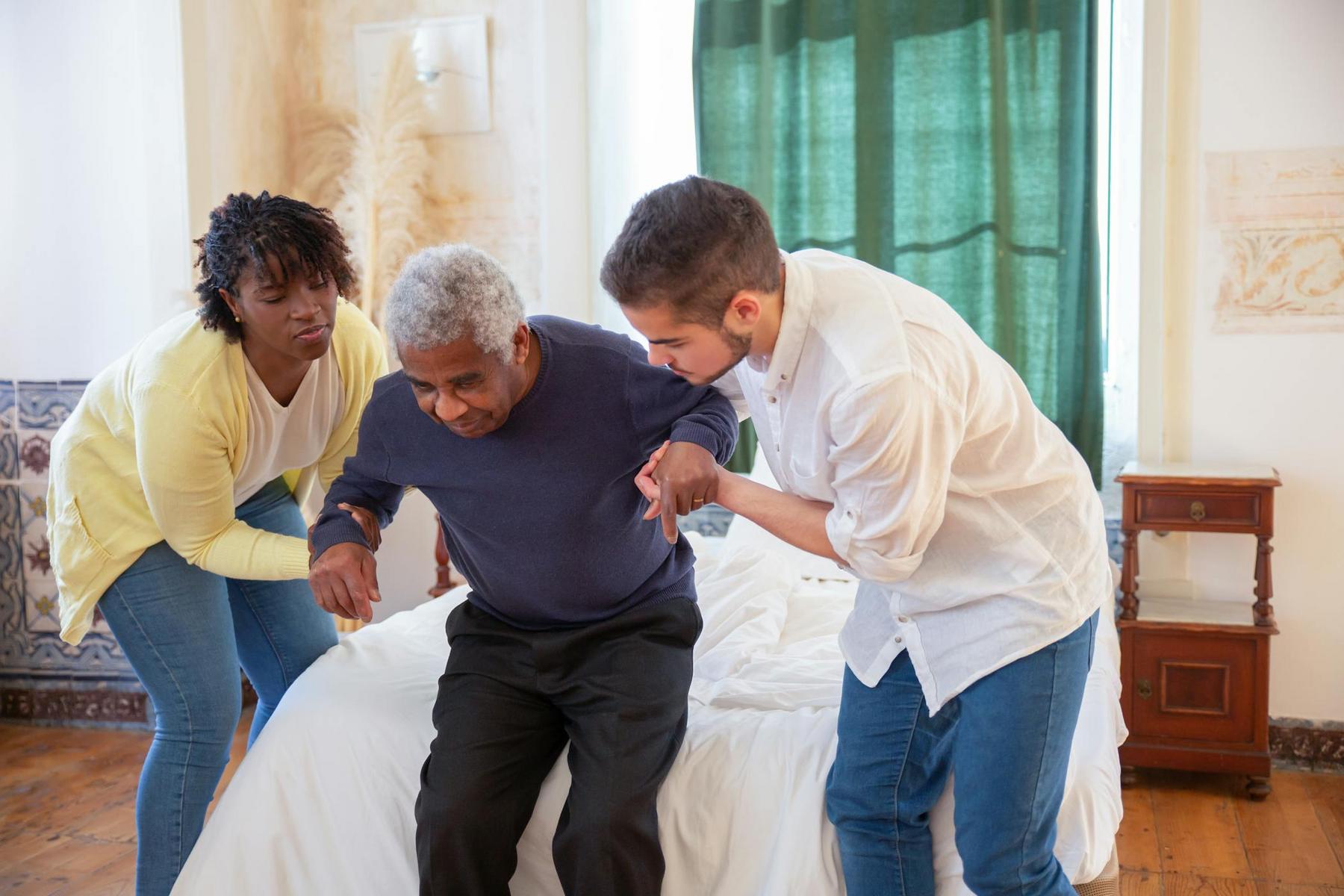
Educational Disclaimer: The information in this article is intended for general educational purposes only and is not a substitute for personalised assessment, advice, or training from a qualified health professional. Every individual’s needs, abilities, and circumstances are different. Readers are strongly encouraged to consult a registered occupational therapist or their own healthcare provider before implementing any transfer technique or selecting Assistive equipment.
Moving People Safely Is More Critical Than Most Realise
Every day, across homes, aged care facilities, hospitals, and disability support settings throughout Australia, thousands of transfers take place – from bed to wheelchair, chair to standing, or floor to stretcher. For many, these movements are so routine they appear unremarkable. Yet the evidence tells a very different story.
In 2023–24, there were 248,211 hospitalisations due to falls in Australia, accounting for 43% of all injury admissions. Falls and transfer-related injuries remain a leading cause of serious harm in older Australians, and the cost to the Australian health system has exceeded $5 billion annually. Meanwhile, healthcare workers face their own significant risks: manual handling injury rates in healthcare sit at 58.9%, compared to 43.9% across all other industries.
The good news is that safe transfer techniques – when applied correctly, consistently, and with appropriate equipment – can meaningfully reduce injury risk for both the person being transferred and the person providing the support. This guide explores how.
Why Are Safe Transfer Techniques So Important for Risk Reduction in Australia?
The scale of the problem is well-documented. One in four Australians aged over 65 experiences at least one fall per year, and research consistently shows that up to one-third of workplace injuries in hospitals and nursing homes occur during patient transfers. In residential aged care facilities, crude fall rates reach 7.14 incidents per 1,000 resident days, with 37.2% classified as injurious falls.
Beyond the physical harm, falls carry significant emotional consequences – fear of falling, reduced independence, and diminished quality of life. For support workers and carers, transfer-related injuries are among the most common causes of musculoskeletal disorders, including lower back strain, herniated discs, shoulder injuries, and nerve compression.
Safe transfer techniques are not simply procedural best practice – they represent a fundamental commitment to the dignity, wellbeing, and safety of every person involved in a transfer.
What Does a Thorough Pre-Transfer Risk Assessment Involve?
The foundation of any safe transfer begins well before the movement itself. A comprehensive pre-transfer assessment generally addresses several interconnected areas, though the specific components should be determined in consultation with a qualified health professional.
Client Assessment
This involves evaluating the individual’s physical and cognitive capacity – including weight-bearing status, strength, balance, and cognitive function. Understanding what the client can contribute to the transfer is essential for determining the level of support needed.
Environmental Assessment
The transfer environment must be assessed for adequate space, appropriate lighting, clear pathways, and suitable surface heights. Obstacles, slippery floors, and cluttered spaces all increase risk significantly.
Equipment Assessment
All equipment – whether slide sheets, transfer boards, gait belts, or mechanical hoists – must be checked for functionality and suitability prior to each transfer. Equipment that is damaged, poorly maintained, or incorrectly selected introduces unnecessary risk.
Staffing Assessment
The number of support workers or carers required for the transfer should be determined as part of planning. Some transfers can be managed safely with one person; others – particularly for clients with complex needs or higher support requirements – may require two or more handlers. A registered occupational therapist can advise on appropriate staffing levels for individual circumstances.
Communication and Consent
Before any transfer begins, the procedure should be clearly explained to the client. Informed consent is not only an ethical obligation – it is a practical safety measure. Clear verbal cues support coordination and help clients contribute actively to the process. For clients living with dementia, calm, patient communication and a gentle approach are generally recommended; a qualified therapist can advise on strategies suited to the individual.
What Are the Most Common Safe Transfer Techniques Used in Clinical and Home Settings?
Safe transfer techniques span a wide range of movements, each suited to specific clinical presentations, environments, and levels of client ability. The table below provides a general overview of frequently used techniques and some of their key considerations. This information is intended to be illustrative only; appropriate technique selection should always be guided by a qualified health professional following individual assessment.
| Transfer Type | Primary Indication | Equipment Often Required | Staffing (Minimum) |
|---|---|---|---|
| Sit to Stand (One-Person Assist) | Client with partial weight-bearing capacity | Gait belt, non-slip footwear | 1 carer |
| Sit to Stand (Two-Person Assist) | Reduced balance/strength | Gait belt | 2 carers |
| Bed to Wheelchair | Clients requiring positional change | Wheelchair (brakes locked), gait belt | 1–2 carers |
| Lateral Transfer (Bed to Stretcher) | Non-ambulant, post-surgical clients | Slide sheets, transfer board | 3–4 carers |
| Slide Board Transfer | Paraplegia, lower limb amputation | Sliding board, transfer belt | 1–2 carers |
| Full Body Mechanical Hoist | Non-weight-bearing clients | Floor/ceiling hoist, appropriate sling | 2 operators |
| Standing Hoist | Minimal weight-bearing capacity | Standing hoist, sling spreader bar | 2 operators |
| Log Roll (Spinal Precautions) | Suspected spinal injury | Pillow, in-line traction maintained | 3+ carers |
Regardless of technique, the principles of safe body mechanics apply universally. Known as the APPLAUSE method in occupational therapy practice, these principles broadly focus on positioning, planning, spine protection, and controlled movement. Carers and support workers are encouraged to seek formal, hands-on training from a registered occupational therapist to understand how these principles apply to their specific situation.
What Equipment Helps Reduce the Risk During Transfers?
Assistive equipment is not optional – it is a core component of safe transfer practice. The hierarchy of control for transfer safety in Australia places elimination and substitution of manual handling at the highest priority levels, meaning equipment should replace manual effort wherever possible.
Slide Sheets
Slide sheets are double-layered, low-friction sheets designed to reduce the effort required during lateral transfers and bed mobility. The number of carers required for safe use will depend on the individual’s needs and circumstances – a qualified health professional can advise on this. Proper training in their use and removal is important; guidance should be sought from a registered occupational therapist.
Transfer Boards
Transfer boards bridge the gap between two surfaces, facilitating lateral sliding transfers for clients with adequate sitting balance. Standard boards have a safe working load limit that varies by product – always refer to the manufacturer’s specifications. Correct technique for transfer board use should be demonstrated by a qualified health professional.
Gait Belts
Gait belts provide carers with a secure handling point around the client’s waist or hips. They are generally appropriate for clients who are near-independent but may need support in the event of a balance loss. A gait belt is a guiding and steadying aid, not a lifting device; training in its correct use is recommended.
Mechanical Hoists (Floor and Ceiling)
Mechanical hoists are essential for non-weight-bearing clients and high-risk transfer situations. Two operators are generally required. Sling selection must be appropriate to the individual client and the specific transfer type. Carers should receive thorough, practical training from a qualified professional before operating any mechanical hoist.
Electric Profiling Beds
Height-adjustable beds can significantly reduce awkward postures during transfers, supporting safer body mechanics for carers. The optimal height adjustment for a given transfer should be discussed with a qualified health professional.
How Should Safe Transfer Techniques Be Adapted for Different Client Groups?
Different clinical presentations require thoughtful adjustments to standard safe transfer techniques. The following information is provided as a general overview only. Individual recommendations should always come from a registered occupational therapist or treating health professional who has assessed the specific person.
Clients Living with Dementia
Calm, patient communication and a gentle, consistent approach are broadly recommended. Specific strategies for supporting individuals living with dementia during transfers should be developed in consultation with a qualified health professional familiar with the individual’s needs.
Clients Following Stroke
Transfer approaches following stroke may need to account for physical changes such as weakness on one side, shoulder vulnerability, and altered spatial awareness. A registered occupational therapist can recommend an appropriate transfer plan based on the individual’s current level of function.
Bariatric Clients
Manual lifting of bariatric clients is generally not appropriate and mechanical lifting equipment is typically required. Equipment selection, staffing, and technique should be determined through a formal assessment by a qualified health professional with experience in bariatric care.
Clients with Parkinson’s Disease
Transfer strategies for people living with Parkinson’s disease may need to account for movement freezing and postural changes. A registered occupational therapist can advise on communication strategies, environmental modifications, and appropriate techniques suited to the individual’s presentation.
Clients with Spinal Cord Injury
Transfer approaches for people with spinal cord injury vary widely depending on the level and completeness of injury, upper limb strength, and available equipment. Individual assessment by a qualified health professional is essential in determining the safest and most appropriate approach.
How Can Families and Home Carers Apply Safe Transfer Techniques Effectively?
Safe transfers in the home setting present unique challenges. Unlike clinical environments, homes are not purpose-designed for care delivery – furniture heights vary, floor surfaces differ, and space may be limited. A home environment assessment by a registered occupational therapist is therefore an important step in planning safe transfers, examining factors such as floor stability, lighting, bathroom safety, pathway clearance, and electrical access for equipment.
Family carers face documented risks of their own: musculoskeletal disorders – particularly neck and shoulder pain – are prevalent in informal caregiving roles. Task-specific training, early access to appropriate equipment, and regular health monitoring are all important protective measures.
Research demonstrates that coordinated, evidence-based fall and injury prevention strategies can reduce falls by up to 34%, while comprehensive fall prevention programs in residential aged care have demonstrated up to a 55% reduction in fall incidents. These outcomes are not achieved through technique alone – they require training, equipment, environment, and consistent application working together.
Building a Culture of Safety Around Every Transfer
Safe transfer techniques are not a single skill – they are a clinical and organisational commitment. From the moment a risk assessment begins to the post-transfer documentation that closes the loop, every element of the process contributes to the safety of both the client and the carer.
The evidence is clear: when safe transfer techniques are implemented with proper training, appropriate equipment, and a person-centred approach, injury rates fall – for carers and clients alike. In Australia’s aged care and disability sectors, where the stakes are high and the caseloads are significant, this is not simply best practice. It is essential practice.
Occupational therapists play a meaningful role in this space – assessing individual needs, recommending appropriate equipment, training carers and family members, and tailoring transfer plans to each unique person and environment.
What are safe transfer techniques and why are they important?
Safe transfer techniques are evidence-based methods used to move a person from one position or surface to another while minimising the risk of injury to both the client and the carer. They are important because transfer-related injuries are among the most common causes of harm in care settings, affecting both care recipients and support workers. In Australia, falls and manual handling injuries carry significant personal, clinical, and financial consequences.
When should a mechanical hoist be used instead of a manual transfer technique?
A mechanical hoist should be considered whenever a client is non-weight-bearing, when manual handling poses an unacceptable risk to the carer or client, or when the client’s size or clinical complexity makes manual transfer unsafe. In bariatric care, mechanical lifting is generally required. The decision about when a hoist is appropriate – and which type – should be made in consultation with a registered occupational therapist or other qualified health professional following individual assessment.
Can an occupational therapist help with safe transfer training in my home?
Yes. Mobile occupational therapy services can conduct home environment assessments, identify appropriate equipment, and provide tailored training for carers and family members on safe transfer techniques. This type of support is available to NDIS participants, aged care recipients, and private clients across many areas of Queensland, New South Wales, Victoria, and Tasmania.
What body mechanics should carers use during transfers?
Safe body mechanics during transfers generally involve principles such as maintaining a stable base, protecting the spine, keeping the client close, and moving in a smooth and controlled manner. However, the specific application of these principles varies depending on the transfer type, client presentation, and environment. Carers are strongly encouraged to seek hands-on training from a registered occupational therapist rather than relying solely on written guidance, as correct technique is best learned through practical demonstration and supervised practice.
Are family members and informal carers at risk of injury from assisting with transfers?
Yes. Family carers face documented risks of musculoskeletal disorders, particularly in the neck and shoulder regions. Proper training in safe transfer techniques, access to appropriate assistive equipment, and regular health monitoring are important protective measures. Seeking professional guidance early – rather than waiting for injury to occur – is strongly recommended.