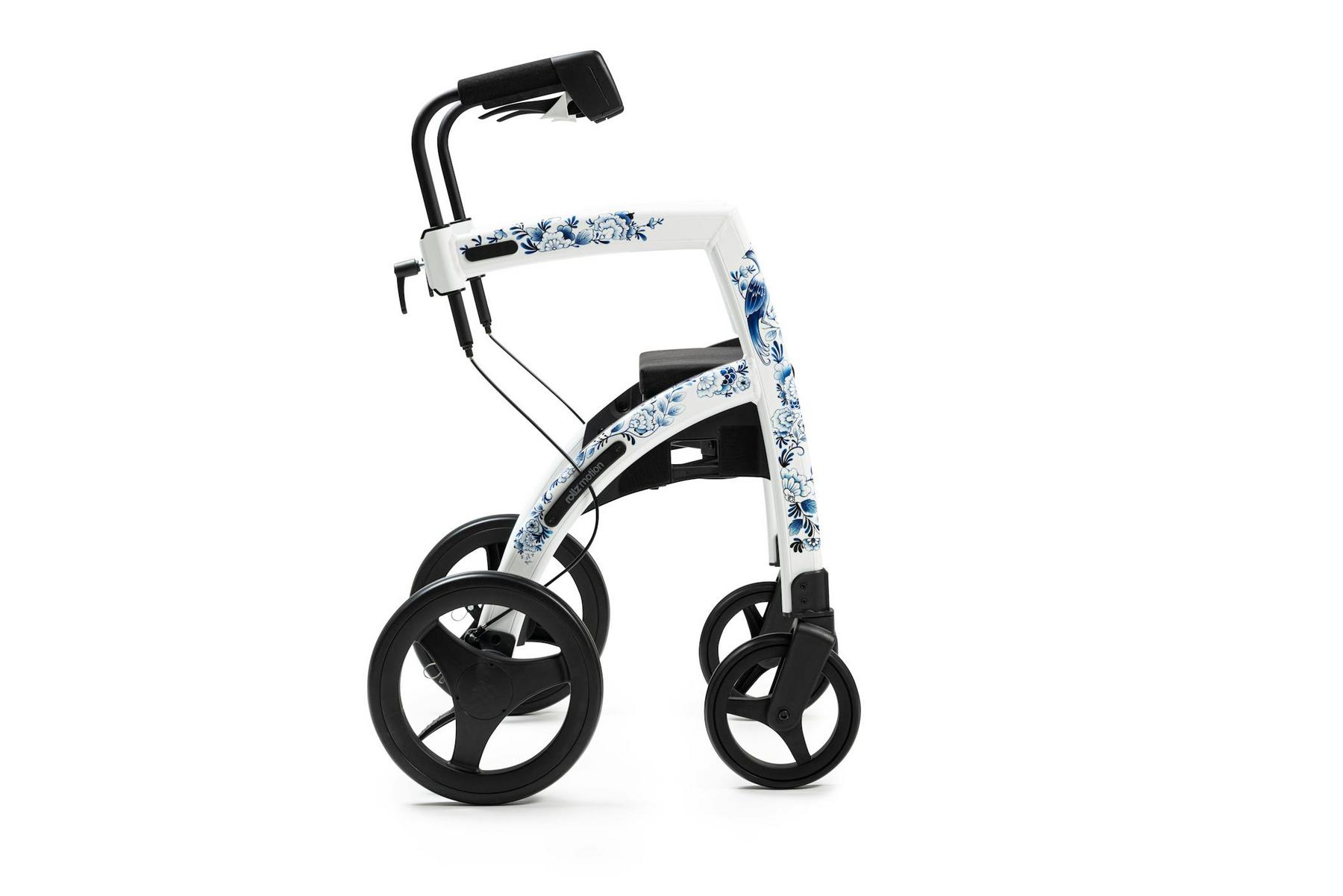
Every year, thousands of pieces of assistive technology sit unused in Australian homes—wheelchairs gathering dust in garages, walking frames tucked away in storage, communication devices no longer needed. Meanwhile, approximately 5.5 million Australians live with disability, representing more than one in five people nationwide. Many face significant barriers accessing the equipment they need to maintain independence, participate in their communities, and live fulfilling lives. The gap between those with unused equipment and those desperately seeking it represents both a challenge and an opportunity.
Recycling or donating pre‑loved assistive technology creates a powerful solution that addresses accessibility, sustainability, and financial equity simultaneously. With the World Health Organisation estimating that 2.5 billion people globally require assistive products—yet only 3% in some low-income countries have access compared to 90% in high-income nations—the imperative for equipment reuse has never been clearer. In Australia, where NDIS funding for assistive technology exceeded $1.2 billion in the first nine months of 2024 alone, the responsible stewardship of these resources matters more than ever.
Why Does Recycling or Donating Pre‑Loved Assistive Technology Matter?
The impact of recycling or donating pre‑loved assistive technology extends far beyond simply passing along unwanted items. Research demonstrates that appropriate assistive equipment fundamentally transforms lives. A longitudinal study following 519 wheelchair recipients across India, Chile, and Peru found remarkable outcomes: employment increased significantly over 30 months, family income rose steadily, and the percentage of recipients who never left their homes dropped from 46.6% to 22.4%. Overall health improved, pain frequency diminished, and mood states increased by 20%.
The environmental benefits prove equally compelling. Healthcare sectors globally account for 4.4% of greenhouse gas emissions, with over 70% generated through supply chains including medical device manufacturing and disposal. Reusing a single manual wheelchair prevents the manufacturing of 23-91 kg of steel, aluminium, and plastic, whilst powered wheelchair reuse prevents 136-227 kg of material extraction and manufacturing. One refurbished device can provide 5-10 years of functional life, keeping valuable resources in circulation rather than landfill.
Australia’s new Assistive Technology Rental and Refurbishment Pilot Programme, launched in January 2025 with $5 million funding, demonstrates government recognition of these benefits. The two-year trial in South Australia and Tasmania aims to benefit over 600 people with disability through an online platform called “AccessTech” for finding refurbished equipment. Minister Bill Shorten articulated the vision clearly: “This pilot could help re-engineer the assistive technology ecosystem. We want to stop the waste and the flow-on effect helps not only get the right disability supports to those who need it but saves money in the process.”
Where Can You Donate Pre‑Loved Assistive Technology in Australia?
Multiple organisations across Australia accept assistive technology donations, though acceptance criteria and processes vary. Understanding which organisations operate in your region and what they accept streamlines the donation process significantly.
National Organisations
Medicycle operates Australia-wide, arranging collection, refurbishment, and redistribution of assistive equipment. Their comprehensive service model removes logistical barriers for donors whilst ensuring equipment reaches those in need.
Endeavour Foundation supports people with disabilities across multiple Australian locations, accepting mobility aids and related equipment based on current community needs.
The Australian Foundation for Disability (Afford) represents another major disability service provider, though acceptance depends on their immediate requirements and capacity.
Rotary Aiding Mobility Programme (RAMP) focuses specifically on wheelchairs, walkers, and crutches. Equipment provided through RAMP reaches recipients via healthcare professionals, ensuring appropriate matching of equipment to need.
State-Based Options
Queensland residents can access Sporting Wheelies/Spinal Life Australia and eWaste Connection, a social enterprise that refurbishes and redistributes equipment whilst providing employment opportunities for people with disability.
Victorian donors may connect with Active Rehabilitation Equipment or My Way Disability and Aged Care, which also operates in Western Australia.
TADACT in the Australian Capital Territory accepts and refurbishes scooters, walkers, and bathroom aids.
Local disability organisations and community health services throughout Australia often accept donations based on immediate community requirements, making them excellent first points of contact.
How Can NDIS Participants Purchase Second-Hand Assistive Technology?
The National Disability Insurance Scheme provides flexibility for participants seeking to purchase recycled or donated pre‑loved assistive technology, though requirements vary based on plan management type and funding category.
NDIS Funding Categories and Requirements
| Funding Category | Cost Range | Requirements | Documentation |
|---|---|---|---|
| Low-Cost AT | Under $1,500 | No pre-approval; must be reasonable and necessary | Receipt with seller details, item description, date, proof of payment |
| Mid-Cost AT | $1,500-$15,000 | Written advice from AT assessor required | Assessment report, quote, receipt |
| High-Cost AT | Over $15,000 | Formal assessment by professional AT adviser; NDIA pre-approval mandatory | Comprehensive assessment, detailed quote, NDIA approval documentation |
Self-managed participants enjoy the greatest flexibility when recycling or donating pre‑loved assistive technology. They can purchase second-hand equipment from any source—inclusive of online platforms, community organisations, or private sellers—provided the items meet “reasonable and necessary” criteria. Documentation requirements remain straightforward: retain receipts showing seller details, item descriptions, dates, and proof of payment.
Plan-managed participants typically need to work with registered providers, though some plan managers offer flexibility for second-hand purchases from reputable sources.
NDIS-managed participants must source equipment through NDIA-registered providers, which may limit second-hand purchasing options but ensures quality standards and accountability.
All second-hand purchases must demonstrate safety, appropriateness for the participant’s needs, and value for money—core principles that Occupational therapists assess when recommending equipment.
What Condition Standards Apply When Recycling or Donating Pre‑Loved Assistive Technology?
Quality standards protect both donors and recipients when recycling or donating pre‑loved assistive technology. Understanding acceptance criteria prevents disappointment and ensures donated equipment genuinely benefits recipients.
Essential Condition Requirements
Equipment must be in good working order, as most charitable organisations lack resources for major repairs. All parts must be present and functional, though items requiring only minor repairs may be accepted by organisations with repair capacity. Service history documentation—including maintenance records and manuals—proves helpful when available.
Thorough cleaning and sanitisation before donation remains crucial, particularly for hygiene-related items such as shower chairs, raised toilet seats, and commode chairs. Equipment must be safe and meet current safety standards, with no structural damage, cracks, or safety issues present. For powered devices, batteries must function adequately, and chargers must be included.
Age Considerations
Avoid donating equipment older than 5-7 years unless exceptionally well-maintained and of simple design. Electronic items should be less than 15 years old when possible. Equipment must have a reasonable lifespan remaining—typically at least 5 years—to provide meaningful benefit to recipients.
Commonly Accepted Items
Manual and powered wheelchairs, walkers, rollators, canes, and crutches represent consistently accepted items. Bathroom safety equipment including shower chairs, transfer benches, raised toilet seats, and grab rails remains in high demand. Beds, mattresses, transfer aids, lifting equipment, communication devices, hearing aids in functioning condition, mobility scooters with chargers and functioning batteries, orthotic devices, and vision aids round out commonly donated categories.
Where Can You Buy Second-Hand Assistive Technology Online?
Multiple online platforms facilitate recycling or donating pre‑loved assistive technology, connecting buyers with sellers across Australia and beyond.
Dedicated Australian Platforms
eBility represents Australia’s leading accessible classifieds site with over 20 years’ experience specialising in disability equipment. The platform facilitates buying and selling second-hand equipment with categories specifically designed for assistive technology.
Mobile Independence and TAD Equip Second Hand Equipment offer specialised assistive technology marketplaces focused exclusively on disability-related equipment, ensuring buyers find relevant options quickly.
General Platforms
Facebook Groups including “Disability Equipment Australia for Sale or Swap,” “Buy and Sell Disability Products Australia,” and “Second-hand equipment for children with disability in Australia” create community-focused spaces for equipment exchange.
Facebook Marketplace, Gumtree (particularly the Free Items Section), and eBay provide additional options, though buyers must exercise greater caution regarding equipment condition and appropriateness.
Safety Considerations for Online Purchases
Before purchasing second-hand equipment online, conduct thorough safety checks. Assess condition indicators including rust, frayed cables, or cracks. Test functionality—buttons, motors, and folding mechanisms must work properly. Verify battery health for powered devices by checking runtime and charge capability. Confirm weight limits and dimensions match user needs.
Request service history information including maintenance records, manuals, and any battery or motor replacement history. Consider compatibility with door widths, corners, other equipment, and transportation requirements.
For complex conditions or electronic devices, involve an occupational therapist in the assessment process. This professional input proves particularly important for wheelchairs, transfer aids, and hoists where inappropriate equipment creates safety risks.
What Impact Does Accessing Appropriate Assistive Technology Create?
The evidence demonstrating impact when recycling or donating pre‑loved assistive technology reaches recipients reveals profound quality-of-life improvements across multiple domains.
Research by the UK Motability Foundation found that appropriate wheelchair provision for young users generates annual benefits valued at £10,700 per person. Mental health impacts account for two-thirds of total benefits for student users, with physical health impacts representing 17% of benefits, impacts on carers 12%, and educational impacts 4%. The return on investment proves remarkable: for every £22 million increase in equipment spending, societal returns exceed £60-315 million—a ratio between 3:1 and 14:1.
A study following wheelchair recipients in Haiti found that 70.2% used their wheelchairs a minimum of 3-5 days weekly six months post-receipt. Most reported benefits included improved mobility, independence, participation, and social interaction. Notably, 100% of families retained donated equipment, demonstrating the enduring value of appropriate assistive technology provision.
In Chile specifically, the percentage of recipients who never left home dropped from 47% to just 2.3% following wheelchair receipt. Overall independence ratings increased from 3.9 to 5.0 on a 10-point scale. These statistics illustrate not merely incremental improvements but fundamental transformations in daily life, social participation, and independence.
Moving Forward: The Future of Assistive Technology Reuse
Recycling or donating pre‑loved assistive technology represents far more than charitable giving—it embodies a sustainable, equitable approach to addressing genuine community needs whilst reducing environmental impact. The convergence of Australia’s new pilot programme, growing awareness of circular economy principles, and increasing NDIS participant engagement creates unprecedented momentum for systemic change.
The statistics speak compellingly: globally, 1 billion people lack access to needed assistive technology due to cost and availability barriers. Of 80 million people requiring wheelchairs worldwide, only 5-35% have access depending on country. Hearing aid production meets less than 10% of global demand despite 1.5 billion people experiencing hearing loss. These gaps represent not merely numbers but millions of individuals unable to access education, employment, healthcare, and community participation.
By choosing to recycle or donate pre‑loved assistive technology rather than relegating unused equipment to storage or landfill, Australians contribute to addressing these disparities. Each donated wheelchair, walker, or communication device represents potential independence, employment, education, and social connection for someone currently without access.
The environmental imperative reinforces the social justice case. With healthcare sectors contributing significantly to global greenhouse gas emissions, and medical device manufacturing generating substantial waste, equipment reuse aligns with climate action goals whilst serving immediate community needs. Research into sustainable materials for assistive technology manufacturing demonstrates that recycled polymers yield 20-40% cost reductions versus virgin materials whilst maintaining performance standards—evidence that sustainability and functionality need not conflict.
Occupational therapists play crucial roles throughout this ecosystem—assessing individual needs, recommending appropriate equipment, connecting clients with reuse programmes, ensuring only necessary items are obtained, training users on safe operation, and advocating for responsible disposal practices over waste. Studies consistently demonstrate that occupational therapy involvement in assistive technology selection significantly improves outcomes and reduces inappropriate equipment acquisition.
The new AccessTech platform launching through Australia’s pilot programme promises streamlined connections between donors and recipients. Combined with established organisations like Medicycle, eBility, RAMP, and numerous state-based services, Australians throughout Queensland, New South Wales, Victoria, and Tasmania have increasing opportunities to participate in assistive technology reuse—whether donating unused equipment, purchasing affordable second-hand items, or supporting programme expansion through advocacy.
As we progress through 2026 and beyond, the question shifts from whether to embrace assistive technology reuse to how quickly and comprehensively these systems can expand. The evidence of impact—both individual and societal—proves irrefutable. The environmental benefits align with urgent climate goals. The economic case demonstrates value for government programmes, families, and communities. Most importantly, the human stories of transformed independence, employment, education, and participation remind us why this work matters.
Can NDIS participants claim second-hand assistive technology purchases?
Yes, NDIS participants can purchase second-hand assistive technology depending on their plan management type. Self-managed participants have the greatest flexibility, purchasing from any source provided the equipment meets “reasonable and necessary” criteria. Plan-managed participants typically work with registered providers but may access second-hand options through approved channels, while NDIS-managed participants must source equipment through NDIA-registered providers. In all cases, proper documentation such as receipts with seller details, item descriptions, dates, and proof of payment is required, and the items must demonstrate safety, appropriateness, and value for money.
What should I check before buying second-hand mobility equipment?
Before purchasing second-hand mobility equipment, conduct a thorough assessment of its condition. Check for rust, frayed cables, cracks, and any structural damage. Test all functionalities including buttons, motors, brakes, and folding mechanisms. For powered equipment, verify battery health and ensure that chargers are included. Additionally, request service history such as maintenance records and manuals, and confirm that weight limits and dimensions match the user’s requirements. It is advisable to consult an occupational therapist for complex equipment to ensure safety and appropriateness.
Which organisations accept assistive technology donations in Queensland?
Queensland residents have several options when it comes to donating assistive technology. Organisations like Medicycle operate Australia-wide, including in Queensland, offering collection, refurbishment, and redistribution services. Sporting Wheelies/Spinal Life Australia and eWaste Connection are also key players in Queensland, with the latter being a social enterprise that refurbishes equipment and provides employment opportunities for people with disability. Additionally, organisations such as the Endeavour Foundation operate in multiple locations across Queensland, and local community health services may also accept donations based on immediate needs.
How do I prepare assistive equipment for donation?
To prepare assistive equipment for donation, ensure thorough cleaning and sanitisation, particularly for hygiene-related items like shower chairs and toilet seats. Verify that all parts are present and functional, and include any manuals, chargers, or accessories if available. It is important to document the service history, including maintenance records and repairs, and to check for any structural issues such as cracks or rust. If the equipment requires minor repairs, make a note of this for the recipient. Finally, contact the receiving organisation in advance to confirm that they can accept the item and to arrange for collection or drop-off.
Does donating assistive technology provide tax benefits?
Donations of assistive technology to registered charitable organisations with Deductible Gift Recipient (DGR) status may be tax-deductible in Australia. Donors should request a receipt that documents the donation date, item description, and the organisation’s DGR status. It is important to retain this documentation for tax purposes, as the Australian Taxation Office requires receipts for donations over $2. Since not all disability organisations have DGR status, it is advisable to confirm this detail beforehand and consult with a tax professional regarding specific eligibility and documentation requirements.