When Mrs Chen returned home after her hip replacement, her family had thoughtfully rearranged the furniture to make things “safer.” They removed rugs, moved the bedside table, and replaced her favourite reading chair with a higher one. Yet within three days, she’d fallen twice—not because the environment was unsafe, but because it no longer matched how she naturally moved through her home. This scenario illustrates a fundamental truth that occupational therapists understand: environmental assessments cannot be effective without understanding the unique context of each individual’s life.
The interaction between a person and their environment is never static. What appears hazardous on a checklist may be perfectly safe for one individual, whilst seemingly benign features can pose significant risks to another. Context encompasses not just the physical space, but the person’s capabilities, their daily routines, cultural values, support systems, and meaningful activities. Without this contextual understanding, even well-intentioned environmental modifications can fail—or worse, create new obstacles to independence.
What Makes Context Essential in Environmental Assessments for Occupational Therapy?
Context transforms environmental assessment from a simple hazard identification exercise into a sophisticated analysis of person-environment-occupation interaction. The Person-Environment-Occupation (PEO) Model, developed by Mary Law and colleagues in 1996, demonstrates that occupational performance results from the dynamic interplay between these three domains. Higher levels of congruence between person, environment, and occupation lead to improved quality of occupational performance.
Consider the example of a loose rug in a hallway. For an ambulatory adult with typical balance and vision, this rug may pose minimal risk. However, for someone with peripheral neuropathy affecting foot sensation, balance impairment following a stroke, or visual field deficits, that same rug becomes a significant fall hazard. The environmental feature hasn’t changed—the context has.
This contextual understanding extends beyond physical capabilities. A study by Stark (2004) examining environmental modifications for persons with disabilities found dramatic improvements when modifications were tailored to individual context and goals. Pre-modification, average performance scores measured 3.19, whilst post-modification scores reached 7.81. Similarly, satisfaction scores increased from 2.25 to 7.69. These improvements occurred not because generic modifications were applied, but because interventions reflected each person’s specific context, goals, and daily living patterns.
The Person-Environment-Occupation-Performance (PEOP) Model, developed by Christiansen and Baum, expands this framework by emphasising that intrinsic factors (physiological, psychological, cognitive characteristics) and extrinsic factors (cultural, social support, physical environment, assistive technology) interact to determine occupational performance. This model reinforces a critical principle: no single intervention works for everyone. Context-specific assessment and modification are essential for meaningful outcomes.
How Does Context Influence Fall Risk and Environmental Hazards?
According to the Australian Institute of Health and Welfare (AIHW), falls remain among the leading causes of disease burden and injury in Australians aged over 65. In 2022-23, there were 238,055 fall-related hospital admissions, with an age-standardised rate of 758.2 per 100,000 population. Significantly, over 70,000 of these admissions occurred at home. These statistics highlight the importance of environmental assessment, but equally important is understanding that environmental hazards are context-dependent.
A landmark study by Cumming and colleagues (1999) involving 530 community-dwelling older adults in Sydney revealed crucial contextual factors affecting intervention effectiveness. The research found that occupational therapist-led home safety interventions reduced falls by 36% in the intervention group compared to 45% in the control group. However, the critical finding was that this intervention proved effective only in participants with a prior history of falls. For those without previous falls, the intervention showed no benefit. This demonstrates that individual fall history—a key contextual factor—determines intervention effectiveness.
The context-dependent nature of environmental hazards extends to how we assess them. The Westmead Home Safety Assessment (WeHSA), developed by Lindy Clemson through extensive Australian research, exemplifies context-sensitive environmental assessment. This 72-item standardised checklist assesses 13 areas of the home environment, but crucially, each item can be rated as “not relevant” to acknowledge that not all potential hazards apply to every individual. The therapist conducts functional assessment whilst the client performs daily activities in their own home environment, discussing potential hazards whilst considering the person’s risk-taking behaviours, lifestyle patterns, and personal goals.
Research examining the WeHSA’s psychometric properties found impressive inter-rater reliability, with 34 items achieving excellent ratings (kappa >0.75) and 31 items achieving fair to good ratings (0.75 > kappa > 0.40). Zero items received poor ratings (kappa < 0.40), demonstrating the tool's reliability when properly accounting for individual context.
What Contextual Factors Should Occupational Therapists Consider?
Environmental assessments in occupational therapy must evaluate multiple layers of context that influence person-environment interaction. These contextual factors operate simultaneously, creating complex patterns that determine whether environmental features support or hinder occupational performance.
Person-Level Context
Individual capabilities form the foundation of contextual assessment. Physiological factors include health status, fitness, strength, and endurance. Psychological factors encompass identity, motivation, self-esteem, emotional regulation, and self-efficacy. Cognitive factors involve memory, reasoning, executive function, and awareness. Neurobehavioural factors include sensory processing, motor control, and balance. Each of these person-level factors influences how an individual interacts with their environment.
Environmental Context
The physical environment includes both natural and built surroundings—lighting, surfaces, layout, and accessibility features. Social environment encompasses family support, caregiving capacity, and social relationships. Cultural environment reflects cultural norms, values, and traditions that influence preferences for home modifications and living arrangements. Economic context determines financial resources for modifications, funding sources (self-pay, NDIS, aged care packages), and whether the person rents or owns their home, affecting modification options.
Occupational Context
Daily activities, meaningful roles, and life goals shape how people use their environment. An individual who enjoys gardening will interact differently with outdoor spaces than someone whose primary occupation involves sedentary activities. A person who values independence in personal care will prioritise bathroom modifications differently than someone comfortable with caregiver assistance.
Temporal Context
Time introduces another layer of complexity. Time of day affects lighting conditions and fatigue levels. Seasonal variations alter environmental hazards—slippery surfaces in winter, heat concerns in Australian summers. The timing of assessment relative to hospital discharge or acute events influences both the person’s capabilities and the urgency of different interventions.
| Context Domain | Key Considerations | Assessment Impact |
|---|---|---|
| Person | Physiological, psychological, cognitive, neurobehavioural capabilities | Determines which environmental features pose risks and which modifications will be effective |
| Physical Environment | House structure, flooring, lighting, furniture, pathways, outdoor areas | Identifies potential hazards and modification opportunities |
| Social Environment | Family support, caregiving capacity, community connections | Influences implementation feasibility and ongoing safety management |
| Cultural Environment | Values, traditions, decision-making patterns | Affects modification acceptance and preferences |
| Economic | Financial resources, funding sources, rental vs. ownership | Determines modification feasibility and prioritisation |
| Occupational | Daily activities, meaningful roles, life goals | Shapes modification priorities and success criteria |
| Temporal | Time of day, seasonal variations, timing relative to health events | Influences risk levels and intervention urgency |
Why Do Some Environmental Interventions Fail Despite Best Practice Assessment?
Understanding why environmental interventions sometimes fail reveals the importance of organisational and systemic context alongside individual context. The largest trial to date, the OTIS study conducted by Cockayne and colleagues (2021), involved 1,331 community-dwelling participants aged 65 and over in England. Unexpectedly, the research found no evidence that occupational therapist-delivered home assessment and modification reduced falls. The intervention group reported 57.0% experiencing at least one fall over 12 months, compared to 56.2% in the control group.
The critical contextual issue? Implementation. Only 50% of recommended modifications were in place at 12-month follow-up. Implementation challenges included cost, access to services, and client preference. This reveals that assessment quality alone doesn’t guarantee outcomes—the context of modification implementation is equally crucial.
Research by Tynan and colleagues (2022) examining implementation of best practice environmental assessment and modification in two Queensland regional health services found that organisational context significantly influences implementation success. One site successfully embedded environmental assessment and modification into team processes, achieving 80-97% adherence over 30 months. The other site did not progress beyond the initial training phase. Differences included team structure, multiple responsibilities of key stakeholders, access to resources, and connection between complementary services.
These findings demonstrate that occupational therapists must consider not only the client’s individual context but also the broader context within which interventions will be implemented. Factors lying outside individual control—funding models, organisational priorities, staffing resources, and coordination with complementary services—all affect whether evidence-based environmental assessments translate into meaningful outcomes.
How Does Context Differ Across Client Populations in Australia?
For occupational therapists providing services across Queensland, Victoria, New South Wales, and Tasmania, understanding population-specific context is essential for effective environmental assessment.
Aged Care and Ageing in Place
Older adults ageing at home present unique contextual considerations. Housing type varies significantly—from home ownership to rental properties to assisted living facilities. Available support systems range from family caregivers to paid support workers to community services. Chronic health conditions and comorbidities affect environmental tolerance. Cognitive and sensory changes with ageing alter how individuals perceive and navigate their environment. Cultural preferences for ageing in place versus residential care influence modification acceptance. Financial resources for modifications vary considerably, affecting intervention feasibility.
The Australian falls prevention guidelines (updated 2023) provide Level 1A recommendations for occupational therapist-led home safety interventions specifically for older people with severe visual impairment, those who have fallen in the past year, those who need help with everyday activities, and those recently discharged from hospital. This targeted approach reflects the importance of context in determining who benefits most from environmental assessment.
NDIS Participants
For NDIS participants, context includes the type and severity of disability—physical, intellectual, psychosocial, or neurological. Individual goals and aspirations for community participation shape modification priorities. The availability of paid support workers and their training in environmental use affects how modifications will be utilised. Access to assistive technology and modifications through NDIS funding creates opportunities that may not exist for non-participants. Life stage matters significantly—children, adolescents, and adults have different environmental needs that change over time.
The NDIA distinguishes three categories of home modifications. Category A (minor modifications under $10,000) includes non-structural changes like grab rails and non-slip flooring. Category B (minor modifications $10,000-$20,000) encompasses minor structural modifications like bathroom floor modifications. Category C (complex modifications over $20,000) involves substantial structural changes affecting multiple areas. For NDIS funding approval, occupational therapists must provide evidence that modifications are “reasonable and necessary,” requiring thorough understanding of the client’s specific context, disability, goals, and how environmental factors interact with their occupational performance.
Post-Discharge Rehabilitation
After hospitalisation, context shifts rapidly. Discharge often occurs before full recovery. The home environment may have changed during hospitalisation—family members may have moved objects or removed mobility aids. Reduced functional capacity affects environmental tolerance. Reduced confidence and fear of falling alter how individuals navigate familiar spaces. The need for urgent, prioritised interventions requires careful contextual assessment to identify highest-risk interactions first.
A study by Johnston and colleagues (2010) found that for non-neurological patients, pre-discharge home assessment significantly reduced post-discharge falls (odds ratio 4.2, 95% confidence interval 2.1-8.2). However, for neurological patients, home assessment did not significantly reduce falls. This finding demonstrates that assessment effectiveness depends on client diagnosis and functional capacity—critical contextual factors that influence intervention selection.
What Does Context-Sensitive Assessment Look Like in Practice?
Context-sensitive environmental assessment begins with gathering the client’s narrative—their subjective story including perceptions, goals, needs, and personal priorities. This narrative phase is essential for understanding what occupations are meaningful to the individual, how they perceive their home environment, cultural values and beliefs that influence home modification preferences, and collaborative goals for intervention.
The assessment phase evaluates person-environment interaction through comprehensive evaluation of person factors, environmental factors, and occupational factors. Rather than simply identifying potential hazards, context-sensitive assessment examines how the client actually performs daily activities in their home. Observing functional performance reveals the dynamic interaction between person and environment.
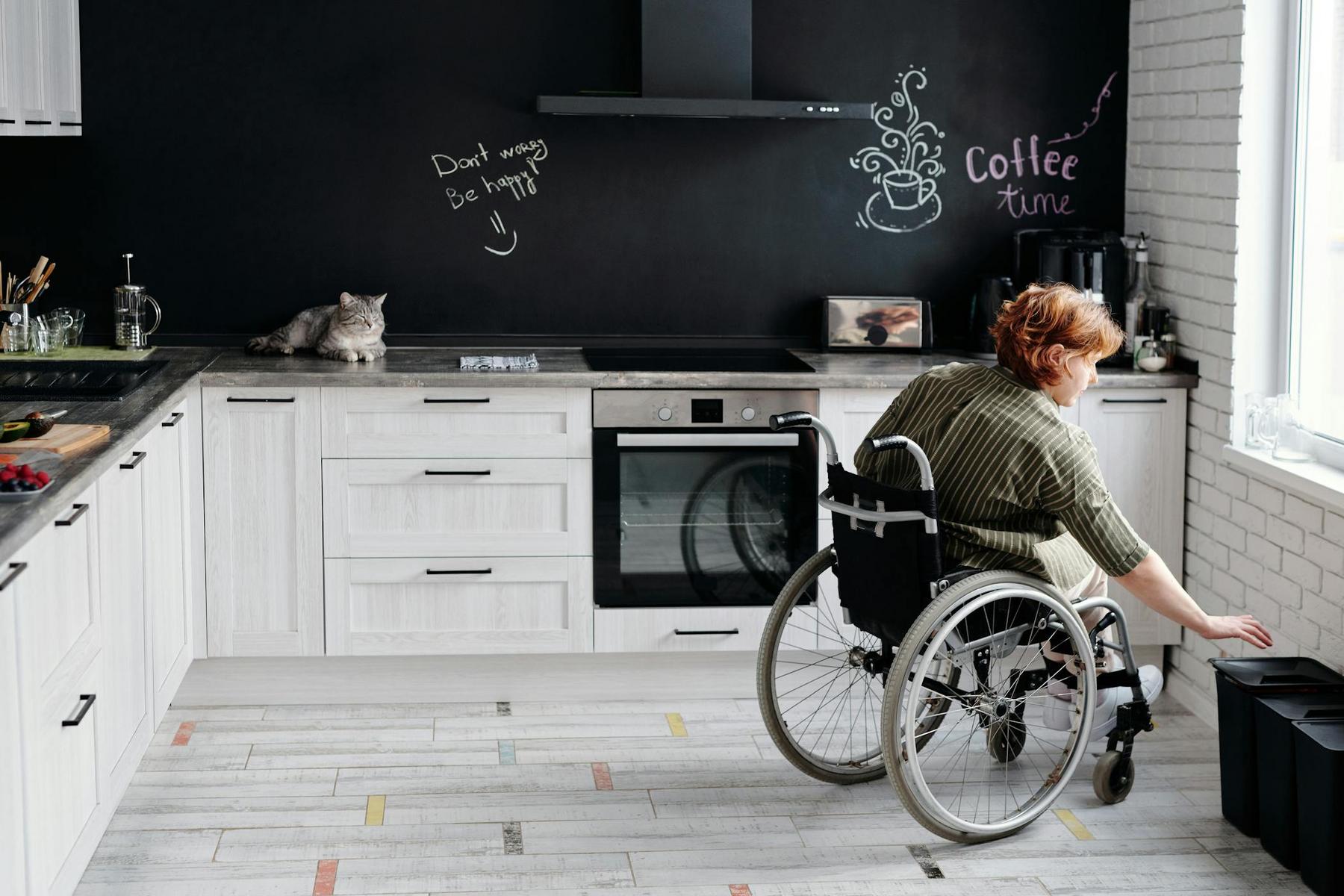
For example, assessing bathroom safety involves more than checking for grab rails and non-slip surfaces. Context-sensitive assessment observes how the client transfers from their wheelchair to the toilet, whether they can reach personal care items whilst maintaining balance, how lighting affects their ability to navigate the space safely, and whether their daily routine creates time pressure that increases risk. These observations reveal person-environment-occupation interactions that static checklists cannot capture.
Implementation support represents another critical phase of context-sensitive practice. Follow-up monitoring checks implementation progress and effectiveness. Modifications may need adjustment based on client feedback. Understanding barriers to implementation when recommendations aren’t followed allows therapists to problem-solve collaboratively rather than simply document non-compliance. Building caregiving support through training family and paid caregivers ensures modifications are used appropriately. Clear documentation supports continuity of care as clients transition between services or funding sources.
Moving Forward: Context as Central to Effective Practice
Environmental assessment in occupational therapy has evolved from simple hazard identification to sophisticated analysis of person-environment-occupation interaction. The evidence demonstrates clearly that context determines what constitutes a hazard, which interventions will be effective, whether modifications will be implemented, and ultimately, whether clients achieve their goals for independence, safety, and quality of life.
For occupational therapists serving clients across diverse Australian communities—from metropolitan centres like Brisbane, Sydney, and Melbourne to regional areas like the Gold Coast, Sunshine Coast, North Lakes, and beyond—understanding context is not an optional addition to environmental assessment practice. Context is central to achieving meaningful, effective outcomes. Whether delivering services face-to-face or through telehealth platforms across Queensland, Victoria, New South Wales, and Tasmania, occupational therapists must consider individual, family, cultural, economic, temporal, and organisational contexts that influence how people interact with their environments.
The research demonstrates that when context is properly understood and addressed, environmental interventions can significantly reduce fall risk, improve occupational performance, and enhance satisfaction with daily activities. Conversely, when context is overlooked, even evidence-based interventions may fail to achieve intended outcomes. As the field continues to evolve, maintaining focus on context ensures that environmental assessments remain person-centred, goal-directed, and genuinely supportive of the meaningful activities that constitute daily life.
How often should environmental assessments be conducted?
Environmental assessments should be conducted whenever there is a significant change in a person’s functional abilities, living situation, or goals. This includes after hospital discharge, following diagnosis of a progressive condition, when falls occur, or when the person reports difficulty performing daily activities. For NDIS participants, assessments may be needed when reviewing plans or as goals evolve. Older adults ageing at home may benefit from periodic reassessment as capabilities change. The frequency depends on individual context rather than a fixed schedule.
Can environmental assessments be conducted via telehealth?
Telehealth environmental assessments can be effective when conducted appropriately. Through video consultation, occupational therapists can guide clients or family members to show different areas of the home, observe how the person performs daily activities, and identify environmental features affecting occupational performance. However, telehealth assessments work best when supplemented with detailed photographs, measurements, and potentially a follow-up in-person visit for complex situations. The suitability of telehealth depends on the individual’s context, including their comfort with technology, the complexity of their needs, and the availability of someone to assist with the assessment process.
What is the difference between environmental assessment and home modification?
Environmental assessment is the comprehensive evaluation process that occupational therapists conduct to understand how person-environment-occupation interactions affect daily function and safety. It includes gathering the client’s narrative, evaluating multiple contextual factors, observing functional performance, and identifying opportunities for intervention. Home modification is one type of intervention that may result from environmental assessment—physical changes to the home environment such as installing grab rails, widening doorways, or modifying bathroom layouts. However, environmental assessment often leads to other interventions as well, including education, assistive technology recommendations, activity modification strategies, or caregiver training.
Who can fund environmental assessments and home modifications in Australia?
Funding for environmental assessments and modifications varies depending on individual circumstances. NDIS participants may access funding through their plans for assessments and modifications deemed reasonable and necessary. Aged care package recipients can use their funding for home modifications. Department of Veterans’ Affairs clients may access modifications through specific programmes. Some private health insurance policies cover occupational therapy assessments. State-based programmes in Queensland, Victoria, New South Wales, and Tasmania may offer support for specific populations. Self-funded options remain available for those not eligible for other funding sources. An occupational therapist can help navigate funding options based on individual context.
How do I know if my home environment needs assessment?
Several situations suggest benefit from professional environmental assessment. If you or a family member has experienced falls or near-misses at home, difficulty performing daily activities like bathing or cooking, recent changes in mobility or balance, a new diagnosis affecting function, recent hospital discharge, concerns about safety when alone, or goals to maintain independence whilst ageing at home, environmental assessment can provide valuable insights. Rather than waiting for an incident, proactive assessment identifies opportunities to enhance safety and independence before problems occur. The decision should consider individual context, current capabilities, future goals, and available resources for implementing recommendations.