The bathroom represents the single highest-risk location in residential settings, accounting for approximately 80% of falls in the home. Yet for many Australians living with disability, reduced mobility, or age-related changes, the bathroom remains a space of vulnerability rather than sanctuary. When designed thoughtfully with occupational therapy insights, accessible bathrooms transform from hazardous necessity into spaces that enable independence, preserve dignity, and support quality of life for years to come.
Why Is Accessible Bathroom Design Critical for Safety and Independence?
The statistics surrounding bathroom-related injuries paint a sobering picture. Approximately one in four Australians aged 65 and over experiences a fall each year, with the bathroom environment combining multiple hazards: wet surfaces, hard fixtures, transitions between spaces, and the need for balance during personal care activities.
Falls in the bathroom carry particularly serious consequences. Hip fractures and head injuries resulting from bathroom falls often mark a turning point in an individual’s ability to live independently. Beyond the immediate physical trauma, the psychological impact—fear of falling, loss of confidence, reduced participation in valued activities—can be equally devastating.
Accessible bathroom design addresses these risks systematically. By incorporating features such as grab rails, non-slip flooring, curbless showers, and appropriate circulation space, properly designed bathrooms reduce fall risk whilst simultaneously supporting independence in essential daily activities. Research from Medicare beneficiary data found that 55.5% of older adults who had experienced falls had implemented bathroom modifications, yet concerningly, 40.2% of those with repeated falls still lacked adequate modifications—representing millions of individuals at ongoing risk.
The connection between bathroom accessibility and health outcomes extends beyond falls prevention. Accessible bathrooms enable individuals to maintain personal hygiene independently, supporting dignity and psychological wellbeing. For people living with disability, chronic conditions, or progressive health changes, the ability to safely use bathroom facilities without assistance represents a fundamental aspect of autonomy and quality of life.
What Does an Occupational Therapist Assess When Designing Accessible Bathrooms?
Occupational therapists bring a unique, holistic perspective to accessible bathroom design, moving beyond standard measurements to understand how an individual actually functions within their environment. When assessing bathroom accessibility needs, occupational therapists evaluate multiple interconnected factors that influence safety, independence, and dignity.
Current and anticipated mobility needs form the foundation of assessment. An occupational therapist examines whether someone currently uses a wheelchair, walker, cane, or walks independently, whilst also considering potential future changes. This forward-thinking approach ensures modifications remain relevant as functional abilities evolve.
Balance, coordination, and fall risk receive careful evaluation. Occupational therapists observe how individuals navigate wet surfaces, transfer between positions, and maintain stability during personal care tasks. Factors such as dizziness, vertigo, proprioceptive challenges, or fear of falling significantly influence design recommendations.
Strength and endurance affect every aspect of bathroom use. Can the person rise from a toilet independently? Do they have sufficient upper body strength to use grab rails effectively? Can they stand throughout showering, or is seated bathing necessary? These capabilities directly inform fixture selection and positioning.
Cognitive function and vision play crucial roles in bathroom safety. Occupational therapists assess whether someone can safely operate fixtures, recognise hot and cold controls, navigate the space at night, and respond appropriately to environmental hazards. Individuals with dementia, acquired brain injury, or vision impairment require specific design considerations addressing these needs.
Upper extremity function determines how someone interacts with taps, handles, and controls. Limited grip strength, reduced fine motor control, or arthritis influence whether lever taps, sensor-activated fixtures, or alternative control systems become necessary.
Beyond physical abilities, occupational therapists evaluate comfort, dignity, and psychological factors. Many individuals resist modifications that appear clinical or institutional. Successful accessible bathroom design balances function with aesthetics, creating spaces people feel comfortable using. Assessment includes understanding personal preferences, cultural considerations, and psychological responses to various design elements.
Shared household use requires additional consideration. When multiple people with different abilities share a bathroom, occupational therapists work to identify solutions accommodating everyone’s needs whilst maintaining household harmony and acceptance.
Which Australian Standards Guide Accessible Bathroom Design?
Australian Standard AS 1428.1:2021 provides the technical framework for designing accessible bathrooms, establishing minimum requirements for access and mobility. Whilst these standards primarily apply to public and commercial buildings, they offer evidence-based guidance valuable for residential accessible bathroom design.
Understanding these specifications helps create bathrooms that genuinely support independence and safety. However, occupational therapists recognise that standards provide a baseline—individual assessment remains essential for determining optimal design for each person’s specific circumstances.
Key Dimensional Requirements from AS 1428.1:2021
Door and entry specifications require minimum clear width of 850mm, with 900mm recommended for optimal wheelchair access. Outward-opening or sliding doors maximise usable floor space whilst ensuring emergency access. Level thresholds eliminate tripping hazards, and lever-style handles accommodate individuals with limited grip strength or dexterity.
Floor space and circulation standards specify a minimum 1500mm diameter turning circle for wheelchair manoeuvrability, with larger spaces (1500mm x 1500mm to 2330mm x 2300mm) preferred depending on fixtures and equipment needs. Slip-resistant flooring with minimum R10 rating reduces fall risk, whilst continuous level surfaces with appropriate drainage gradients (1:60 to 1:80) manage water without creating hazards.
Toilet specifications include seat height of 460-480mm from finished floor level—significantly higher than standard toilets and aligned with wheelchair seat height for easier transfers. Circulation space of 1900mm x 2300mm minimum accommodates safe approaches and transfers. Grab rails must be positioned strategically at 800-810mm height with minimum 850mm length, supporting various transfer methods.
Shower specifications call for minimum 1160mm x 1100mm accessible shower dimensions with curbless, level entry eliminating tripping hazards. Floor gradients maintain proper drainage without creating slip risks. Fold-down seats positioned at 460-480mm height enable safe seated bathing, whilst hand-held showerheads on flexible hoses (minimum 1500mm length) provide bathing flexibility.
Washbasin specifications position basin rims at 800-830mm height, with knee clearance beneath allowing seated approach. Lever or sensor-operated taps accommodate limited hand function, and insulated plumbing prevents burns from exposed pipes.
Grab rail specifications require 30-40mm diameter rails capable of supporting minimum 1100N force without deformation. Strategic positioning around toilets, showers, and bath areas provides stability during transfers and movement. Clearance of 40-60mm from wall surfaces ensures proper grip, whilst non-slip surface finishes enhance safety.
What Are the Essential Features of an Accessible Bathroom?
Accessible bathroom design comprises multiple integrated features working together to create safe, functional spaces. Understanding the purpose and specifications of each element helps ensure modifications genuinely support independence and dignity.
Comparison of Essential Accessible Bathroom Features
| Feature | Primary Purpose | Key Specifications | OT Considerations |
|---|---|---|---|
| Grab Rails | Stability during transfers and movement | 30-40mm diameter; 800-810mm height; support 150kg minimum | Positioning must match individual’s transfer method and grip strength |
| Curbless Shower | Eliminate trip hazards; wheelchair access | Zero-step entry; 1160mm x 1100mm minimum; 1:60-1:80 drainage gradient | Space requirements for equipment; carer access if needed |
| Comfort-Height Toilet | Reduce joint strain; easier transfers | 460-480mm seat height; grab rails on both sides | Must suit individual’s anthropometrics; consider bidet options |
| Non-Slip Flooring | Fall prevention in wet conditions | Minimum R10 rating; R11-R12 for high-risk users | Aesthetic appeal important for acceptance |
| Lever Taps | Enable operation with limited hand function | Single-lever preferred; sensor options available | Position must be reachable from wheelchair or standing |
| Fold-Down Shower Seat | Enable safe seated bathing | 460-480mm height; slip-resistant; self-draining | Transfer ability determines fixed vs. portable option |
| Hand-Held Showerhead | Flexibility for seated bathing | 1500mm minimum hose length; adjustable wall mount | Essential for those unable to stand during showering |
| Thermostatic Mixing Valve | Prevent scalding injuries | Maintains consistent safe temperature | Critical for reduced temperature sensation or cognition changes |
Grab rails and handrails provide stability and fall prevention throughout the bathroom. Professional installation ensuring structural reinforcement remains essential—these rails must support body weight during transfers, not merely provide light touch support like towel bars. Occupational therapists determine optimal height, angle, and positioning based on individual transfer methods and grip capabilities.
Curbless or walk-in showers eliminate the single most problematic barrier in traditional bathrooms. By removing raised shower curbs, these designs accommodate wheelchairs and walkers whilst reducing trip hazards for everyone. Proper drainage systems maintain water containment without creating hazardous thresholds.
Raised or comfort-height toilets reduce strain on hips and knees during sitting and standing. At 460-480mm height (compared to standard 350-400mm), these toilets align with wheelchair seat height and require less strength for transfers. For many individuals with arthritis, joint replacements, or reduced lower limb strength, comfort-height toilets represent the difference between independence and requiring assistance.
Accessible sinks and vanities enable personal hygiene tasks from seated or standing positions. Wall-mounted basins with knee clearance beneath accommodate wheelchair users, whilst 800-830mm height works for both seated and standing access. Lever or sensor taps eliminate the need for tight gripping or twisting motions.
Non-slip flooring forms the foundation of bathroom safety. Textured finishes with minimum R10 slip resistance reduce fall risk in wet conditions, with R11 or R12 ratings recommended for individuals at higher risk. Modern non-slip flooring options include attractive patterns and colours, dispelling the misconception that safety requires clinical appearance.
Hand-held showerheads on flexible hoses enable bathing flexibility essential for seated showering or carer assistance. Adjustable wall mounts allow positioning appropriate for individual height and reach, whilst multiple spray patterns can accommodate various preferences and sensitivities.
Shower seats and transfer benches enable safe seated bathing, reducing fatigue and fall risk. Fold-down seats maximise space when not needed, whilst transfer benches with one end inside and one end outside shower areas facilitate safe transfers for individuals unable to step over barriers.
Thermostatic mixing valves prevent scalding injuries by automatically maintaining safe water temperature. Particularly important for individuals with reduced temperature sensation, cognitive changes, or unexpected movements, these devices provide critical safety protection often overlooked in residential bathroom design.
How Do You Balance Accessibility with Aesthetics in Bathroom Design?
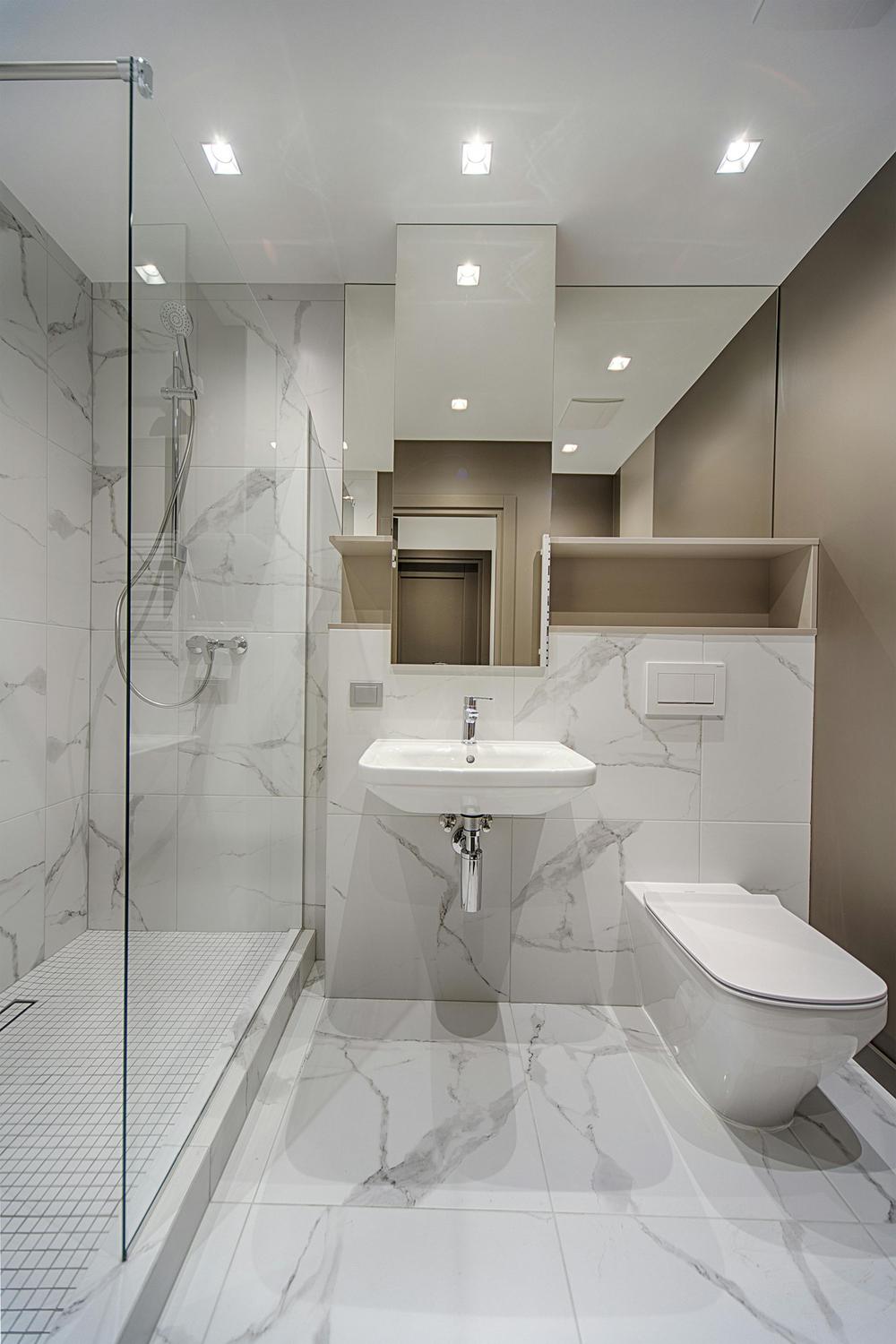
One of the most common barriers to implementing accessible bathroom modifications involves concerns about appearance. Many individuals resist changes they perceive as making their bathroom look clinical, institutional, or stigmatising. Modern accessible bathroom design directly addresses these concerns, proving that accessibility and aesthetics complement rather than compete.
Universal design principles guide this balance, creating spaces that work beautifully for everyone regardless of ability. Rather than designing specifically “for disability,” universal design incorporates accessibility features seamlessly into attractive, functional spaces appealing to all ages and abilities.
Contemporary grab rails exemplify this aesthetic evolution. Available in finishes including brushed nickel, matte black, chrome, and even rose gold, modern grab rails coordinate with existing fixtures rather than standing out as medical equipment. Decorative designs incorporate grab rail function into towel bars, corner shelving, or architectural elements.
Non-slip flooring options have similarly evolved. Textured porcelain tiles, patterned vinyl, and slip-resistant stone finishes provide safety without sacrificing visual appeal. Large-format tiles with minimal grout lines create clean, modern aesthetics whilst maintaining proper slip resistance.
Curbless showers actually enhance contemporary bathroom design. The seamless floor surface creates visual spaciousness, whilst glass screens provide elegant enclosure without the dated appearance of shower curtains. Strategic tile patterns or subtle floor gradients guide water to drains without obvious slopes.
Colour and contrast serve dual purposes in accessible design. High-contrast fixtures assist individuals with vision impairment in navigating spaces safely, whilst simultaneously creating bold, contemporary aesthetic statements. Matte black fixtures against white walls, for example, provide both functional visibility and design impact.
Lighting design integrates accessibility and ambience. Layered lighting—combining ambient illumination, task lighting at mirrors and fixtures, and subtle nightlights—ensures visibility without harsh glare. Modern motion-sensor options eliminate fumbling for switches whilst conserving energy.
The most successful accessible bathroom designs involve occupational therapists, designers, and users collaborating from initial planning through completion. This partnership ensures modifications meet functional needs whilst reflecting personal style preferences, creating spaces people genuinely enjoy using rather than merely tolerate.
What Should You Consider When Planning Bathroom Modifications?
Planning accessible bathroom modifications requires balancing immediate needs with future considerations, individual requirements with household dynamics, and functional necessities with budget realities. Thoughtful planning maximises the long-term value and effectiveness of modifications.
Future-proofing represents a crucial consideration often overlooked. Functional abilities change over time—arthritis progresses, balance decreases, strength diminishes. Designing for anticipated future needs, not just current abilities, extends the useful life of modifications. Installing structural reinforcement for future grab rail placement costs little during renovation but proves expensive to add later. Selecting adjustable-height fixtures accommodates changing needs without requiring replacement.
Shared household use complicates planning when multiple people with different abilities share bathroom facilities. Solutions might include installing grab rails positioned to serve multiple transfer methods, selecting neutral aesthetic styles acceptable to everyone, or incorporating adjustable features accommodating various heights and reaches. Occupational therapists skilled in accessible bathroom design navigate these competing needs, identifying solutions maximising function for everyone.
Budget considerations significantly impact modification scope. Minor modifications—installing grab rails, replacing taps, adding non-slip flooring—might cost $500-$1,000 AUD. Shower conversions typically range $5,000-$15,000 AUD, whilst complete accessible bathroom renovations can reach $20,000-$60,000 AUD or more depending on size and finishes selected.
However, cost-benefit analysis must consider long-term value. Accessible bathroom modifications enabling someone to remain in their home for an additional 5-10 years represent substantial savings compared to residential care costs. Fall prevention benefits reduce medical expenses and maintain quality of life. Properly designed accessible bathrooms also increase property value, appealing to the growing market of buyers seeking accessible or adaptable housing.
Funding options for bathroom modifications exist through various channels. The National Disability Insurance Scheme (NDIS) provides funding for eligible participants when modifications are deemed reasonable and necessary. Home Care Packages support aged care recipients with modification costs. Some state-based programmes and local councils offer assistance, and tax deductions may apply when modifications address documented medical needs.
Professional involvement proves essential for successful modifications. Occupational therapists assess needs and recommend appropriate modifications, ensuring changes genuinely address functional limitations. Licensed builders and plumbers handle installation to required standards and building codes. Certified designers with accessibility expertise balance aesthetics with function. This collaborative approach produces better outcomes than attempting to navigate complex requirements independently.
Timing considerations influence planning decisions. Modifications implemented proactively, before falls occur or abilities significantly decline, prevent injuries and maintain confidence. Reactive modifications following hospitalisation or crisis often happen under time pressure, limiting options and potentially producing less optimal results.
Creating Bathrooms That Support Independence and Dignity
Accessible bathroom design represents far more than installing grab rails and widening doorways. At its core, designing accessible bathrooms addresses fundamental human needs: safety, independence, dignity, and participation in daily life. When occupational therapists collaborate with individuals, families, designers, and builders to create truly accessible bathrooms, they enable people to maintain autonomy in essential personal care whilst reducing injury risk and supporting aging in place.
The evidence supporting accessible bathroom modifications extends beyond statistics about falls prevented. Research consistently demonstrates that appropriate environmental modifications enhance quality of life, reduce caregiver burden, delay institutional placement, and support psychological wellbeing. For the thousands of Australians across Queensland, New South Wales, Victoria, and Tasmania seeking to maintain independence despite mobility challenges, chronic conditions, or age-related changes, accessible bathrooms provide essential support.
Australian Standard AS 1428.1:2021 offers valuable technical guidance, yet individual assessment remains paramount. Every person brings unique functional abilities, preferences, cultural considerations, and circumstances to bathroom design decisions. Occupational therapists’ skills in holistic assessment, activity analysis, and person-centred planning ensure modifications genuinely meet individual needs rather than simply meeting minimum standards.
The evolution of accessible design aesthetics removes previous barriers to implementation. Modern accessible bathrooms combine safety, function, and beauty, disproving outdated notions that accessibility requires sacrificing style. This aesthetic evolution supports both physical safety and psychological comfort, recognising that environments we find attractive and welcoming support better outcomes than spaces we perceive as clinical or institutional.
Looking forward, emerging technologies promise continued innovation in accessible bathroom design. Smart fixtures responding to voice commands, sensor-based systems reducing physical demands, and integrated safety monitoring represent just the beginning of possibilities. Yet regardless of technological advances, the fundamental principles remain constant: accessible bathrooms must support safety, enable independence, preserve dignity, and reflect the individuals who use them.
For families and individuals considering bathroom modifications, professional guidance from occupational therapists familiar with accessible design principles proves invaluable. These clinicians understand not only technical requirements and building standards, but more importantly, how environments enable or restrict meaningful participation in daily life. Their insights ensure modifications truly support independence and quality of life, providing lasting value well beyond initial investment.
Have questions? Need help? Contact Astrad Occupational Therapy today. Our mobile occupational therapy service delivers comprehensive bathroom accessibility assessments across Brisbane, North Lakes, Sydney, Melbourne, Gold Coast, Sunshine Coast, and throughout Queensland, Victoria, New South Wales, and Tasmania. We provide personalised guidance on accessible bathroom design, working with you to create safe, functional, and dignified spaces supporting independence and quality of life.
How much does it cost to make a bathroom accessible in Australia?
Accessible bathroom modification costs vary significantly based on scope and specifications. Minor modifications including grab rail installation, lever tap replacement, and non-slip flooring typically cost $500-$1,500 AUD. Converting a standard shower to a curbless accessible shower ranges $5,000-$15,000 AUD. Complete accessible bathroom renovations incorporating multiple modifications generally cost $20,000-$60,000 AUD, with luxury finishes and larger spaces potentially exceeding this range. Occupational therapy assessment helps prioritise modifications based on individual needs and budget, ensuring critical safety features receive priority. Funding may be available through NDIS, Home Care Packages, or local programmes for eligible participants.
What is the minimum size for an accessible bathroom in Australia?
Australian Standard AS 1428.1:2021 specifies minimum dimensions for accessible bathroom components rather than an overall room size. For example, an accessible toilet requires a minimum clear floor space of 1900mm x 2300mm, an accessible shower needs at least 1160mm x 1100mm, and a wheelchair turning circle requires a 1500mm diameter. In practical terms, fully accessible bathrooms typically measure at least 2400mm x 2400mm to accommodate these components, though larger dimensions may be recommended based on individual needs and mobility aids.
Do I need council approval for accessible bathroom modifications in Queensland?
Council approval requirements depend on the scope of the modifications and local regulations. Minor changes such as installing grab rails, replacing taps, or cosmetic updates often do not require approval. However, structural changes like altering walls, relocating plumbing, or modifying the building footprint generally require building permits and council approval. It is advisable to consult with licensed builders and occupational therapists to ensure all modifications meet local building codes and standards.
Can grab rails be installed in any bathroom wall?
Grab rails require secure structural support to safely bear body weight during transfers. Standard plasterboard walls without reinforcement may not be sufficient. Options include installing grab rails where wall studs provide backing, adding backing boards during renovations, or using specialised mounting systems designed for hollow walls (for lighter loads only). Occupational therapists typically determine the optimal positioning based on individual needs, and qualified professionals should install the rails to ensure safety.
What’s the difference between an accessible bathroom and an adaptable bathroom?
An accessible bathroom is designed with modifications that address current functional limitations, such as grab rails, comfort-height toilets, and curbless showers, catering to existing mobility challenges. An adaptable bathroom incorporates design features that allow for future modifications with minimal structural changes, such as reinforced walls or flexible fixture placements. Occupational therapists can help determine whether an accessible, adaptable, or universal design best meets an individual’s present and future needs.