Every night, thousands of Australians face a simple yet potentially dangerous challenge: getting in and out of bed safely. For individuals with mobility limitations, disabilities, or age-related changes, this fundamental activity can become a significant fall risk. Falls in older people accounted for 43.4% of all injury-related hospitalisations in Australia during 2022-23, with over 238,055 admissions recorded. Perhaps most concerning is that 70% of falls in senior housing communities occur in a resident’s bedroom, making bedroom modifications for safer transfers a consideration for preventing injuries and maintaining independence.
The financial and human costs are significant. Treatment of injuries from falls in older people cost over $4.7 billion in 2021-2022 alone. Beyond the statistics lie disrupted lives, reduced independence, and the physical consequences of preventable injuries. Research suggests that falls can be reduced by up to 34% within a year through coordinated, evidence-based interventions. Bedroom modifications form one component of these prevention efforts, addressing the specific environment where many falls occur.
Disclaimer: This information is general in nature and should not replace professional assessment or advice from a qualified occupational therapist, general practitioner, or other qualified health professional. Individuals concerned about fall risk or bedroom safety should consult with a qualified practitioner who can assess their specific needs and circumstances.
Why Might Bedroom Modifications Be Considered for Safer Transfers?
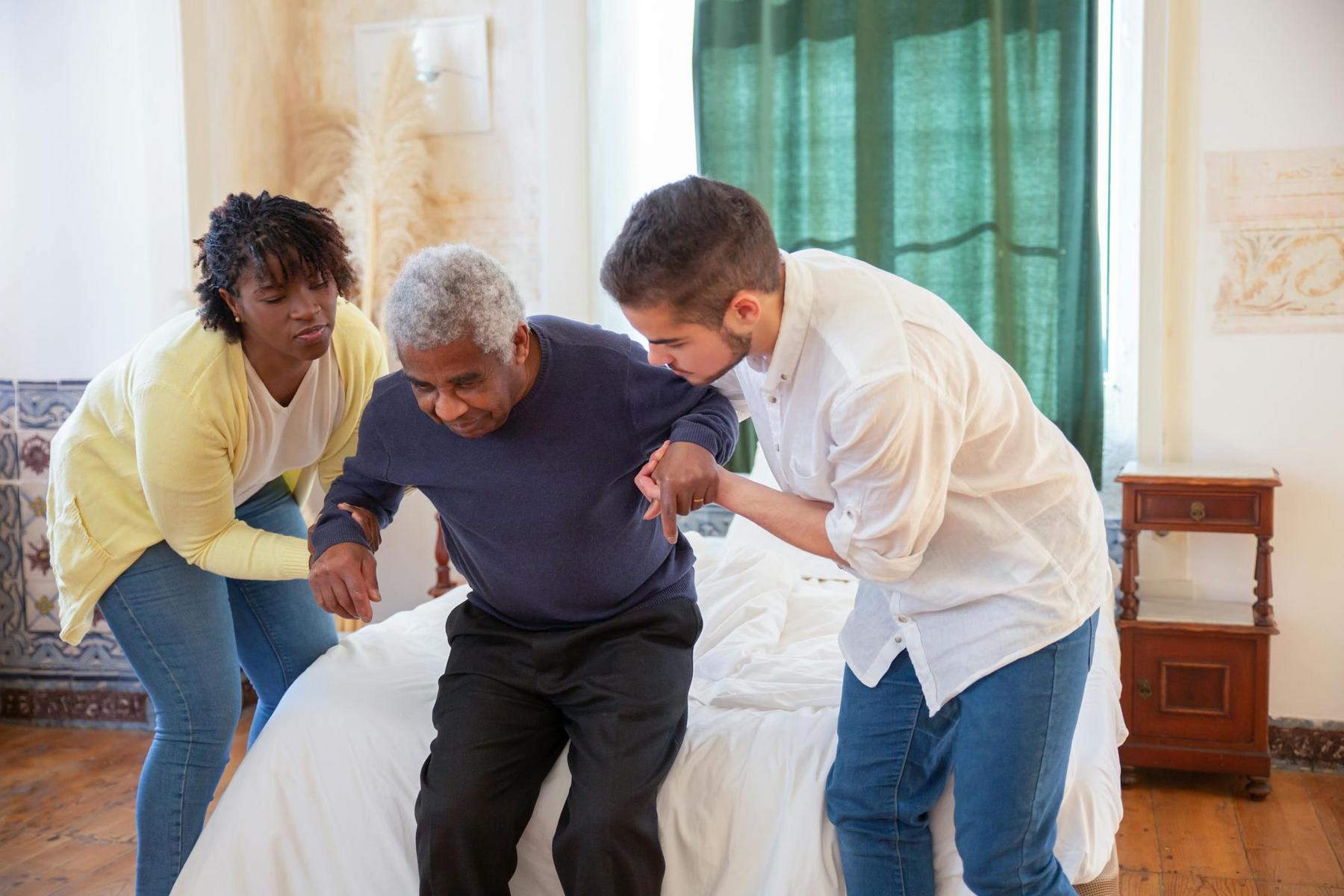
Bedroom modifications may address multiple environmental factors within the space where people are often vulnerable. Transfers—the movements between bed and standing, bed and wheelchair, or bed and commode—represent moments when balance, strength, and environmental factors interact. During these transitions, individuals often move in dim lighting, sometimes while drowsy or medicated, and frequently without immediate support.
Research published in the Cochrane Database of Systematic Reviews suggests that home fall-hazard reduction interventions may reduce the overall fall rate, with potentially greater effectiveness in people identified as being at higher fall risk. When implemented as part of comprehensive approaches to falls prevention, bedroom modifications may contribute to safety outcomes.
Understanding why bedroom modifications might be beneficial requires considering the relationship between a person’s functional capacity and their physical environment. When the bedroom environment does not match an individual’s mobility capabilities, every transfer may become unnecessarily difficult. Modifications may help bridge this gap, creating an environment that works with a person’s abilities.
For individuals throughout various regions of Australia, professional Occupational therapy assessment can help identify which modifications might be appropriate for individual needs rather than applying generic solutions.
What Are Some Possible Bedroom Modifications for Transfer Safety?
Research and evidence-based practice suggest a range of potential modifications that may support transfer safety. These modifications vary from simple, low-cost changes to more complex structural adaptations.
Lighting considerations are frequently discussed in falls prevention guidance. Research identifies poor lighting as a common factor in fall incidents. Individuals and their practitioners may wish to discuss:
- Motion-activated pathway lighting options
- Under-bed lighting to provide floor-level visibility
- Bedside lighting solutions with accessible controls
- Glow-in-the-dark switches or motion-sensor nightlights
Flooring and pathway management are areas people may wish to consider. Smooth, non-slip surfaces are often discussed as preferable to thick carpet or highly glossy tiles. Individuals may wish to discuss with a qualified practitioner:
- Non-slip backing for any rugs or floor coverings
- Removal of loose rugs or those with curled edges
- Maintaining clear walkway space to accommodate mobility aids
Door hardware presents an area where modifications may support independence. Research suggests lever handles may be easier to operate than round knobs for some individuals. People may wish to discuss door handle options with an allied health professional, particularly if they experience reduced hand strength or joint limitations.
Storage and accessibility considerations may help reduce the need for reaching and stretching. Individuals may wish to consult with an occupational therapist about:
- Storing frequently used items within comfortable reach
- Pull-down closet rod options
- Slide-out shelves
- Bedside storage solutions
Temperature and environmental controls may contribute to comfortable sleeping conditions. Some people choose to consider programmable climate control or accessible thermostat options, which can be discussed with a qualified practitioner.
| Modification Type | General Safety Consideration | NDIS Category (if applicable) |
|---|---|---|
| Motion-activated lighting | May reduce nighttime falls | Simple/Minor |
| Non-slip flooring treatments | May prevent slipping incidents | Simple/Minor |
| Lever door handles | May improve accessibility | Simple |
| Transfer poles | May support safe bed transfers | Minor |
| Adjustable bed | May provide flexibility in bed positioning | Minor/Complex |
| Ceiling hoist system | May assist with safe transfers for some individuals | Complex |
Bed Height and Positioning: Considerations for Transfer Safety
Bed height is frequently discussed in fall prevention literature as relevant to transfer safety. Research suggests that bed height may affect the ease and safety of transfers. Individuals may wish to discuss optimal bed height ranges with an occupational therapist or other qualified allied health professional, as appropriate height varies depending on individual factors such as height, strength, and mobility.
Adjustable beds offer flexibility in bed positioning. Some people choose to consider motorised adjustable beds because they allow changes to bed height and angle. Individuals may wish to discuss with a qualified practitioner:
- How adjustable bed features might support their specific needs
- Edge support and stability considerations
- Control placement for accessibility
Transfer poles and bed support options are areas where individuals may benefit from professional guidance. Research suggests that vertical support during transfers may be beneficial for some people. An occupational therapist can discuss the range of support options available and which might be appropriate for individual circumstances and functional capacity.
Bed positioning within the room may be relevant to safe transfers. Individuals and practitioners may wish to discuss:
- Access routes around the bed
- Space allowances for mobility aids
- Room layout considerations for wheelchair access if relevant
Mattress characteristics such as firmness and edge support may be discussed with a qualified practitioner as they relate to comfort and transfer safety.
A qualified occupational therapist can provide assessment taking into account individual anthropometrics, specific mobility considerations, and personal transfer techniques and preferences.
Assistive Equipment and Technology: Potential Support Options
Assistive equipment and technology present various options that some individuals and their practitioners may consider as part of a broader approach to transfer safety.
Ceiling hoist systems are discussed in research as one option for safe transfers for individuals with significant support needs. These systems require professional assessment of structural capacity, professional installation, and ongoing maintenance. Individuals considering this option may wish to consult with a qualified occupational therapist to discuss whether ceiling hoists might be appropriate for their circumstances.
Transfer boards and slide sheets may be options some individuals discuss with their occupational therapist or other qualified practitioner as potentially beneficial for certain types of transfers.
Transfer belts and gait belts may be used in supervised transfer contexts. A qualified practitioner can provide guidance on appropriate use.
Smart home technology is an emerging area. Voice-controlled systems may allow some individuals to manage lighting, temperature, and emergency communication without leaving bed. The appropriateness and effectiveness of such systems varies by individual circumstances, and individuals may wish to discuss options with a qualified practitioner.
Emergency communication systems such as fall-detection devices or call buttons may provide safety backup. A qualified practitioner can discuss options relevant to individual needs and preferences.
The National Disability Insurance Scheme (NDIS) provides information about assistive equipment and technology that may be funded, subject to individual circumstances and approved assessments.
NDIS Funding for Bedroom Modifications: General Information
The NDIS may provide funding for home modifications that meet eligibility criteria. The NDIS categorises modifications into different types, and individuals are encouraged to obtain information directly from the NDIS or work with a qualified occupational therapy assessor to understand funding pathways relevant to their situation.
Simple home modifications generally refer to modifications at lower cost points and may not require formal quotes. Examples discussed in falls prevention contexts include grab rails, anti-slip treatments, lever handles, and lighting improvements.
Minor home modifications involve non-structural changes and may require professional assessment and quotes depending on cost. Bedroom-related examples might include lighting upgrades, adjustable bed installation, or transfer pole installation.
Complex home modifications involve structural changes and typically require detailed assessment, specifications, and construction quotes.
Individuals should contact the NDIS directly or work with a qualified occupational therapy assessor to understand funding eligibility, processes, and timelines relevant to their specific circumstances. Professional guidance can help ensure applications are complete and meet relevant criteria.
For those with rental properties, individuals should discuss any proposed modifications with their landlord prior to making changes.
The Role of Occupational Therapy Assessment in Planning Modifications
Occupational therapy assessment is frequently recommended as a foundation for identifying appropriate bedroom modifications. Occupational therapists are trained to analyse how individual capabilities interact with physical environments to support or hinder daily activities.
An occupational therapy assessment typically involves:
- Visiting the home to evaluate functional abilities and bedroom layout
- Discussing daily routines, preferences, and goals
- Identifying environmental factors relevant to safety
- Providing recommendations tailored to individual circumstances
Research suggests that occupational therapy assessment combined with home modifications may support falls prevention efforts, particularly when combined with other strategies such as exercise, education, and ongoing support.
For individuals considering NDIS funding for modifications, occupational therapy assessments from qualified assessors form an important part of the application process.
Beyond assessment, occupational therapists may provide guidance on proper use of equipment and assistive devices to ensure safety and effectiveness.
Individuals can access occupational therapy services through various pathways, including NDIS funding, private payment, aged care services, or health system referrals. A qualified occupational therapist can discuss their qualifications and experience in home modification assessment.
Creating a Broader Safety Strategy for Your Bedroom
Research suggests that comprehensive approaches to falls prevention—combining environmental modifications with other strategies—may be more effective than single interventions alone.
Integration with other approaches individuals and practitioners might consider include:
- Balance and mobility exercise programmes supervised by trained personnel
- Medication review in consultation with a healthcare provider
- Vision assessment and management through optometry or ophthalmology
- Continence assessment and management approaches
- Ongoing review and reassessment as needs change
Individuals concerned about falls or bedroom safety are encouraged to discuss comprehensive approaches with qualified practitioners including occupational therapists, physiotherapists, general practitioners, or other relevant health professionals.
What do bedroom modifications for safer transfers typically involve?
Bedroom modifications can range from simple changes like improved lighting or non-slip treatments to more complex adaptations such as ceiling hoist installation or room reconfiguration. A qualified occupational therapist can assess individual circumstances and discuss appropriate options. Costs and complexity vary significantly depending on the specific modifications needed. Professional assessment determines what modifications might be beneficial for individual needs.
Can bedroom modifications be made in rental properties?
Any modifications to rental properties require written landlord approval before proceeding. If accessing NDIS funding for modifications in rental properties, landlord consent is required. It is recommended to discuss proposed modifications with landlords early, as negotiations may take time. Some modifications can be designed to be reversible. If landlords do not consent to necessary modifications, individuals may discuss alternative options with their occupational therapist or NDIS planner.
What are the different types of support equipment available for bed transfers?
A range of equipment options may be available to support safe transfers, including transfer poles, transfer boards, adjustable beds, and ceiling hoists. The appropriateness of different options depends on individual functional capacity, mobility status, available support, and preferences. A qualified occupational therapist can discuss which options might be suitable for individual circumstances and can provide guidance on proper use and safety.
How do I access professional assessment for bedroom modifications?
Occupational therapy assessment can be accessed through several pathways:
– Through NDIS planning and funding (for NDIS participants)
– Private payment through occupational therapy services
– Referral through a general practitioner or other health professional
– Through aged care services or community health programmes
– Through hospital discharge planning services
Individuals can search for qualified occupational therapists through professional registration bodies and ask about their experience with home modification assessment.
What funding is available for bedroom modifications?
The NDIS provides funding for home modifications that meet eligibility criteria and are deemed reasonable and necessary for the person’s disability. Other funding pathways may be available through health services, aged care programmes, or private payment. Individuals are encouraged to discuss available options with a qualified practitioner or to contact the NDIS directly for information relevant to their circumstances.
How do I know if bedroom modifications are right for me?
A qualified occupational therapist or other health professional can assess your individual circumstances, functional abilities, and safety concerns to provide advice on whether modifications might be beneficial. If you have concerns about falls, bedroom safety, or transfers, consultation with a qualified practitioner is recommended.