For many people, the prospect of living independently – whether following an injury, disability diagnosis, or simply as part of ageing – carries both excitement and uncertainty. The desire to maintain autonomy, routine, and a sense of self is deeply human. Yet questions naturally arise: Is this person safe at home alone? Do they have the skills they need? What supports might bridge the gap?
These are not simple questions with simple answers. Evaluating readiness for solo living is one of the most nuanced and comprehensive assessments an occupational therapist (OT) undertakes. It reaches far beyond a safety checklist – it is a whole-person evaluation that considers physical function, cognitive capacity, emotional wellbeing, environmental factors, and the daily activities that make a life meaningful.
Please note: The information in this article is intended for general educational purposes only. It is not a substitute for individualised occupational therapy assessment or professional advice. Readers are encouraged to seek their own professional assessment to address their specific circumstances.
This article explores the key OT considerations involved in evaluating readiness for solo living, the frameworks and tools used, and what individuals, families, and carers can expect from the process.
What Does “Readiness for Solo Living” Actually Mean from an OT Perspective?
From an occupational therapy perspective, readiness for solo living is not a binary determination. It exists on a spectrum, shaped by the unique interaction between a person, their environment, and the occupations (activities) that form their daily life.
Occupational therapists use the Person-Environment-Occupation (PEO) model as a core framework. This approach recognises that independence is not simply a function of physical ability – it is a product of how a person’s individual capacities interact with both their living environment and the tasks they need to perform each day.
A person may be physically capable of preparing a meal but struggle with planning and sequencing the steps involved. Another person may have significant physical limitations but thrive with the right environmental modifications and support structure in place. Evaluating readiness for solo living requires an OT to examine all three elements of this equation simultaneously – and to do so in context, ideally within the person’s own home.
What Functional Areas Do OTs Evaluate When Assessing Solo Living Readiness?
Functional assessment sits at the heart of evaluating readiness for solo living. OTs examine two broad categories of daily activity:
Activities of Daily Living (ADLs)
These are the foundational self-care tasks that underpin personal independence:
- Bathing, showering, and personal hygiene
- Dressing and grooming
- Eating and drinking
- Toileting and continence management
- Transfers (e.g., moving from bed to chair) and mobility around the home
Instrumental Activities of Daily Living (IADLs)
IADLs reflect the broader skills required for community-based living:
- Meal preparation and cooking
- Shopping and sourcing household necessities
- Housekeeping and laundry
- Medication management and adherence
- Financial management and bill payment
- Community mobility and use of transport
- Communication (telephone, digital)
- Managing household emergencies
A range of validated assessment tools support this evaluation, including the Katz Index of Independence, the Lawton IADL Scale, the Performance Assessment of Self-Care Skills (PASS), and the Canadian Occupational Performance Measure (COPM), which centres the client’s own perception of their performance and satisfaction.
| Assessment Tool | Domain Assessed | Key Focus |
|---|---|---|
| Katz Index of Independence | Basic ADLs | 6 core self-care functions |
| Lawton IADL Scale | Instrumental ADLs | 8 community-living skills |
| Performance Assessment of Self-Care Skills (PASS) | ADLs and IADLs | Task performance, safety, adequacy |
| Kohlman Evaluation of Living Skills (KELS) | Multiple domains | Living skills across 5 categories |
| Functional Independence Measure (FIM) | Disability level and assistance required | Tracks change over time |
| Canadian Occupational Performance Measure (COPM) | Client-perceived performance | Goal-setting and client priorities |
| Montreal Cognitive Assessment (MoCA) | Cognitive screening | Executive function, mild impairment |
| Home FAST | Home safety | 25 common home hazards |
How Do OTs Assess Cognitive Capacity and Decision-Making for Independent Living?
Cognitive function is one of the most critical – and most frequently misunderstood – elements of evaluating readiness for solo living. An important distinction underpins all OT assessment in this area: cognitive ability and decision-making capacity are not the same thing.
A person may demonstrate cognitive impairment on screening tools and yet retain the capacity to make meaningful, informed decisions about their living arrangements. Conversely, someone who performs adequately on standardised tests may still lack the practical judgement needed to manage unexpected situations safely at home.
OTs assess decision-making capacity across four core elements:
- Understanding: Can the person comprehend relevant information about their current functional abilities, risks, and available supports?
- Appreciation: Can the person recognise how that information applies to their own situation? Poor insight into one’s own limitations is a significant risk factor for solo living.
- Reasoning: Can the person compare options, anticipate consequences, and articulate a logical rationale for their choices?
- Expression: Can the person communicate their decisions and preferences clearly?
Beyond formal capacity assessment, executive function is considered the strongest predictor of functional independence. This includes planning and organisation, problem-solving, task initiation, impulse control, and the ability to respond to unexpected situations. Tools such as the Montreal Cognitive Assessment (MoCA) and the Assessment of Motor and Process Skills (AMPS) help OTs assess these capacities – but the most ecologically valid insights come from observing a person completing real-world tasks in their actual environment.
How Does the Home Environment Factor Into a Solo Living Readiness Assessment?
An occupational therapy home safety assessment is a functional evaluation of how a person’s abilities interact with the specific spaces and demands of their living environment. It is not a generic walkthrough – it is tailored to the individual.
Falls represent a critical safety consideration. Falls are a significant cause of injury hospitalisation among the general population, with older adults disproportionately affected. A substantial proportion of falls among older adults occur at home, and the risk increases with age. Research supports OT-led home assessment as an effective intervention, with studies indicating that well-targeted home safety modifications can meaningfully reduce fall risk, particularly for those with a history of falls.
Key areas evaluated during a home safety assessment include:
Bathrooms
The bathroom is the highest-risk area in most homes. OTs assess grab bar placement and security (which must support forces of 112kg or greater and be properly anchored to wall studs), non-slip surfaces, toilet height, lighting, hot water temperature, and emergency access.
Bedrooms
Bed height plays an important functional role – an optimal range of approximately 45–66cm supports safe sitting and standing transitions. OTs also assess lighting access, pathway clarity, and emergency communication.
Kitchens
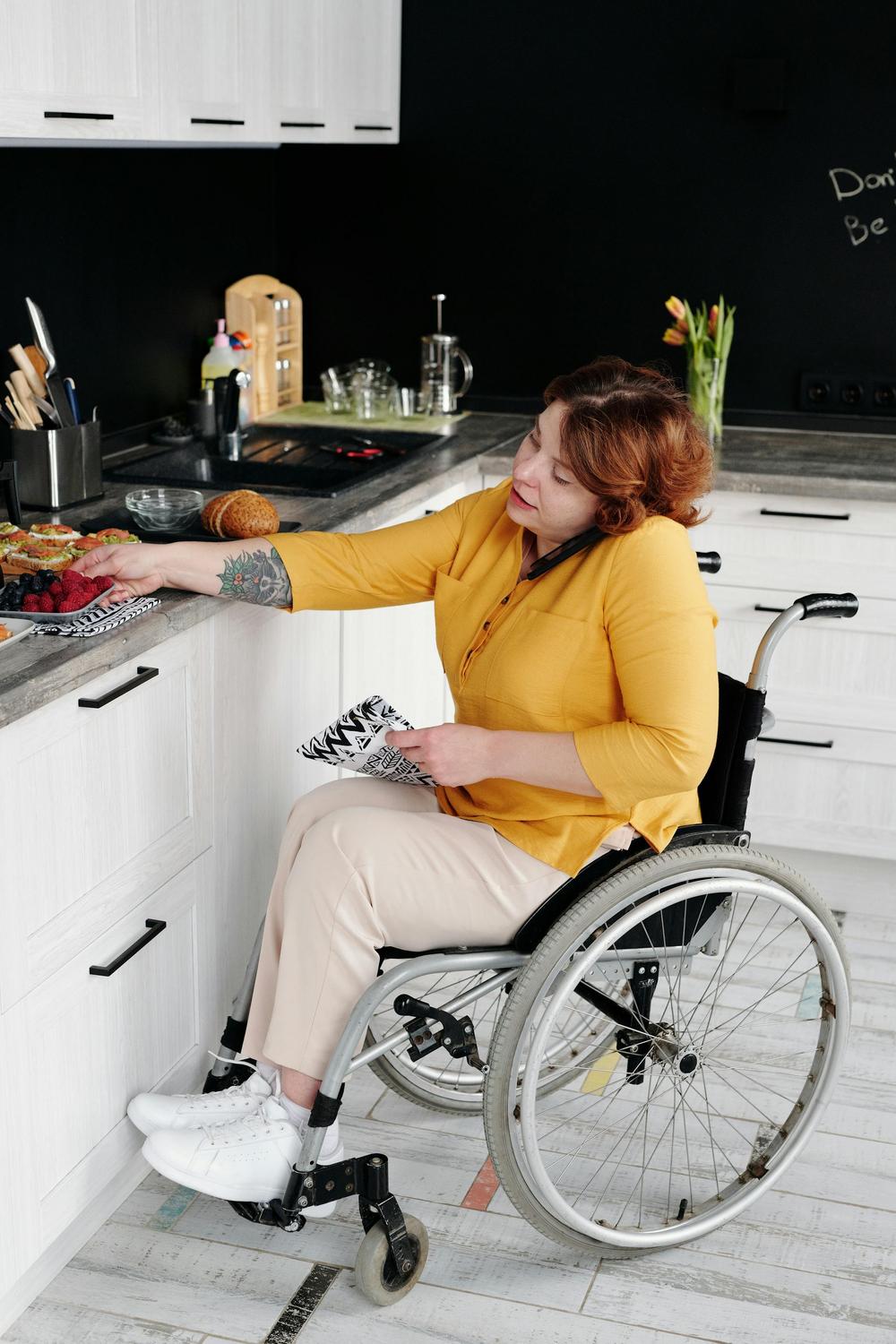
Storage heights, appliance accessibility, spill management capability, and safe use of cooking equipment are all evaluated in the context of the individual’s abilities.
Hallways, Stairs, and Entryways
Handrail adequacy and positioning, lighting (a minimum of 50 lux in pathways), step visibility, and the management of cables and clutter are all assessed.
A thorough occupational therapy home safety assessment typically takes 2–3 hours for a standard residence, encompassing an initial consultation, room-by-room evaluation, functional performance observation, and a recommendation discussion. More complex homes or presentations may require additional sessions.
What Are the Key Risk Factors That Can Affect Someone’s Capacity to Live Independently?
Understanding risk factors allows OTs to tailor assessment and recommendation strategies appropriately. Risk factors may be internal (relating to the person) or external (relating to the environment and social context).
Internal Risk Factors
- Multiple chronic health conditions or comorbidities
- Cognitive impairment, including dementia or executive dysfunction
- Visual or hearing impairment
- Balance and mobility challenges
- Mental health conditions such as depression or anxiety
- Poor insight into functional limitations
- Difficulty with medication management and adherence
- History of self-neglect or falls
External Risk Factors
- Social isolation or a limited informal support network
- Inadequate or inaccessible housing
- Limited access to community resources or transport
- Financial constraints affecting access to modification funding
- Geographic isolation from emergency services
The presence of multiple risk factors does not automatically determine that solo living is inappropriate – rather, it informs the level and nature of support or environmental modification required to enable safe, dignified independence.
Who Can Benefit From a Solo Living Readiness Assessment, and What Does the NDIS Cover?
Evaluating readiness for solo living is relevant across a wide range of life circumstances and client groups.
Older adults ageing in place benefit from assessment that addresses fall prevention, chronic condition management, sensory changes, and social connection. Younger adults with intellectual or developmental disabilities transitioning from family homes or supported environments require assessment focused on capacity building, skill development, and appropriate supervision levels. Individuals with mental health conditions may require assessment that considers the relationship between psychiatric symptoms and functional performance. People recovering from acquired brain injury or stroke often need evaluation of how changed cognitive and physical capacities affect their ability to manage daily life safely.
Within the Australian NDIS, solo living readiness assessments are commonly conducted in the context of Supported Independent Living (SIL) or Independent Living Options (ILO) planning. SIL assessments determine a participant’s ability to carry out everyday tasks, identify tasks requiring assistance, and inform the appropriate level of support (such as support ratios and overnight care). ILO assessments explore the most suitable living model based on individual goals, daily support requirements, and risk profile.
The NDIS also funds home modifications across three categories – under $10,000, between $10,000 and $20,000, and complex modifications exceeding $20,000 – with OT assessment forming a key part of the evidence base for these approvals.
Research supports the value of OT-led home modifications, with studies indicating improvements across measures of caregiver assistance, functional independence, and activity difficulty following well-targeted interventions.
Finding the Right Balance Between Safety and Autonomy in Solo Living Assessment
One of the most important principles guiding OT practice in this area is that safety and autonomy are not opposing forces – they must be held in balance. An individual’s right to make decisions about their own life, including decisions that involve some degree of risk, is a cornerstone of person-centred care.
Effective solo living readiness assessment does not seek to restrict independence; it seeks to identify the conditions under which independence is most safely and sustainably achievable. That may mean recommending assistive technology, environmental modifications, skill-building programmes, or structured support arrangements – or a combination of all of these.
The Path Forward: What Solo Living Readiness Assessment Achieves
Evaluating readiness for solo living is ultimately about enabling people to live the lives they want, in the places they choose, with the right support around them. When conducted comprehensively and with genuine person-centred intent, OT assessment does not simply identify what a person cannot do – it illuminates what they can do, what they are working towards, and what conditions will help them get there.
Annual reassessment is recommended for individuals with changing needs, with post-modification reviews at 30, 90, and 180 days helping to ensure that recommendations have been implemented effectively and that the person’s circumstances continue to be well supported.
Whether the goal is full independence, supported independence, or a well-structured living arrangement, the OT assessment process provides the evidence base to make those decisions with confidence, clarity, and dignity.
What is a solo living readiness assessment in occupational therapy?
A solo living readiness assessment is a comprehensive, person-centred occupational therapy evaluation that examines an individual’s physical function, cognitive capacity, decision-making ability, home environment, and daily living skills to determine their readiness to live independently. It uses validated assessment tools and in-home observation to identify strengths, challenges, and the supports or modifications needed for safe, sustainable independent living.
How long does an occupational therapy home safety assessment take?
A thorough occupational therapy home safety assessment typically takes 2–3 hours for a standard residence. This includes an initial consultation, a room-by-room hazard evaluation, observation of the person performing real-world tasks, and a discussion of findings and recommendations. More complex homes or presentations may require additional sessions.
Can NDIS funding be used for solo living readiness assessments?
Yes. For NDIS participants, occupational therapy assessments related to solo living readiness are commonly funded under Supported Independent Living (SIL) or Independent Living Options (ILO) planning. NDIS funding may also support recommended home modifications and ongoing therapy supports. It’s best to consult with a support coordinator or plan manager for specific eligibility and application of funding.
What is the difference between ADLs and IADLs in the context of solo living?
Activities of Daily Living (ADLs) refer to foundational self-care tasks such as bathing, dressing, eating, toileting, and mobility, while Instrumental Activities of Daily Living (IADLs) encompass broader skills required for community living like meal preparation, shopping, medication management, financial tasks, and transportation. Both are essential in assessing a person’s ability to live independently.
Can telehealth occupational therapy services support solo living readiness assessments?
Telehealth OT services can support aspects of the assessment process such as initial consultations, goal-setting, and follow-up support. However, a comprehensive solo living readiness assessment often requires in-home observations and detailed environmental evaluations, which are best conducted in person to accurately assess safety and functional capabilities.